Author Archives: Quentin Budworth

Unknown's avatar

About Quentin Budworth

Quentin Budworth is a hurdy-gurdy virtuoso, composer, and award-winning filmmaker, blending European folk traditions with drone music, while cycling the Highlands, indulging in cheese, and leading bands Celtarabia and Agent Starling. Author: The Secret Life of the Hurdy-Gurdy - Field Notes On Playing https://quentinbudworthmusic.com/book/

The Universe Holds Its Breath

A Manifesto for the Spiritual Artist

There is a quiet but distinct terror in cracking the spine of a brand-new notebook. The paper sits there smooth and expectant and smells faintly of wood pulp and potential. It feels almost sacrilegious to mar that perfection with a smudge of ink or a hasty scribble. It reminds me of looking out at a garden covered in thick snow before anyone has walked across it. The whiteness is so absolute that you hesitate to ruin it with your boots. Yet we are here to make tracks. Leaving a trail is our art and it stands as the only true record of our humanity.

I define myself as a spiritual artist because that moment of hesitation before the first mark is made holds more divinity for me than any cathedral I have ever visited. This practice requires a distinctive kind of courage. It demands we look inward to find the spark rather than upwards to beg for it. We act as the vessel for something profound and entirely human.

Angels in the Trees

History is a treasure map if you know where to dig and I am certainly not the first to hold this compass. We stand on the shoulders of giants who understood that the power we attribute to the heavens actually hums within our own nervous systems. We cannot talk about the spirit of art without tipping our caps to the grandfather of British visionaries. William Blake walked the streets of London and saw angels in the trees at Peckham Rye not because he was delusional but because he was paying attention. He famously despised the “mind-forg’d manacles” of organized religion. Blake believed that the Imagination was the body of God and that everything that lives is holy. He understood two centuries ago that the divine is a matter of perception. To see a world in a grain of sand is not a poetic metaphor. It is a distinct instruction on how to use your eyes.

Wassily Kandinsky picked up this torch and ran with it. He saw the act of painting as a direct line to the soul and wrote about the spiritual vibration of art in the early twentieth century. He believed colour and form were a language capable of bypassing the intellect to strike the spirit directly. Hilma af Klint took this exploration into even deeper waters. She created her massive and esoteric works under the guidance of what she called “high masters.” We might interpret these figures today as manifestations of a collective human consciousness. She reframed spirituality as a secular and human-driven exploration of reality. The path she cleared leads us straight back to ourselves.

The Biology of Bliss

Anthropology offers a grounded perspective on why we look for gods in the clouds in the first place. Émile Durkheim argued that what we worship is often a projection of society itself. We create structures to manage the terrifying beauty of existence. Cultures build deities out of their specific needs and fears and hopes. Recognizing God as a cultural expression frees us to take responsibility for our own magic. We stop waiting for a miracle and start painting one. The realization hits you with the force of a breaking wave.

Scientific curiosity often leads us to the same conclusions as artistic intuition. Researchers in white coats have spent decades mapping the exact terrain I explore with paint. They offer empirical weight to the feeling that our spiritual experiences are homegrown rather than imported. Neuroscience reveals that the brain physically facilitates the sensation of oneness with the universe. We are hardwired for transcendence.

Psychology found a name for the state Blake lived in. Mihaly Csikszentmihalyi coined the term “Flow” to describe that optimum state of consciousness where we feel and perform our best. The ego takes a tea break during these moments. The prefrontal cortex quiets down and time creates its own strange elasticity. We do not need to attribute this trance to a muse or a ghost. It is the biology of total engagement. We become the channel simply by getting out of our own way.

Thinking With My Fingers

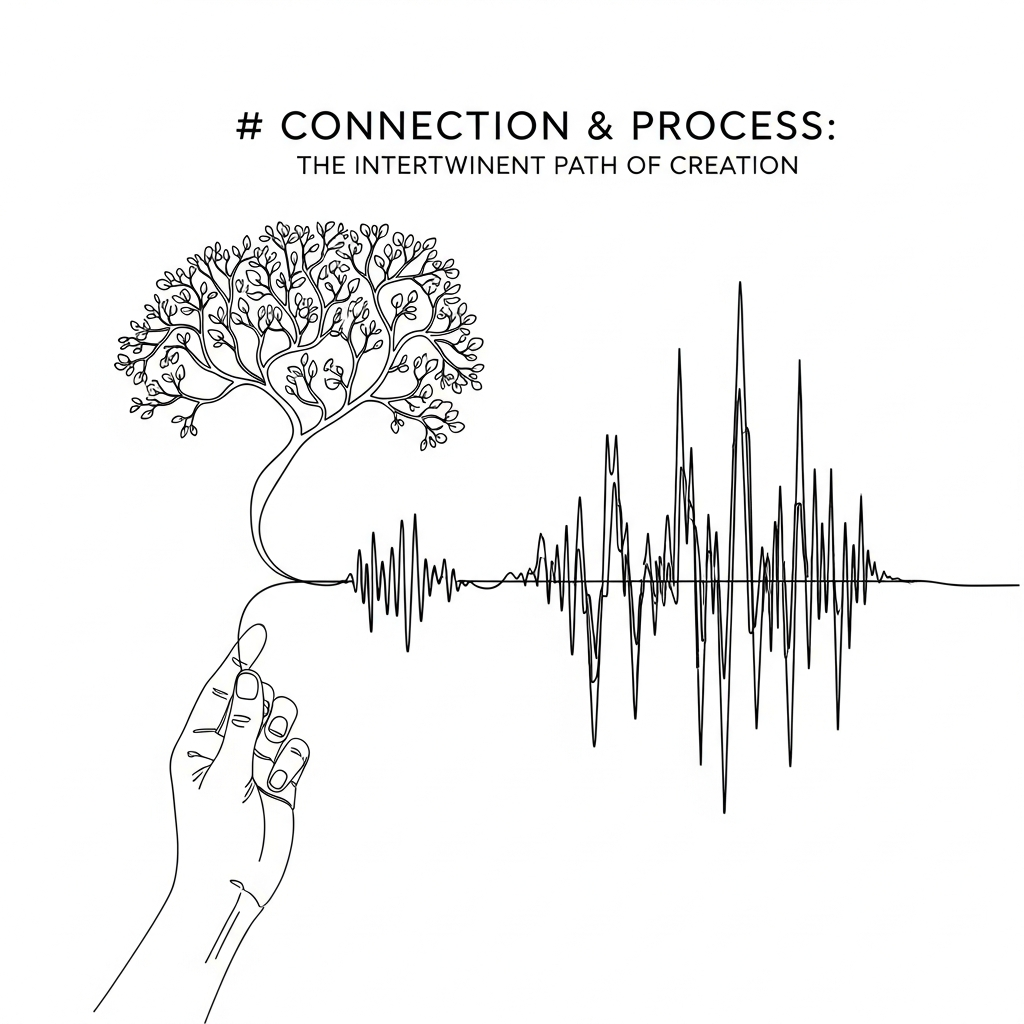
For me this communication with the divine arrives when I enter that flow state. Something strange happens. I become absorbed in the task. My intention amplifies but ceases to carry a heavy emotional charge. I am simply in the process. This manifests differently across the disciplines. In photography it takes the form of a strange dance where I physically move through space to find the geometry that sings. The editing phase becomes a rapid series of intuitive choices until the exact version of the image reveals itself through my hands rather than my conscious mind. It is playful and purposeful and unconscious.

Music offers a departure from the known into the unknown. I am lucky enough to play the hurdy-gurdy. The drone of the instrument opens the door to this state with startling ease. While solo play can sustain this for hours the experience transforms when shared. My band Celtarabia is built on this specific idea. We generate wild and life-affirming dance music where the gig becomes a performance for the crowd and a ritual for the players.

This process takes on a different shape with my music collaboration Agent Starling. I am given a set of instructions that include a feeling or a theme. I reflect on this to choose a fitting key and mode and time signature. Then I explore that territory whilst the recording happens. I am thinking with my fingers not my head. I have set the parameters and a playing space for musical exploration. The results are recorded raw and I return later to edit them in a second session. Even the quiet hours hold this power. I often wake early to listen to the inner voice talking. Once the writing begins the ideas flow and new paths appear to be explored.

The Paradox of Mistakes

This willingness to make a mess brings us to a vital paradox. We often find the right path only by exploring the wrong ones. The fear of error paralyzes the spirit but the embrace of the mistake liberates it. A wrong note or a stray brushstroke is not a failure. It is data. It is the universe telling you that the edge is here and not there. When I am improvising and my fingers slip they often land on a chord I would never have chosen consciously. That dissonance forces me to resolve the melody in a new way. It pushes the work into territory I could not have planned. We know we are right specifically because we have been brave enough to get it wrong. The mistake proves we are pushing against the boundaries of the known rather than simply repeating what is safe. We find our true north only by getting thoroughly lost first.

This is where the sheer frequency of the practice becomes transformative. When you show up to the page or the instrument every day you strip away the preciousness of the art. You stop treating every creation like it has to be a masterpiece and you start chasing the flow itself. We shift from a state of doing to a state of being. The practice ceases to be a chore and becomes a way to inhabit the world. It allows us to explore our inner and outer landscapes with a playful lack of judgment. In a world that worships efficiency and deliverables and bottom lines insisting on the primacy of process is an act of rebellion. We are not machines designed for output. We are gardens designed to grow.

Reclaiming the Divine

Philosophers have spent centuries trying to reclaim these treasures we mistakenly cast into the sky. Ludwig Feuerbach argued with great conviction that theology is essentially anthropology. He believed that what we call God is actually a projection of our own highest nature. We take our best qualities like love and wisdom and alienate them from ourselves by assigning them to a deity. Feuerbach urged us to take those attributes back. Friedrich Nietzsche picked up a hammer to drive this point home. His famous declaration that God is dead was a challenge rather than an ending. He wanted us to realize the “will to power” within us. The “Übermensch” is essentially a human who has realized their own potential to create values and affirm life without supernatural crutches.

Baruch Spinoza offered a perspective that feels particularly resonant for an artist who loves the natural world. He saw God and Nature as two names for the same infinite substance. This pantheistic view suggests we do not need to look up to find the divine because we are already standing in it. Paul Tillich reframed the conversation by describing the divine not as a being but as the “Ground of Being.” This shifts the focus from a beard in the sky to the raw act of existing with courage. Carl Jung mapped the internal landscape by describing gods as archetypes in the collective unconscious. He viewed spirituality as a process of individuation where we integrate the hidden parts of our psyche to achieve wholeness. These thinkers provide the intellectual bedrock for believing in our own magic.

Building Cathedrals

Contemporary visual artists continue to fan these flames. Marina Abramović uses her own body to demonstrate the sheer scale of human resilience and energy. Her performance pieces like The Artist Is Present strip away the noise to reveal the raw power of human connection. She proves that our ability to hold space for one another is a spiritual act. We must also acknowledge that the viewer is as much a part of the spiritual equation as the artist. Mark Rothko understood this perfectly. He stripped his paintings of figures and landscapes until only raw emotion remained. The Rothko Chapel stands as a testament to this power. It is a sanctuary without a dogma where massive dark canvases invite people to sit in silence. Visitors often find themselves weeping before these blocks of colour. They are having a religious experience facilitated entirely by pigment and presence. It proves we can build cathedrals out of canvas.

We can also build them out of ice and leaves. The Land Art movement reminds us that the earth itself is the ultimate studio. Artists like Andy Goldsworthy go out into the wind and the rain to stitch together leaves or balance stones. They create works of breathtaking beauty knowing full well the tide will wash them away by lunch. This is a profound spiritual stance. It embraces impermanence. It finds the sacred in the mud and the moss. It reminds us that we do not need to preserve something for it to matter. The act of creation is the prayer and the dissolving is the ‘Amen’.

A Frequency Inside Us

Music amplifies this concept by turning the vibration of the human spirit into something we can physically feel rattling our ribcages. Jimi Hendrix treated the electric guitar less like an instrument and more like a dowsing rod for the soul. He spoke of music as his religion and a way to connect with universal vibrations that bypass cultural dogma entirely. John Lennon picked up a similar thread with a quieter intensity, stripping away the divine hierarchy to reveal a humanistic unity. But for me this connection is far more personal and immediate.

The sense of timelessness and security the drone provides when I practice the hurdy-gurdy is unlike anything else. When it is strapped closely to my stomach I feel the instrument as much as I play it. It acts as an anchor and a platform that allows me to leap into the unknown. This vibration connects me to a specific lineage of sound that has always moved me. I remember the visceral bass of dub hitting deep in the stomach and making my trousers flap when I played with Suns of Arqa. I recall the trance-inducing acid house vibes of The Orb and System 7 that I heard at my first rave. I think of the soaring joyful journey of Indian ragas played by Shiv Kumar Sharma on the Santoor. These experiences are not about worshipping a distant god. They are about accessing a frequency that already lives inside us.

The Final Breath

It is hard to name that strange fluttering expectant excitement that courses through our body in the moments before starting to create. The ancients looked inward and found something that felt too vast to be entirely their own. You see this in the Christian concept of Imago Dei or the notion that we are crafted in the image of the divine. Eastern traditions like Advaita Vedanta suggest the individual soul and the universal reality are identical. These ancient maps of the spirit point to a singular truth. We are not empty vessels waiting to be filled. We are already brimming with the precise essence we search for. It forces us to ask where the line between the human and the holy actually sits.

Pierre Teilhard de Chardin famously suggested we are spiritual beings having a human experience. I take that to heart. It means the messy and chaotic and sometimes painful process of being alive is the point. Resilience becomes a spiritual practice in this light. When a painting goes wrong or life throws a curveball that knocks the wind out of you the response is the same. We wipe the palette clean. We dig deep into that steely grit and we shout “Next!” with a grin. The ability to create again after destruction is the truest evidence of our power.

Recognizing these qualities within ourselves changes the game completely for a creative practice. It transforms art from a mimicry of creation into an act of pure genesis. We tap into that boundless energy to heal and to build and to make sense of the chaos. The divine is not a destination we travel to. It is the place we are speaking from. As I turn the wheel of my hurdy-gurdy the entire universe holds its breath.

The New American Empire Is Here. And It Hates You

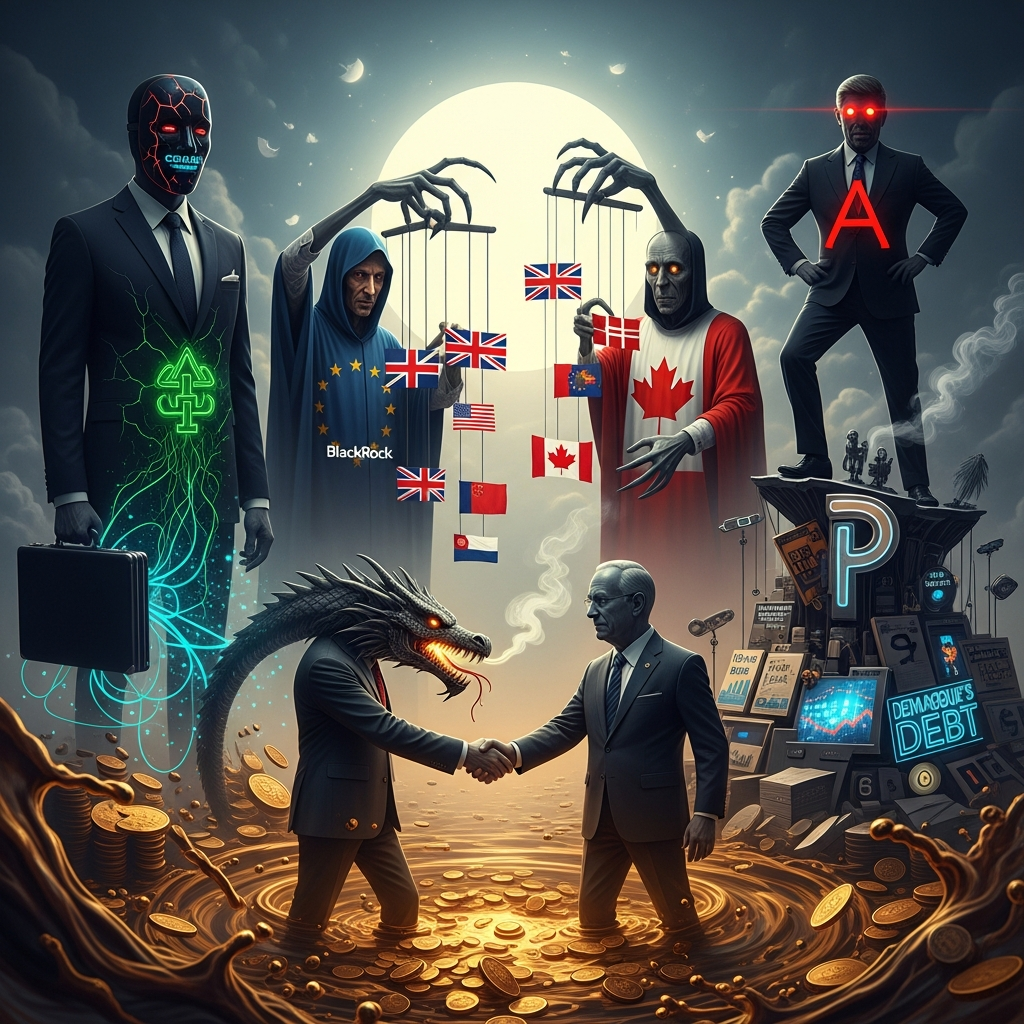
Fortress America: The White House’s Terrifying Plan to Partition the World

Government white papers are usually excellent cures for insomnia. They are typically filled with bureaucratic grey noise, polite diplomatic fictions, and the sort of tentative language that allows civil servants to sleep at night. You expect them to be dull. This document, the newly published “National Security Strategy of the United States,” is far from dull. It reads like a manifesto blending a victory speech, an ideological tract, and a corporate hostile takeover bid for the planet written by a dementing Darth Vader screaming ‘I want’ 47 times throughout the US ultimatum to the world.

We need to talk about the sheer psychological force radiating from these pages. The opening letter sounds like a rally. Written with a cadence of superlatives and moral binaries, it presents a “President of Peace” who has single-handedly resolved eight global conflicts in eight months from Gaza to the Congo while obliterating drug cartels now designated as terrorists. It is a form of myth-making that borders on confabulation. It uses the proper nouns of diplomacy to create an impression of global reach while demanding total suspension of disbelief. The message is clear. Institutions failed you. Elites betrayed you. Only the Great Man can save you.

This narrative of betrayal is the engine driving the entire strategy. The text paints a vivid picture of a “Grievance Narrative” where the American people have been sold down the river by post-Cold War elites. These elites, the document argues, pursued an impossible dream of global domination through “transnationalism” that only served to hollow out the American heartland. It is a diagnosis that will resonate with populists from the Rust Belt to the Red Wall. The proposed cure is a regression to a hierarchical empire. The United States is defending the nation-state. But it is doing so by ruthlessly asserting its own sovereignty while treating the sovereignty of others as a conditional privilege.

Nowhere is this double standard more glaring than in the “Trump Corollary” to the Monroe Doctrine. This new corollary goes far beyond the gunboat diplomacy of the past. It declares a total economic exclusion zone. The document explicitly targets Chinese-owned ports and Russian investment as “hostile foreign incursions” that must be uprooted. It threatens to rip up the commercial fabric of Latin America to deny competitors a foothold. It is a demand that the entire hemisphere disconnect from the global economy and plug solely into the American grid. The hypocrisy is staggering. The United States demands an “open door” in Asia while slamming the door shut in the Americas. It treats the people of the Global South not as partners with agency, but as inventory in a warehouse owned by Washington. By carving out this exclusive zone, the White House is effectively telling Beijing and Moscow that the world is being partitioned. It is an invitation for every great power to ring-fence their own neighbourhood.

We must catch the signal amidst the noise here. For the first time in living memory, an American security strategy ranks the Western Hemisphere as the absolute top regional priority. It sits above the Indo-Pacific. It sits well above Europe. This is the blueprint for “Fortress America” where the drawbridge is permanently up. The strategy outlines a plan to “enlist and expand” local deputies to do the heavy lifting of border security. It treats the entire continent south of the Rio Grande as a defensive buffer zone against migration and narcotics. By focusing so intently on its own backyard, Washington is implicitly telling its allies in Europe and Asia that the lease is up. They are seceding from the global order they built, taking the keys to the economy with them.

Then we reach the section that should send a chill through the chancelleries of Europe. The document explicitly links national security to demographics in a way that is profoundly disturbing. It frames migration as an “invasion” and a primary threat to the state. It warns of “civilizational erasure” in Europe and openly questions the future loyalty of NATO allies whose populations might become “majority non-European.” This is the “Great Replacement” theory codified into superpower statecraft. It explicitly racialises the Atlantic Alliance, suggesting that a diverse Europe is a weak Europe. It signals to London, Paris, and Berlin that Washington no longer views them as partners in democracy. It views them as racial traitors to a shared “civilizational” project.

The strategy brings the American culture wars directly into the situation room. “Radical gender ideology” and “woke lunacy” are identified as threats on par with ballistic missiles. It vows to root out “DEI” initiatives as anti-meritocratic dangers to military readiness. Most dangerously, it dismisses climate change as an “ideology” that subsidises adversaries, pivoting back to fossil fuels with aggressive enthusiasm. This is the weaponisation of resentment. By attaching physical danger to cultural grievances, the administration creates a permission structure for purges within the military and the civil service. They are walling themselves in while the planet burns.

For the United Kingdom and Europe, the bill for this new worldview has arrived. The “Hague Commitment” demands that NATO allies spend 5 per cent of GDP on defence. It is a figure designed to break the back of the European welfare state. But the financial cost is secondary to the political threat. The strategy explicitly states a preference for working with “patriotic parties” over the current EU establishment, which it views as illegitimate. It is a divide-and-conquer approach. The goal is to strengthen NATO’s military utility for American ends while weakening the European political project.

We must also notice the pivot on democracy. The document abandons the “hectoring” of authoritarian regimes. It signals a willingness to accept Gulf monarchies and regional strongmen as they are, provided they align with U.S. interests. Stability has replaced liberty as the currency of the realm. It is a transactional realism that strips away the veneer of American moral leadership to reveal the raw power dynamics underneath.

It is easy to recoil from the brutality of this text. It is a mirror that exposes Western hypocrisy, revealing an imperialism that was often masked as a “rules-based order.” It diagnoses real failures in the hubris of the last thirty years. Yet the solution it offers is a retreat into a fossil-fueled, ethno-nationalist fortress.

We have a choice. We can panic, or we can look at this landscape with clear eyes. This document forces us to grow up. We can no longer rely on a benevolent protector. We must rediscover a European project that stands for something more than trans-Atlantic subservience. If America is retreating behind its walls, we cannot simply wait outside the gates. We must build a new coalition of the willing. We need an architecture based not on shared heritage, but on the shared reality that climate change and inequality care little for borders, even ones guarded by a Golden Dome. America has stated clearly what it wants. Now we must decide what we are willing to build to replace it.

Read it and weep https://www.whitehouse.gov/wp-content/uploads/2025/12/2025-National-Security-Strategy.pdf

Art After the Flood: Authenticity in an Age of Hyper-production.

We are living through a second flood. The first, chronicled by Walter Benjamin, was a rising tide of mechanical reproduction that stripped the artwork of its unique presence in time and space, its ritual weight. What we face now is a deluge of a different order, not the copying of an original, but the generation of the ostensibly original itself. This synthetic reproducibility, instant and infinite, does not so much wash away the aura of the artwork as dissolve the very ground from which aura once grew. For the artist, this marks a profound reordering, a passage through a great filter that demands a reckoning with why creation matters in a world saturated with the facsimile of creation.

The crisis is, at its heart, an economic one, born from the final victory of exhibition value over all else. Benjamin saw how reproduction prised art from the domain of ritual, making it a political, exhibitable object. AI hyper-production perfects this shift, creating a universe of content whose sole purpose is to be displayed, circulated, and consumed, utterly detached from any ritual of human making. When ten thousand competent images can be summoned to fill a website’s empty corners, the market value of such functional work collapses. The commercial artist is stranded, their skill rendered not scarce but superfluous in a marketplace where the exhibitable object has been liberated from the cost of its production.

This leads to the deafening, companion problem: the drowning-out effect. If everything can be exhibited, then nothing is seen. The channels of distribution become clogged with a spectral, ceaseless tide, a ‘slop’ of algorithmic potential. Discovery becomes a lottery. In this storm of accessibility, the scarce resource is no longer the means of production, but attention. And attention, in such a climate, refuses to be captured on the mass scale that the logic of exhibition value demands; it must be cultivated in the intimate, shadowed spaces the floodlight cannot reach.

Consequently, the artist’s identity fractures and reassembles. The role shifts from creator to curator, editor, and context-engineer. If the machine handles the ‘how,’ the human value retreats into the realms of conception, discernment, and judgement. The artistic self becomes a more ghostly thing, defined less by the manual trace and more by the authority of selection and the narrative woven around the chosen fragment. For some, this is a liberation from tradition’s heavy hand; for others, it feels like the final severance of that unique phenomenon of a distance, however close it may be, that once clung to the hand-wrought object.

This forced evolution makes brutally clear a distinction that has long been blurred: the split between ‘content’ and ‘art.’ ‘Content’ is the pure, polished exhibit. It is information, filler, ornament, the fulfilment of a demand. For this, the synthetic process is peerless. ‘Art,’ however, must now be defined by what it stubbornly retains or reclaims. It must be an act where the process and the human context are the irreducible core, where the value cannot be extracted from the texture of its making. Its purpose shifts from exhibition back towards a new kind of ritual, not of cult, but of verifiable human connection. The artist must now choose which master they serve.

The only viable path, therefore, is a strategic retreat to the domains presence in time and space still governs. Since the object alone is forever suspect, value must be painstakingly rebuilt around radical context and provenance. The aura must be consciously, authentically reconstructed. This becomes the artist’s new, urgent work.

The story of the object’s making is now its last line of defence. The narrative, the intention, the struggle, the trace of the human journey, ceases to be a mere accompaniment and becomes the primary text. Proof of origin becomes a sacred credential. As a latter-day witness to this crisis noted, the only territory where authenticity can now be assured is “in the room with the person who made the thing.” The live performance, the studio visit, the act of co-creation: these are no longer secondary events but the central, unassailable offering. Here, art reclaims its here and now, its witnessable authenticity in a shared moment that no algorithm can simulate or inhabit.

The Unmaking of the Unique

Thus, hyper-production functions as a great filter. It mercilessly commoditises the exhibit, washing away the economic model of the last century. In doing so, it forces a terrible, clarifying question upon every practitioner: what can you anchor your work to that is beyond the reach of synthetic reproduction?

The emerging responses are maps of this new terrain. Some become context engineers, building immersive narratives where the work is a relic of a true human story. Others become synthesist collaborators, directing the machine with a voice of defiantly human taste. A faction turns resolutely physical, seeking refuge in the stubborn, three-dimensional ‘thingness’ that defies flawless digital transference. Yet others become architects of experience, crafting frameworks for interaction where the art is the fleeting, collective moment itself. And many will retreat to cultivate a deep niche, a dedicated community for whom the human trace is the only currency that holds value.

The flood will not cease. The exhibition value of the world will be met, and exceeded, by synthetic means. But this crisis, by shattering the professionalised model, may ironically clear the way for a return to art’s first principles: not as a commodity for distribution, but as a medium for human connection, a testament of presence, and a ritual of shared meaning. The future of art lies not in battling the currents of reproduction, but in learning to build arks, vessels of witnessed, authentic experience that can navigate the vast and glittering, but ultimately hollow, sea of the endlessly exhibitable.

The Great Unraveling: Living in Gramsci’s Global Interregnum

We are living in the parenthesis between epochs. Writing from a Fascist prison cell, Antonio Gramsci described this liminal space with chilling foresight: “The crisis consists precisely in the fact that the old is dying and the new cannot be born; in this interregnum a great variety of morbid symptoms appear.”

Nearly a century later, his observation feels unnervingly prescient. The world is suspended in what can be understood as a global interregnum—an extended, unsettled transition in which familiar structures of governance, economics and social order are crumbling, while coherent replacements remain only partially formed, visible more as glimpses than blueprints.

The Morbid Symptoms of Our Time

Look around. The symptoms emerge not as isolated crises, but as overlapping polycrises—a chorus of systemic failures. The neoliberal order that defined the late 20th century stutters and stalls, its promise of endless growth colliding with planetary limits and deepening inequality. In its weakening, we witness the rise of what Gramsci might have called our era’s “monsters”: authoritarianism in democratic clothing, xenophobic populism feeding on economic anxiety, and technological shifts that pledge liberation while threatening new forms of control.

Geopolitically, the world operates with multiplying centres of gravity. The post-war liberal international order—once the sun around which global politics revolved—now loses its pull. We see this in the fraying of long-standing alliances, the return of great-power tensions many thought were historical relics, and conflicts from Ukraine to Gaza that expose the limits of existing diplomatic mechanisms. The world is not yet multipolar, but it is increasingly nonpolar—a dangerous limbo where old rules no longer hold and new ones remain unwritten.

New Powers and the Vacuum They Fill

Into this vacuum step unlikely actors. Technology titans—today’s equivalent of mercenary captains—wield influence comparable to nation-states, shaping policy and public discourse with little accountability. Their platforms become our public squares; their algorithms, the invisible hands guiding economies and elections. This shift in power echoes historical interregnums, where economic forces redraw political maps long before new structures take shape.

At the same time, the environmental foundations of our civilisation show alarming fractures. Climate change embodies the ultimate polycrisis—ecological, economic, political and existential all at once. It acts as both consequence and accelerator of our interregnum, revealing how the old growth model now feeds on its own collapse.

The Spectrum of Possible Futures

Where does this lead? Several paths branch from our present uncertainty:

  1. The Authoritarian Resolution: Democratic norms erode further, replaced by digital surveillance states and corporate-backed strongmen offering stability in exchange for freedom.
  2. The Progressive Transformation: A deliberate, difficult turn toward regenerative economics, participatory democracy and global cooperation centred on sustainability and equity.
  3. The Chaotic Fragmentation: Current trends deepen into systemic failure—more collapsed states, global trade splintered into hostile blocs, climate displacement triggering unprecedented crises.
  4. The Techno-Oligarchic Horizon: Power consolidates not in nations but in corporate entities controlling essential technologies, from AI to bioengineering, creating a digital feudalism.

Navigating the In-Between

What the idea of interregnum emphasises is agency. This is not just something happening to us; it is a space we inhabit and can shape. The “morbid symptoms” are warnings, not inevitabilities.

Meaningful response means acting on multiple levels at once:

Politically, we must reinvent multilateralism for a fragmented world—creating spaces for dialogue that recognise new power realities without abandoning human rights.

Economically, we need to build resilience—localising essential supplies while sustaining global cooperation, testing post-growth models that do not equate progress with extraction.

Technologically, we must set ethical boundaries before capability outruns governance, especially with artificial general intelligence approaching as either a vital tool or an existential risk.

Ecologically, the task is a just transition—moving rapidly beyond fossil fuels while supporting communities disrupted by both climate impacts and economic change.

Labour Pains of What Comes Next

Perhaps the hardest part of living through an interregnum is psychological. We are conditioned to expect linear progress or cyclical return, not this prolonged disorientation. The temptation is to retreat into nostalgia for a simpler past or to surrender to despair.

And yet history suggests these between-times, however painful, are also spaces of remarkable creativity. The Renaissance emerged from medieval crisis. The modern international system was born from world war’s ashes. The old must decay enough to make room for the new.

Our task, then, is not to wish the interregnum away, but to move through it with clear sight and steady will. To help birth the “new” waiting to emerge—systems centred on ecological renewal rather than extraction, on fair distribution rather than accumulation, on shared governance rather than concentrated power.

The parenthesis will close. What follows depends profoundly on what we choose to nurture in this uncertain, fertile and dangerous in-between. The interregnum is not our destination, but our crucible. What emerges from it will be shaped by what we value, whom we stand with and the courage we find in this twilight of an old world.

Strike The Right Note This Christmas: The Ultimate Gift For The Hurdy-Gurdy Player In Your Life

The festive season is upon us, and with it comes the annual quest for the perfect, thoughtful gift. If there’s a hurdy-gurdy player in your life, you know they are passionate about their instrument. But what do you buy for the musician who has everything? This year, give them more than just another accessory; give them the gift of inspiration, knowledge, and a deeper connection to their craft.

“The Secret LIfe of the Hurdy-Gurdy” is not just a book; it’s a treasure chest of wisdom for anyone captivated by the sound of the hurdy-gurdy. It is the ideal present for players of all abilities and interests, from the enthusiastic beginner to the seasoned performer.

Unlock the Secret Life of the Hurdy-Gurdy

Imagine giving a gift that allows your loved one to sit down and learn from the masters. This book holds the distilled knowledge, reflections, and insights from 32 of the world’s most respected hurdy-gurdy players. Each chapter is dedicated to a different artist, providing an intimate look into their musicality, playing technique, theory, and performance philosophy.

This is a chance to stand on the shoulders of giants. The book features writing and interviews with a stellar lineup of artists, including:

  • Bruno Andersen
  • Patrick Bouffard
  • Gilles Chabenat
  • Germán Díaz
  • Matthias Loibner
  • Michalina Malisz
  • Isabelle Pignol
  • Steve Tyler
  • And 24 other leading players!

Knowledge is power. This book will delight, enthuse, and enlighten, bringing more power and passion to every reader’s music-making. It’s the gift that will keep on giving, inspiring new ideas and better playing long after the Christmas decorations are packed away.

What Readers Are Saying:

Don’t just take our word for it. Here’s how this book has inspired musicians around the world:

‘Hi, I just wanted to say thank you for the excellent book. It was really interesting to read about the philosophy and approach to playing the gurdy of such a variety of musicians, and it inspired me to play my gurdy, which is never a bad thing!
Wolfie Fiddler

‘It’s an excellent book. I learn something new from every chapter!
Kevin Holland, Multi-instrumentalist

‘A fascinating read. Not only for hurdy-gurdy players and other musicians, but with insights from 32 leading players from around the world for anyone who likes people’s stories. Recommended! Nice one!’
Lou Dufy-Howard

Give a Gift that Supports the Artist Directly

By ordering this book directly from the author, you do more than just buy a present.

  • You directly support the creator. A much larger portion of your purchase goes to the author, rather than the 60% that Amazon takes after printing.
  • You help build a community. The author can keep a database of readers for future publications and connect with the people who appreciate the work.
  • You give a billionaire a little kick in the shin! Support independent artists and keep the music community thriving.

Order Now for Christmas Delivery!

Ordering is simple, but don’t delay! With a delivery time of 10-14 days, now is the perfect time to secure your copy for the festive season. And with no duty to pay for EU, US, Canadian, or UK customers, it couldn’t be easier.

To place your order, simply email the author, Quentin Budworth, at quentinbudworth@yahoo.com with the following information:

  1. Your full postal address.
  2. Your preferred payment method (PayPal or Direct Bank Transfer).

Quentin will reply with the payment details to finalize your order.

This Christmas, give the hurdy-gurdy player in your life a gift they will truly cherish. Give them the key to a secret world of music and inspiration.

Strike The Right Note This Christmas: The Ultimate Gift For The Hurdy-Gurdy Player In Your Life

The festive season is upon us, and with it comes the annual quest for the perfect, thoughtful gift. If there’s a hurdy-gurdy player in your life, you know they are passionate about their instrument. But what do you buy for the musician who has everything? This year, give them more than just another accessory; give them the gift of inspiration, knowledge, and a deeper connection to their craft.

“The Secret LIfe of the Hurdy-Gurdy” is not just a book; it’s a treasure chest of wisdom for anyone captivated by the sound of the hurdy-gurdy. It is the ideal present for players of all abilities and interests, from the enthusiastic beginner to the seasoned performer.

Unlock the Secret Life of the Hurdy-Gurdy

Imagine giving a gift that allows your loved one to sit down and learn from the masters. This book holds the distilled knowledge, reflections, and insights from 32 of the world’s most respected hurdy-gurdy players. Each chapter is dedicated to a different artist, providing an intimate look into their musicality, playing technique, theory, and performance philosophy.

This is a chance to stand on the shoulders of giants. The book features writing and interviews with a stellar lineup of artists, including:

  • Bruno Andersen
  • Patrick Bouffard
  • Gilles Chabenat
  • Germán Díaz
  • Matthias Loibner
  • Michalina Malisz
  • Isabelle Pignol
  • Steve Tyler
  • And 24 other leading players!

Knowledge is power. This book will delight, enthuse, and enlighten, bringing more power and passion to every reader’s music-making. It’s the gift that will keep on giving, inspiring new ideas and better playing long after the Christmas decorations are packed away.

What Readers Are Saying:

Don’t just take our word for it. Here’s how this book has inspired musicians around the world:

‘Hi, I just wanted to say thank you for the excellent book. It was really interesting to read about the philosophy and approach to playing the gurdy of such a variety of musicians, and it inspired me to play my gurdy, which is never a bad thing!
Wolfie Fiddler

‘It’s an excellent book. I learn something new from every chapter!
Kevin Holland, Multi-instrumentalist

‘A fascinating read. Not only for hurdy-gurdy players and other musicians, but with insights from 32 leading players from around the world for anyone who likes people’s stories. Recommended! Nice one!’
Lou Dufy-Howard

Give a Gift that Supports the Artist Directly

By ordering this book directly from the author, you do more than just buy a present.

  • You directly support the creator. A much larger portion of your purchase goes to the author, rather than the 60% that Amazon takes after printing.
  • You help build a community. The author can keep a database of readers for future publications and connect with the people who appreciate the work.
  • You give a billionaire a little kick in the shin! Support independent artists and keep the music community thriving.

Order Now for Christmas Delivery!

Ordering is simple, but don’t delay! With a delivery time of 10-14 days, now is the perfect time to secure your copy for the festive season. And with no duty to pay for EU, US, Canadian, or UK customers, it couldn’t be easier.

To place your order, simply email the author, Quentin Budworth, at quentinbudworth@yahoo.com with the following information:

  1. Your full postal address.
  2. Your preferred payment method (PayPal or Direct Bank Transfer).

Quentin will reply with the payment details to finalize your order.

This Christmas, give the hurdy-gurdy player in your life a gift they will truly cherish. Give them the key to a secret world of music and inspiration.

How The Greens Win The Next General Election

That grinding sense of exhaustion after every election in the UK has to change; we’ve had enough of two-party politics and first-past-the-post and the failed two-party system. Nobody wants to vote as a damage limitation exercise. Holding your nose, ticking a box for the least bad option, and hoping for the best, only to find the ‘best’ felt suspiciously like a slower, slightly more polite version of the same old austere managed decline. That feeling isn’t an accident. It’s the managed despair that keeps a broken two-party system on life support.

But what if that exhaustion is the signal that the game itself is changing? The 2024 election gave Labour a government, but it didn’t provide them with the courage to act on their mandate for real hope. With public support already fraying, a vacuum is opening up on the Left. And it is into this vacuum that the Green Party is stepping, powered not just by a sharp new strategy but by a tidal wave fuelled by hope. With membership surging past 124,000—making them the third-largest party and closing in on the Conservatives—this is no longer just a protest vote. It’s a movement gathering unstoppable force.

This movement is being channelled into a patient, four-phase plan to build a new politics from the ground up.

Phase One: Lay the Foundations in Our Communities. This is where the new energy is most visible. The strategy has already started not in Westminster, but in your town hall, and it’s being executed by a rapidly growing army of activists. The Greens’ 859 councillors are the tip of the spear, but the shaft is the thousands of new members turning up to canvass, deliver leaflets, and stand for election themselves. Every pothole fixed, every local renewable energy scheme approved becomes a proof of concept, building an infrastructure of trust that is powered by sheer people-power.

Phase Two: Inspire a National Conversation. With those local foundations secured by a legion of volunteers, the next step is to take the vision national. This means doubling down on a message of hope that resonates because it’s authentic. The membership surge isn’t happening in a vacuum; it’s a direct response to policies that offer a stark, positive choice: a wealth tax on billionaires to fund public services; bringing energy and rail back into public hands; rent controls to tackle the housing crisis. The strategy is to link these bold ideas to people’s daily lives, framing environmentalism not as a sacrifice, but as the essential toolkit for a fairer, more secure society—a message now amplified by over a hundred thousand voices.

Phase Three: Offer a Clear Choice in the Heartland. This is where the plan becomes truly focused, and where the new-found scale of the party becomes a powerful force for change. The aim is to methodically concentrate on over 100 constituencies where disillusionment with the old parties is highest. An ambition like that would have been a fantasy a few years ago. Now, funded by membership fees and powered by thousands of activists with the enthusiasm the major parties can only dream of, it becomes a credible alternative. This is how you create a green breakthrough: by having the boots on the ground to give voters a genuine choice, converting apathy into engagement and winning a formidable bloc of Green MPs.

Which brings us to Phase Four: Reshape the System for Good. This is the ultimate goal. The most realistic path to power isn’t winning 326 seats outright, but winning enough—perhaps 40, perhaps 60—to hold the balance of power. A strong bloc of Green MPs, backed by the largest and most engaged activist base in the country, would enter a hung parliament not merely as junior partners, but as architects of a new democracy with a non-negotiable mandate: electoral reform. With nearly 70% of the public supporting Proportional Representation, this is the moment you translate people-power into permanent, systemic change.

So, what does this mean for you, nursing that feeling of political burnout? It means recognising that the cage has no bars, and that you are not alone. The first step is internal: stop seeing politics as something done to you. But the most vital step is external. The energy fuelling this entire strategy isn’t coming from focus groups; it’s coming from people like you. When you join this movement, you aren’t just adding your name to a list. You are the fuel. You are the hands that help lay the foundations in Phase One, the voice that inspires the conversation in Phase Two, and the engine for the breakthrough that will make the old politics obsolete.

Your Brain Isn’t Broken. It’s Creative

The Engine and the Armour: A Truer Story of Creativity

It starts with profound curiosity doesn’t it? That low-level hum beneath the surface of things. The sense that you can’t quite switch your own brain off. You’re in the supermarket, trying to remember if you need milk, but you’re also cataloguing the precise tone of fluorescent hum from the overhead lights, the discordant percussive rhythmic rattle of trolley wheels, and the quiet, tragic history etched on the face of the man staring at the price of coffee. For many, this is just background noise and mindless distraction. For you, it’s the entire orchestra, and you’re standing right in front of the brass section.

This isn’t a poetic exaggeration; it’s a neurological reality. Your brain isn’t just passively receiving more data; it’s wired for a different kind of processing. We now understand this as a dynamic, chaotic dance between three key neural networks. There’s the Default Mode Network (DMN), the brain’s dreamer, spinning daydreams and forging wild connections. There’s the Executive Control Network (ECN), the project manager, trying to focus and evaluate those ideas. And mediating between them is the Salience Network, the scout that constantly scans the horizon, deciding what’s interesting enough to deserve your attention.

In many creative people, the connectivity between these networks is unusually high. The dreamer and the manager are in a constant, frantic conversation, and your scout is working overtime. This is the very mechanism that allows you to see patterns others miss. It’s also why it feels like you can’t turn it off. But to frame this experience purely as a burden is to tell only half the story. The truth is far more powerful.

Chapter 1: The Addictive Pull of Deep Focus

Here’s the part the tragic artist myth always leaves out. The reason you can’t switch off isn’t just some curse. It’s because, when channelled, that relentless mental energy triggers one of the most powerful and rewarding states a human can experience: flow. Coined by psychologist Mihaly Csikszentmihalyi, flow is that sacred state of total immersion where time dissolves, your sense of self evaporates, and the act of creating becomes its own magnificent reward. It’s what makes the process autotelic, the joy is in the doing, not the done.

This isn’t just a feeling; it’s a neurochemical cascade. Theories like Self-Determination Theory tell us that we are intrinsically motivated by a need for autonomy, competence, and connection. The creative act is a direct line to satisfying those needs. As you engage, your brain rewards you with dopamine surges in the striatum, reinforcing the behaviour and making it deeply pleasurable. This is what makes creativity addictive in the best possible way, not just an obligatory coping strategy. You’re not just offloading sensory data to survive; you are chasing the profound, intrinsically rewarding high of mastery. It’s a private, powerful truth. Which makes the public lie we’re told all the more infuriating.

Chapter 2: The Lie of the Lone Genius

Our culture loves a simple hero narrative, doesn’t it? The lone genius, struck by a bolt from the blue, toiling in a dusty garret to produce a masterpiece all on their own. It’s a romantic story. It’s also a convenient and profoundly damaging lie. The truth is that creativity isn’t a solo performance; it’s a team sport. It’s what Brian Eno, a master of these things, brilliantly termed ‘scenius’.

The polar opposite of genius scenius is the idea that groundbreaking work emerges not from a single mind, but from the collective intelligence and energy of a scene. Think of the Bloomsbury Group, tearing up the literary rulebook over tea and fierce arguments. Think of the punk scene in 1970s London, a glorious, feedback-drenched conversation happening in grubby pubs and rehearsal rooms. Innovation doesn’t happen in a vacuum. It happens in conversation, in collaboration, in the fertile friction of minds rubbing up against one another.

So why does the myth of the lone genius persist? Because it’s incredibly useful. It serves a clear economic and social function. A single, tortured genius is a simple, compelling product to market. A collaborative, messy ‘scenius’ is not. More insidiously, it atomises us. By telling creatives they should be toiling away alone, it keeps them disconnected, less powerful collectively, and far easier to exploit in industries built on precarious, gig-based work. It allows a small group of cultural gatekeepers to bestow the ‘genius’ label, maintaining a power structure that is far from meritocratic. The myth of the lone genius isn’t just wrong; it’s a cage with no bars, designed to keep us from realising our collective strength.

This is why the composition of a ‘scenius’ is so critical. A homogenous scene is a stagnant one. If everyone in the room comes from the same background, shares the same reference points, and holds the same assumptions, you don’t get innovation—you get an echo chamber. The cultural river becomes dangerously shallow. True, world-changing creativity is almost always the product of friction between different perspectives and experiences. Fighting for genuine diversity and inclusion in our creative fields isn’t just a moral good; it is a strategic imperative for any culture that wants to progress.

Chapter 3: An Engine for Growth, Not Just Survival

So yes, the cost can be brutal. That survey finding 73% of musicians experience anxiety and depression is real and it matters. But it’s a profound mistake to see art only as a coping mechanism for trauma. While it absolutely can be a powerful therapeutic tool, its purpose extends far beyond mere survival. To create is to experience a unique form of well-being, what the Greeks called “eudaimonia”—the joy that comes from living a life of purpose and growth.

In an age where artificial intelligence can generate slick, novel content in seconds, this distinction has never been more vital. AI can replicate patterns, but it cannot replicate the messy, embodied, human experience that gives art its soul. It hasn’t felt heartbreak or stood in a supermarket overwhelmed by the sheer chaos of existence. Our creativity, our ability to connect, to feel, to find meaning in the chaos, is not just a nice-to-have. It is our last truly wild resource, and our most valuable strategic asset.

The Pragmatic Path: How to Service the Engine

Understanding all this is one thing. Living it is another. In an economy increasingly dominated by AI, nurturing our uniquely human creativity isn’t a soft skill; it is the most important work we can do to make ourselves indispensable. It’s not enough to validate the feeling of being overwhelmed; we need a practical toolkit to navigate it. If your creativity is an engine, not a curse, then it requires maintenance. This isn’t about suppressing your nature; it’s about learning how to handle a high-performance machine without burning out.

First, practise neurological hygiene. Your hyper-aware brain is taking a constant beating. Mindfulness isn’t some fluffy wellness trend; it’s a direct intervention. Start small. Ten minutes of deep breathing before you even look at a screen creates a vital buffer. A body scan, where you simply pay attention to physical sensations from your feet upwards, can ground you when your mind is racing. This activates your parasympathetic nervous system—the body’s own braking mechanism—and gives you a moment of quiet agency in the storm.

Second, build resilience through radical self-compassion. The “lone genius” myth leaves no room for failure, which is, of course, the most essential part of the creative process. Reframe your inner critic. Instead of seeing a failed experiment as a personal failing, see it as data. Keep a journal of small wins. When you feel that familiar pang of alienation, pause and remind yourself: “This feeling is a known occupational hazard for people like me. I am not alone in this.” This isn’t self-indulgent; it’s a strategic move to build the emotional stamina you need for the long haul.

Third, defend your environment. In 2025, our attention is the most valuable commodity on earth, and everything is designed to steal it. You have to fight back. It’s not optional. Establish non-negotiable digital boundaries. Have screen-free times or zones. Crucially, get outside. Spend time in nature—forest bathing, a walk by the sea—to recalibrate your senses away from the urban assault. Counterintuitively, the best way to refuel your creativity is often to engage in low-pressure hobbies entirely unrelated to your main work. Cook a meal, fix a bike, do something with your hands that has no audience and no stakes.

Fourth, actively build your ‘scenius’. Don’t wait for community to find you. Seek out artist groups, online or in person. Share your work, but more importantly, share your process and your struggles. Find a mentor. Offer to mentor someone else. Start a collaborative project with the sole aim of distributing the cognitive load and sparking unexpected ideas. Connection is the antidote to the existential drain of feeling like you’re the only one seeing the world this way.

Finally, look after the machine itself. The link between mind and body isn’t mystical; it’s physiological. You cannot sustain high-level creative output on a diet of caffeine, booze, digital dopamine or anxiety. Prioritise sleep as if it were a critical project deadline, because it is. Move your body in a way that feels good, not punishing. And if the overload becomes chronic and debilitating, seek professional support. Finding a therapist who specialises in the mental health of creative people isn’t an admission of defeat; it’s an intelligent investment in your most valuable asset.

Your creativity is not just your armour against an overwhelming world. It is the very engine that propels you through it. Our job is not to wish for a different, simpler brain, but to learn how to service the magnificent, complex, and powerful one we have.

The Politics of Hope & The Economics of Care: A Radical New Vision For Britain

It is time for change, and it’s happening now. Real green shoots, new progressive ideas, are breaking through the manufactured concrete consensus that the only direction is right and then far-right.

People are resonating with that deep ache for something fundamentally different, a yearning for a world not defined by the relentless pursuit of profit or the cynical machinations of power, but by genuine human connection and collective well-being. We’ve had enough of the politics of despair, the economics of extraction. What we desperately need now is a politics of hope and an economics of care.

This isn’t just a nice idea; it’s an urgent necessity in a UK landscape dominated by a uni-party consensus that offers little more than managed decline, all while the far-right seeks to deepen the chasms between us. The ‘Friendly fascism’ and centrist authoritarianism we see here thrives on a profound lack of hope, on the exhaustion wrought by a system that consistently prioritises abstract market forces over the tangible needs of people. The hypernormalisation of austerity, the dehumanising rhetoric aimed at anyone struggling to survive, the relentless information overload – it’s all designed to drain our will to fight for something better.

So, what do we actually do? We plant the seeds of that hope, and we cultivate that care, refusing to let the cynicism of others define our future. For me, and for a growing chorus of voices, that means actively building a political movement that embodies these very principles – and that’s precisely what we’re doing with the Green Party. While others offer more of the same, praying at the altar of Neo-liberalism and allowing big money and foreign influence to dictate their every move, we are forging an alternative rooted in genuine compassion and a vision for a just future.

A politics of hope means daring to imagine a country where everyone has a safe, warm home, where our NHS is not just protected but properly funded, where our communities are vibrant and resilient, and where our planet is not sacrificed for short-term gain. It means challenging the insidious lie that there is no alternative to the current trajectory. And an economics of care means fundamentally reorienting our priorities: away from endless growth and towards meeting the needs of all, ensuring dignity for workers, protecting our precious natural resources, and fostering genuine well-being over corporate spreadsheets. It means valuing the essential work of caring for each other, for our children, for our elders, and for our environment, not just the financial transactions that boost GDP.

The culture war, stoked by the far-right and amplified by a complicit media, is a deliberate distraction from this fundamental shift. It’s designed to keep us from uniting around shared values of hope and care. We must see through it and expose it for what it is: a cynical ploy to protect the interests of the powerful by fragmenting the rest of us. When they scream about ‘woke’ ideology, we talk about universal basic income, robust public services, and truly affordable housing – the bedrock of an economics of care.

Fascists thrive on scarcity and fear. A politics of hope and an economics of care counters this directly by affirming abundance and mutual aid. We refuse to let them redefine who is ‘deserving’ of care; we insist that every life has intrinsic value. And when it comes to the Labour and Conservative uni-party, beholden as they are to big money, we expose their rhetoric for what it is: a thinly veiled defence of the status quo, offering managed decline instead of genuine transformation. Austerity instead of abundance.

My own journey has shown me that breaking through these entrenched narratives requires persistent, empathetic communication. We need to reach those who feel disillusioned, those who have been let down by decades of Neo-liberal consensus, and show them that hope isn’t naive – it’s a powerful engine for change. The Green Party’s rapid growth isn’t just about environmentalism; it’s about a fundamental commitment to a politics of hope and an economics of care, a vision that resonates deeply with people who are tired of being told there’s no alternative.

Paulo Freire’s call for critical consciousness is absolutely paramount here. We must question the very foundations of an economic system that prioritises profit over people, and a political system that claims to be democratic while being controlled by external forces. We must empower ourselves, and our communities, to imagine and build an entirely new way of organising society – one based on collaboration, compassion, and true sustainability.

Yes, the fight is monumental. The forces of cynicism and greed are deeply entrenched. But we cannot surrender. We must protect our humanity, our empathy, and our capacity for hope, because these are our most potent weapons. Join your local Green Party. Get involved. Speak truth to power. Demand a politics of hope and an economics of care, not just as abstract ideals, but as the foundational principles of a society truly fit for the 21st century. The most anti-fascist act any of us can make, in the face of managed decline and manufactured misery, is to stubbornly, defiantly, hold onto that vision and work every single day to bring it into vibrant, caring reality.

Why the ‘Common Sense’ Bloke Down the Pub is Britain’s Most Dangerous Con

We need to talk about Nigel. It’s the cognitive dissonance that gets you first. The charming common sense everyman voice, the pint in hand, the easy confidence of someone who sounds both posh and plausible. And then come the words. Bitter, divisive words, spouting the worst kind of rhetoric, but delivered as if he’s just commenting on the weather. As if it’s perfectly normal, perfectly acceptable, to speak of your neighbours and fellow citizens with such casual contempt. The truth is, it isn’t. And that gap—between the slick presentation and the toxic substance, is the most dangerous political space in Britain today.

This performance is not an accident. It’s a finely-tuned political instrument designed to do one thing: to make the unthinkable seem reasonable. The charm is the anaesthetic before the surgery. It lowers your defences, making you receptive to the simple, satisfying diagnosis for that low, persistent hum of anxiety we all feel. It takes your legitimate anger about a broken system and, with a friendly wink, points it towards a simple enemy. It’s a strategy, and it works by making prejudice sound like common sense.

Once you’ve accepted the premise, the policies write themselves. Look at the plans for immigration. They are the logical conclusion of this normalised division. Abolishing the right of people who have lived and worked here for years to call this country home? It stops sounding cruel and starts sounding like ‘management’ when you’ve been told they are a burden. Tearing up international human rights laws? It’s no longer a shocking breach of our values, but a ‘necessary step’ to deal with an invasion. Each policy is another brick in a wall built to divide us, turning the complex failings of the state into a simple story of ‘us versus them’.

Then comes the second front of the attack, aimed not at our borders but at the very heart of our communities. The war on “woke.” The crusade to scrap diversity and equality initiatives. This is the mission to purify the ‘us’ group. It’s a direct assault on the messy, complex, brilliant reality of modern Britain. It sends a clear message that fairness has gone “too far,” that protecting minorities is an attack on the majority. It is a project designed to dismantle empathy, to label tolerance as a weakness, and to give bigotry a political permission slip.

And here is the raw truth we must confront: none of this is about fixing the problems that keep you up at night. Your council tax, the state of the NHS, the price of the weekly shop—these are just the emotional kindling for their fire. The goal isn’t to solve anything. The goal is to keep you angry. It is a political model that thrives on our exhaustion and profits from our division. It is a poison that paralyses our ability to look at our real problems and work together to solve them.

So, what on earth do we do? The first act of resistance is to break the spell. It is to see the performance for what it is: a con. It means actively refusing to swallow the daily diet of rage being served up. Practise ‘informational hygiene’. Guard your own resilience as if it were armour, because that’s exactly what it is. To stay calm and clear-headed in a storm of manufactured hysteria is a radical act.

But personal resilience is just the start. The real antidote to this division is connection. This is the unglamorous, vital, and urgent work ahead. It means rebuilding the bonds they are trying to sever, one conversation at a time. Talk to your actual neighbours. Have the quiet courage to challenge the divisive rhetoric when you hear it from a friend, not with aggression, but with a firm refusal to let it stand. And yes, get involved. Join the most boring-sounding local committee you can find. Be part of the levy that shores up the flood defences of our shared civic decency.

Because that is precisely what is at stake. They are selling a story of a broken Britain that can only be saved by breaking it apart even further. Our job is to tell a better story—and not just to tell it, but to live it. A story built not on fear and suspicion, but on the quiet, stubborn, and profoundly British belief that we are, and always will be, better than this.

In more detail with links

London, UK – A range of policies proposed by Reform UK, particularly concerning immigration, multiculturalism, and equality, have faced widespread criticism for being racist, divisive, and detrimental to social cohesion, according to analyses from political opponents, media reports, and think tanks. While Reform UK asserts its platform addresses legitimate public concerns, critics argue that many of their proposals target minority groups, fuel anti-immigrant sentiment, and could erode community harmony.

Immigration Policies at the Forefront of Controversy

Reform UK’s stringent immigration policies have drawn the most significant condemnation. Proposals to freeze non-essential immigration, leave the European Convention on Human Rights (ECHR), and implement offshore processing for asylum seekers have been labeled as “racist” and “immoral” by opponents.[1] Critics, including Labour leader Keir Starmer, argue that such measures scapegoat immigrants for broader societal problems and normalize state-sanctioned racism.[1][2]

One of the most contentious proposals is the plan to abolish Indefinite Leave to Remain (ILR), a move that could affect hundreds of thousands of legal residents. Starmer has vehemently opposed this, stating it would “rip this country apart” by targeting neighbors and contributors to the economy.[1][3] In response, Reform UK’s head of policy, Zia Yusuf, accused Labour of telling the electorate to “pay hundreds of billions for foreign nationals to live off the state forever, or we’ll call you racist!”[1]

Further proposals, such as a 20% National Insurance surcharge on employers hiring foreign workers and restrictions on international students bringing dependents, have also been criticized as discriminatory and echoing past anti-immigration rhetoric.

Challenges to Multiculturalism and Equality

Reform UK’s stance on multiculturalism and its pledge to scrap Diversity, Equality, and Inclusion (DEI) initiatives have intensified accusations of divisiveness. The party’s manifesto states it would replace the Equality Act, which it claims “requires discrimination in the name of ‘positive action'”.[4] Party leader Nigel Farage has been a vocal critic of DEI, and following success in local elections, has vowed to dismantle what he terms the “DEI industry” in councils under Reform control.[5][6]

Legal experts have warned that abolishing DEI roles could breach the Public Sector Equality Duty, a legal requirement for public bodies to eliminate discrimination and promote equality.[5] Critics argue these policies threaten years of progress on workplace equality and could embolden prejudice.[6] The Good Law Project has accused Reform UK of using women’s safety as a “cover for racism” by linking migration to sexual assault without credible evidence.[7][8]

Divisive Rhetoric and the Impact on Social Cohesion

Commentators suggest that Reform UK’s policies and rhetoric are tapping into a sense of public disillusionment and despair, refracting class anger through a racist lens.[9] The party’s success is seen by some as being built on exploiting fears about immigration and a loss of national identity.[9][10] The rhetoric used by some associated with the party has also come under fire. An undercover investigation revealed a Reform UK canvasser using a racial slur against Prime Minister Rishi Sunak and suggesting migrants crossing the Channel should be shot.[11]

While Keir Starmer has labeled some of Reform’s policies as racist, he has been careful to state that he does not believe all Reform voters are racist, acknowledging their frustration with the political status quo.[2][12][13] However, critics maintain that the party’s platform risks normalizing extremist views and undermining the social fabric of the UK.[9][10] A poll by British Future found that four in ten people believe Reform is a racist party, a perception more pronounced than that of UKIP in 2015.[14]

Reform UK defends its policies as necessary for border security and preserving British culture and values.[15] The party’s rise in popularity, particularly its strong performance in the 2024 general election and its significant presence on social media, indicates that its message resonates with a substantial portion of the electorate.[16][17] Nevertheless, the divisive nature of its platform continues to be a central point of contention in British politics.