Quentin Budworth is a hurdy-gurdy virtuoso, composer, and award-winning filmmaker, blending European folk traditions with drone music, while cycling the Highlands, indulging in cheese, and leading bands Celtarabia and Agent Starling.
Author: The Secret Life of the Hurdy-Gurdy - Field Notes On Playing
https://quentinbudworthmusic.com/book/
Police use spyware from Israeli firm Cellebrite to hack phones. But does this powerful surveillance tool threaten our own national security?
It’s the modern detective’s dream: a skeleton key for any smartphone. When a case hinges on data locked inside a device, surveillance technology from companies like Israel’s Cellebrite offers a way in. British police forces are spending millions on these tools. But the very power that makes them so effective also makes them a profound threat to privacy, a tool for oppression, and a startling vulnerability at the heart of our national security.
This isn’t just about pulling a few incriminating texts. The technology performs a complete digital dissection of a person’s life, copying everything: every email, photo, video, and call log. It goes deeper, recovering deleted messages and digging into hidden files that track your location history. It can even reach into your cloud backups, downloading data you thought was stored safely away.
Your Life in a Police File
The implications for ordinary people are chilling. When police use these tools, they often perform a complete “data dump” of the device. Your intensely personal and entirely irrelevant data gets hoovered up right alongside any potential evidence. Victims of crime are often told to hand over their phones, unaware that their entire digital life could be scrutinised.
This practice erodes the trust between the public and the justice system. And with no transparent public record of how often these tools are used, we are left in the dark about whether this immense power is being used proportionately, or simply because it’s there.
A Ready-Made Tool for Tyrants
The story gets darker. This technology is not just used by police in democratic nations. The client list includes some of the world’s most repressive regimes. In Bahrain, it was used to prosecute a tortured activist. In Myanmar, it helped build the case against journalists investigating a massacre. Despite corporate assurances, these tools consistently end up in the hands of governments who use them to hunt down anyone who speaks out of line.
The technology’s sharpest edge is found in conflict zones. In Gaza, it has reportedly been used not as a tool for justice, but as an instrument of military intelligence. Reports describe the mass seizure of phones from Palestinians to map social networks, track movements, and inform targeting decisions. It is population control through technology.
Forged in Intelligence: The Unit 8200 Connection
You can’t understand this technology without understanding its origins. Cellebrite, in particular, is a product of Israel’s state intelligence machine, specifically the legendary cyber-warfare corps, Unit 8200. This unit serves as an incubator for Israel’s tech sector, and its veterans often move into senior roles at surveillance companies.
This isn’t a neutral tech company; it’s a strategic asset of the Israeli state. The revolving door between the military and the boardroom means its technology is born from a philosophy of state security, not just criminal justice.
“When a police force buys this tech, they aren’t just buying software; they’re importing a national security risk.”
An Agent in the Evidence Room
This is where the story comes home. When a British police force uses this tech, it may be inadvertently placing a foreign agent in its own evidence room. The shift to cloud-based software means data extracted in a London station could be processed on servers with ties to a foreign military. This fundamentally compromises our data sovereignty.
This hands a powerful lever of influence to another country. Access to the compromising data of a nation’s leaders, judges, or military officials is the kind of leverage that can quietly shape foreign policy. It’s a stark reminder that in the world of intelligence, there is often no such thing as a true friend, only interests.
The question for any democracy is stark. In the scramble for a tool to keep us safe, are we willing to trade a piece of our own sovereignty to get it?
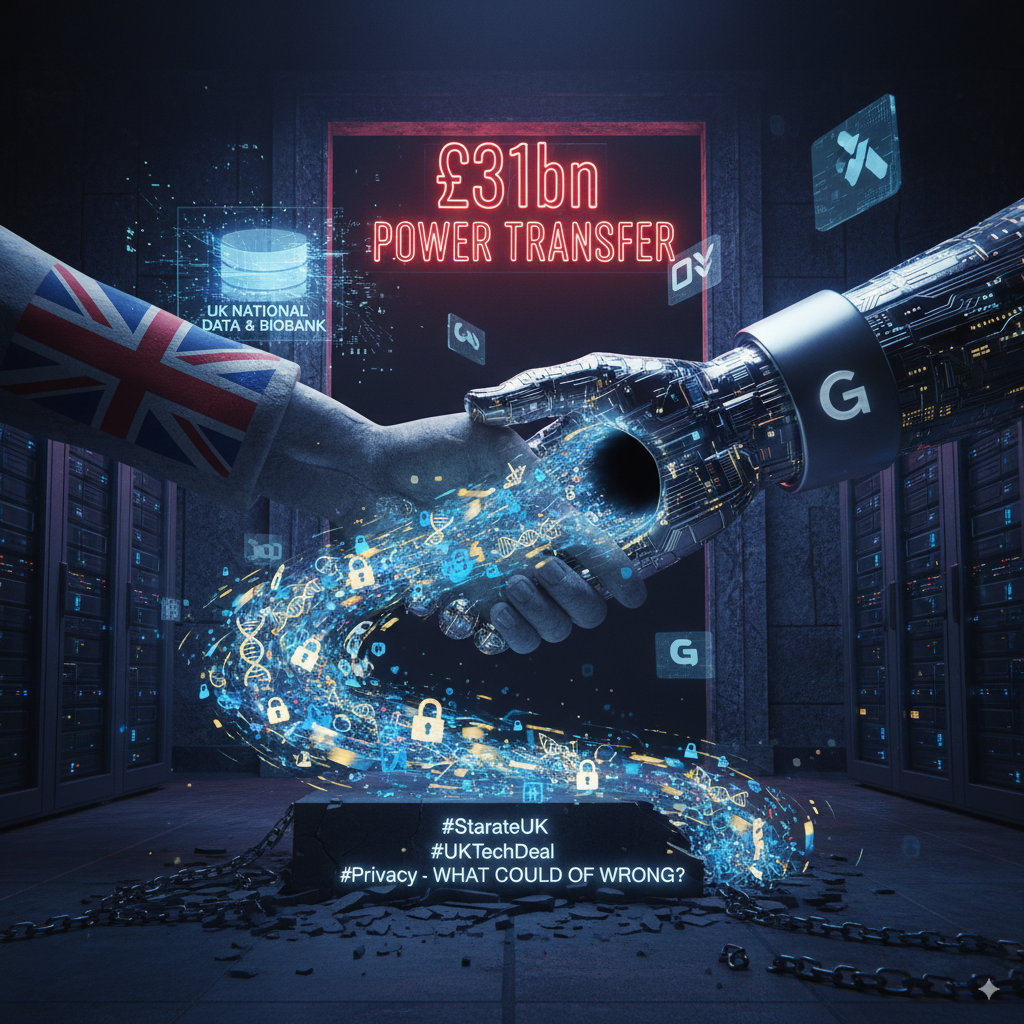
The AI on your phone isn’t just a helper. It’s a tool for corporate and state control that puts our democracy at risk.
I was surprised when my Android phone suddenly updated itself, and Gemini AI appeared on the front screen, inviting me to join the AI revolution happening worldwide.
Google, Apple, and Meta are locked in a high-stakes race to put a powerful AI assistant in your pocket. The promise is a life of seamless convenience. The price, however, may be the keys to your entire digital life, and the fallout threatens to stretch far beyond your personal data.
This isn’t merely my middle-aged luddite paranoia; widespread public anxiety has cast a sharp light on the trade-offs we are being asked to accept. This investigation will demonstrate how the fundamental design of modern AI, with its reliance on vast datasets and susceptibility to manipulation, creates a perfect storm. It not only exposes individuals to new forms of hacking and surveillance but also provides the tools for unprecedented corporate and government control, undermining the foundations of democratic society while empowering authoritarian regimes.
A Hacker’s New Playground
Let’s be clear about the immediate technical risk. Many sophisticated AI tasks are too complex for a phone to handle alone and require data to be sent to corporate cloud servers. This process can bypass the end-to-end encryption we have come to rely on, exposing our supposedly private data.
Worse still is the documented vulnerability known as “prompt injection.” This is a new and alarmingly simple form of hacking where malicious commands are hidden in webpages or even video subtitles. These prompts can trick an AI assistant into carrying out harmful actions, such as sending your passwords to a scammer. This technique effectively democratises hacking, and there is no foolproof solution.
The Foundations of Democracy Under Threat
This combination of data exposure and vulnerability creates a perfect storm for democratic systems. A healthy democracy relies on an informed public and trust in its institutions, both of which are directly threatened.
When AI can generate floods of convincing but entirely fake news or deepfake videos, it pollutes the information ecosystem. A 2023 article in the Journal of Democracy warned that this erosion of social trust weakens democratic accountability. The threat is real, with a 2024 Carnegie Endowment report detailing how AI enables malicious actors to disrupt elections with sophisticated, tailored propaganda.
At the same time, the dominance of a few tech giants creates a new form of unaccountable power. As these corporations become the gatekeepers of AI-driven information, they risk becoming a “hyper-technocracy,” shaping public opinion without any democratic oversight.
A Toolkit for the Modern Authoritarian
If AI presents a challenge to democracies, it is a powerful asset for authoritarian regimes. The tools that cause concern in open societies are ideal for surveillance and control. A 2023 Freedom House report noted that AI dramatically amplifies digital repression, making censorship faster and cheaper.
Regimes in China and Russia are already leveraging AI to produce sophisticated propaganda and control their populations. From automated censorship that suppresses dissent to the creation of fake online personas that push state-sponsored narratives, AI provides the ultimate toolkit for modern authoritarianism.
How to Take Back Control
A slide into this future is not inevitable. Practical solutions are available for those willing to make a conscious choice to protect their digital autonomy.
For private communication, established apps like Signal offer robust encryption and have resisted AI integration. For email services, Tuta Mail provides an AI-free alternative. For those wanting to use AI on their own terms, open-source tools like Jan.ai allow you to run models locally on your own computer.
Perhaps the most powerful step is to reconsider your operating system. On a PC, Linux Mint is a privacy-respecting alternative. For smartphones, GrapheneOS, a hardened version of Android, provides a significant shield against corporate data gathering.
The code has been written, and the devices are in our hands. The next battle will be fought not in the cloud, but in parliaments and regulatory bodies, where the rules for this new era have yet to be decided. The time for us, and our government, to act is now.
You feel it, don’t you? That low, constant hum of discontent, existential horror and the need to express your agitation. The feeling that you are being played.
I remember a late-night scrolling session, the blue light of my laptop on my face, safe in the darkness, my finger hovering over the ‘share’ button. An article, crafted with surgical precision to ignite my particular progressive political sensibilities, had sparked the familiar fire of indignation. I was ready to join the digital mob. I paused. A few minutes later, I saw a friend from the opposite end of the political spectrum share a story that was a perfect mirror image of my own: the same outrage, the same certainty, just aimed at a different target. We were two soldiers unwittingly enlisted in a war we didn’t start, using ammunition handed to us by unseen arms dealers, convinced of our own unique righteousness. We had both taken the broligarchy’s shilling and were aiding and abetting authoritarian politicians whilst making money for digital anarcho-capitalists.
This isn’t an accident. It’s a business model.
Fear is profitable, and in the modern world, it has become the weapon of choice. It’s a hijack of the amygdala skillfully engineered by the algorithm that knows your outrage better than you do, by the political strategist who knows fear generates more clicks than hope. But the true antagonist isn’t just the machine; it’s the ghost in our own machine, our terror of boredom, our craving for the easy hit of validation, our primal need to belong to a tribe. The machine is only powerful because we let it exploit the vulnerabilities within us.
This is the backdoor the outrage machine uses to get inside your head. It doesn’t just hijack your morals; it hijacks your neurochemistry. Your dysregulated dopamine system isn’t a personal failing; it’s the battlefield where the war for your attention is fought and won.
I learned this firsthand after a few days with no internet and no roaming data in the Highlands. Stripped of all stimulation, my mind felt like a cornered animal. But when I returned, something had fundamentally reset. A tedious data entry task I’d been dreading suddenly felt absorbing. I worked for hours, not out of discipline, but because the work itself had become the reward. My dopamine system had recalibrated. Chronic overstimulation floods your brain, desensitising your reward receptors until only the biggest, fastest hit will do. The retreat, by stripping that away, allowed my sensitivity to return. The small reward of making progress was suddenly enough.
So, how do we fight back without retreating from the world and throwing our phones and laptops into the nearest Loch, river or sea? You learn to tend to your inner world, just as a gardener tends to their soil. You start by Gating your inputs, deciding consciously whether to feed your own creativity or the outrage machine. You Allocate sacred time to hear your own voice above the noise, guarding it like a ritual. This allows you to Retreat into solitude, where you can find the answers the machine doesn’t want you to have. You learn to Dump the mental clutter it injects, and Engage the slow part of your brain—the deep, focused network that dopamine hijackers cannot touch. And finally, you Nurture your ‘no’ muscle, because every ‘no’ to a distraction is a ‘yes’ to your own sovereignty.
This practice rewires you. You learn to embrace “boring breaks”, staring out a window instead of at a screen. Listen to and enjoy the quiet sounds of life and nature. Savour the moments you inhabit, resisting the reflex to fill them with productive screen work, research or digital distraction. This feels agonising at first because your brain is screaming for a dopamine hit. Push through. This discomfort is the feeling of your reward system resetting. The goal is a focus so deep it feels effortless.
This isn’t about blissful detachment from the world’s problems. It’s about earning the resilience to engage with them effectively. It’s about building an inner foundation so solid you can have a difficult conversation without losing your centre. It is the quiet power of knowing your own mind in a world of noise, so that when you choose to act, you do so from a place of deep integrity, not manipulated rage.
This is the choice: be defined by what you are against, your energy siphoned off into battles designed to keep you distracted. Or build something real inside yourself.
Because if you don’t value something more than you hate, you will always become what you hate.
To become what you hate is the ultimate surrender. But to build yourself from the inside out is the ultimate victory. The reward isn’t just focus; it’s a quiet integrity. It’s the ability to hold compassion for others without losing your own centre. It is the unshakable confidence of knowing that your mind, your attention, and your soul are your own.
There’s a growing sense that the whole capitalist project is running on fumes. For decades, it’s been a system built on one simple rule: endless growth. But what happens when it runs out of road? It has already consumed new lands, markets, and even the quiet personal spaces of our attention. Think of it like a shark that must constantly swim forward to breathe, and it has finally hit the wall of the aquarium. The frantic, desperate thrashing we’re seeing in our politics and society? That’s the crisis.
For the last forty-odd years, the dominant philosophy steering our world has been Neoliberalism. Stripped to its bare bones, it’s a simple creed: privatise anything that isn’t nailed down, deregulate in the name of ‘freedom’, and chase economic growth as if it were the only god worth worshipping. What has become chillingly clear is that the current lurch towards authoritarianism isn’t a strange detour or a bug in the system; it’s the next logical feature. Technofascism isn’t some bizarre alternative to neoliberalism; it is its terrifying, inevitable endgame. It is emerging as a ‘last-ditch effort’ to rescue a system in terminal crisis, and the price of that rescue is democracy itself.
Before you can build such a machine, you need a blueprint. The blueprint for this new form of control is a set of extreme ideas that’d be laughable if their proponents weren’t sitting on mountains of cash and power. At the heart of a gloomy-sounding gentlemen’s club of philosophies, which includes Neo-Reactionism (or NRx), the Dark Enlightenment, and Accelerationism, is a deep, abiding, and utterly sincere contempt for the very idea of liberal democracy. They see it as a messy, sentimental, and ‘incredibly inefficient’ relic, a ‘failed experiment’ that just gets in the way of what they consider real progress.
This isn’t just a passing grumble about politicians. It’s a root-and-branch rejection of the last few centuries of political thought. Their utopia is a society restructured as a hyper-efficient tech start-up, helmed by a god-like ‘CEO-autocrat’. This genius-leader, naturally drawn from their own ranks, would be free to enact his grand vision without being bothered by tedious things like elections or civil liberties. It’s an idea born of staggering arrogance, a belief that a handful of men from Silicon Valley are so uniquely brilliant that they alone should be calling the shots.
This thinking didn’t spring from nowhere. Its strange prophets include figures like Curtis Yarvin, a blogger who spins academic-sounding blather that tells billionaires their immense power is not just deserved but necessary. It’s a philosophy that offers a convenient, pseudo-intellectual justification for greed and bigotry, framing them as signs that one is ‘red-pilled’, an enlightened soul who can see through the progressive charade. This worldview leads directly to a crucial pillar of technofascism: the active rejection of history and expertise. This mindset is captured in the terrifying nonchalance of a Google executive who declared, ‘I don’t even know why we study history… what already happened doesn’t really matter.’ This isn’t just ignorance; it’s a strategic necessity. To build their imagined future, they must demolish the guardrails of historical lessons that warn us about fascism and teach us the value of human rights. They declare war on the ‘ivory tower’ and the ‘credentialed expert’ because a population that respects knowledge will see their project for the dangerous fantasy it is.
But an ideology, no matter how extreme, remains hot air until it is forged into something tangible. The next chapter of this story is about how that strange, anti-democratic philosophy was hammered into actual, working tools of control. A prime case study is the company Palantir. It is the perfect, chilling expression of its founder Peter Thiel’s desire to ‘unilaterally change the world without having to constantly convince people.’ This company did not accidentally fall into government work; it was built from its inception to serve the state. Its primary revenue streams are not ordinary consumers, but the most powerful and secretive parts of government: the CIA, the FBI, and the Department of Homeland Security. It embodies the new ‘public-private partnership’, where the lines between a corporation and the state’s security apparatus are erased entirely.
The product of this unholy union is a global software of oppression. At home, Palantir was awarded a contract to create a tool for ICE to ‘surveil, track, profile and ultimately deport undocumented migrants,’ turning high-minded talk of ‘inefficiency’ into the ugly reality of families being torn apart. This same machinery of control is then exported abroad, where the company becomes a key player in the new defence industrial base. Its systems are deployed by militaries around the globe, and nowhere is this more terrifyingly apparent than in conflicts like the one in Gaza. There, occupied territories have become a digital laboratory where AI-powered targeting systems, enabled by companies within this ecosystem, are battle-tested with brutal efficiency. The line between a software company and an arms dealer is not just blurred; it is erased. This is the ultimate expression of the public-private partnership: the privatisation of war itself, waged through algorithms and data streams, where conflict zones become the ultimate testing ground.
This architecture of control, however, is not just aimed outward at state-defined enemies; it is turned inward, against the foundational power of an organised populace: the rights of workers. Technofascism, like its historical predecessors, understands that to dominate a society, you must first break its collective spirit. There’s a chilling historical echo here; the very first groups targeted by the Nazis were communists, socialists, and trade unionists. They were targeted first because organised labour is a centre of collective power that stands in opposition to total authority. Today, this assault is cloaked in the language of ‘disruption’. The gig economy, championed by Silicon Valley, has systematically shattered stable employment in entire industries, replacing it with a precarious workforce of atomised individuals who are cheaper, more disposable, and crucially, harder to organise. This attack on present-day labour is just a prelude to their ultimate goal: the stated desire to ‘liberate capital from labor for good.’ The ‘mad rush’ to develop AI is, at its core, a rush to create a future where the vast majority of humanity is rendered economically irrelevant and therefore politically powerless.
The human cost of this vision is already being paid. A new global caste system is emerging, starkly illustrated by OpenAI. While AI researchers in California enjoy ‘million-dollar compensation packages,’ Kenyan data workers are paid a ‘few bucks an hour’ to be ‘deeply psychologically traumatised’ by the hateful content they must filter. This is not an oversight; it is a calculated feature of what can only be called the ‘logic of Empire’, a modern colonialism where the human cost is outsourced and rendered invisible. This calculated contempt for human dignity is mirrored in their treatment of the planet itself. The environmental price tag for the AI boom is staggering: data centres with the energy footprint of entire states, propped up by coal plants and methane turbines. A single Google facility in water-scarce Chile planned to use a thousand times more fresh water than the local community. This isn’t an unfortunate side effect; it’s the logical outcome of an ideology that sees the natural world as an obstacle to be conquered or a flawed planet to be escaped. The fantasy of colonising Mars is the ultimate expression of this: a lifeboat for billionaires, built on the premise that they have the right to destroy our only home in the name of their own ‘progress’.
Having built this formidable corporate engine, the final, crucial act is to seize the levers of political power itself. While it is tempting to see this as the work of one particular political tribe, embodied by a figure like Donald Trump acting as a ‘figurehead’ who normalises the unthinkable, the reality is now far more insidious. The ideology has become so pervasive that it has captured the entire political establishment.
Consider this: after years of opposing Tory-led Freeports, Keir Starmer’s Labour government announces the creation of ‘AI Growth Zones’—digital versions of the same deregulated havens, designed explicitly for Big Tech. The project has become bipartisan. The state’s role is no longer to regulate these powerful entities, but to actively carve out legal exceptions for them. This move is mirrored on the global stage, where both the UK and US refuse to sign an EU-led AI safety treaty. The reasoning offered is a masterclass in technofascist rhetoric. US Vice President JD Vance, a direct protégé of Peter Thiel, warns that regulation could “kill a transformative industry,” echoing the Silicon Valley line that democracy is a drag on innovation. Meanwhile, the UK spokesperson deflects, citing concerns over “national security,” the classic justification for bypassing democratic oversight to protect the interests of the state and its corporate security partners.
This quiet, administrative capture of the state is, in many ways, more dangerous than a loud revolution. It doesn’t require a strongman; it can be implemented by polished, ‘sensible’ leaders who present it as pragmatic and inevitable. The strategy for taking power is no longer just about a chaotic ‘flood the zone with shit’ campaign; it’s also about policy papers, bipartisan agreements, and the slow, methodical erosion of regulatory power.
This is where the abstract horror becomes horrifyingly, tangibly real. The tools built by Palantir are actively used to facilitate the ‘cruel deportations’ of real people, a process that is only set to accelerate now that governments are creating bespoke legal zones for such technology. The AI systems built on the backs of traumatised workers are poised to eliminate the jobs of artists and writers. The political chaos deliberately sown online spills out into real-world violence and division. This is the strategy in action, where the combination of extremist ideology, corporate power, and a captured political class results in devastating human consequences.
When you line it all up, the narrative is stark and clear. First, you have the strange, elitist philosophy, born of ego and a deep-seated contempt for ordinary people. This ideology then builds the corporate weapons to enforce its vision. And finally, these weapons are handed to a political class, across the spectrum, to dismantle democracy from the inside. This entire project is fuelled by a desperate attempt to keep the wheels on a capitalist system that has run out of options and is now cannibalising its own host society to survive.
And here’s the kicker, the final, bitter irony that we must sit with. An ideology that built its brand by screaming from the rooftops about ‘freedom’, individualism, and the power of the ‘free market’ has, in the end, produced the most sophisticated and all-encompassing tools of control and oppression humanity has ever seen.
It’s a grim picture, but there are no two ways about it. But this is precisely where our own values of resilience, empathy, and grounded and courageous optimism must come into play. The first, most crucial act of resistance is simply to see this process clearly, to understand it for what it is. to engage in what the ancient Greeks called an apocalypse, not an end-of-the-world event but a lifting of the veil, a revelation.
Seeing the game is the first step to refusing to play it, especially now that all the major political teams are on the same side. It’s the moment we can say, ‘No, thank you.’ It’s the moment we choose to slow down, to log off from their manufactured chaos, and to reconnect with the real, tangible world around us. It’s the choice to value the very things their ideology seeks to crush: kindness, community, creativity, and the simple, profound magic of human connection. Facing this reality takes courage, but doesn’t have to lead to despair. It can be the catalyst that reminds us what is truly worth fighting for. And that, in itself, in a world of bipartisan consensus, is the most powerful and hopeful place to start.
Donald Trump’s deployment of the National Guard to Los Angeles is not a policy misstep; it is an attack on American federalism itself. Trump has unilaterally seized control of a state’s military force by invoking Title 10 Section 12406 of the US Code to federalise California’s National Guard without Governor Gavin Newsom’s consent. This act tramples on state sovereignty and reveals the authoritarian impulse behind the “states’ rights” rhetoric he once championed. This is not administrative overreach. It is a calculated test of how far a president can go in building a police state, with Los Angeles as the proving ground.
The justification for this deployment is a fabrication. Trump’s social media rants about “violent instigated riots” threatening to “completely obliterate” Los Angeles are baseless, designed to stoke fear and rationalise his tactics. The reality on the ground was a handful of protests on downtown streets—hardly a city-wide apocalypse. Trump has manufactured a crisis to unleash militarised federal troops, turning a major American city into a stage for his authoritarian theatre. This is not leadership; it is state-sponsored propaganda.
The violation of state sovereignty is explicit. Section 12406 allows a president to federalise the National Guard only in extreme cases, such as invasion or rebellion, and is predicated on cooperation with state governors. Governor Newsom did not request this deployment; he explicitly opposed it, calling it a “serious breach of state sovereignty.” For the first time since 1965, a president has commandeered a state’s Guard against its will, stripping California of its constitutional authority to manage its own forces. The Democratic Governor’s Association has rightly warned that this sets a dangerous precedent, eroding the checks and balances that prevent executive overreach.
The hypocrisy is galling. This is the man who built a political brand on “states’ rights” and a “small central government,” railing against federal power when it suited his narrative. Yet, given the chance, he has cast aside the Tenth Amendment, which reserves powers to the states, to punish a political opponent. California, a state that dares to resist his agenda, is being used as a guinea pig for an authoritarian experiment—a dry run for Project 2025’s vision of federal control over Democratic strongholds. This is a deliberate effort to dismantle state authority from the top down, paving the way for unchecked power.
And it is the people of Los Angeles who will pay the price, particularly communities of colour, now demonised as “criminals” and “insurrectionists” to justify this crackdown. Trump’s rhetoric, echoed by his far-right allies, portrays immigrants and minorities as threats, reviving the poison of the “great replacement” theory. For a state “acquired” from Mexico in 1848, home to millions of people of Mexican descent, this language is especially pernicious. It is the vocabulary of white supremacy, weaponised to divide and oppress, with ICE detention centres overflowing and local police conscripted into a federal deportation machine.
Mayor Karen Bass has called for peace, urging Angelenos not to “play into the Trump administration’s hands.” She is right. This chaos is Trump’s creation—a self-fulfilling prophecy in which a crisis is invented to justify tyranny. The “professional agitators” are not on the streets of Los Angeles; they are in the White House. Governor Newsom’s plea to the Pentagon to rescind this illegal order is a stand for democracy, but the responsibility to resist falls on us all.
Trump’s defenders may claim he is restoring order, but there was no order to restore—only a city targeted for political theatre. His actions are not just unconstitutional; they are immoral, putting lives at risk to feed his ego and his base’s paranoia. The founders of the United States designed a nation built on a compact between the states and the federal government. By shredding that compact, Trump’s war on Los Angeles becomes a war on democracy itself.
It is Punch and Judy on the world stage, a performance designed to distract, confuse, and entertain. We get so caught up in the political drama that we miss what is happening behind the curtain. The political theorist Noam Chomsky has warned of this for decades, calling it the “illusion of debate”, an enchanting spectacle where we are encouraged to argue, heckle, and voice an outraged opinion, but only about things that don’t truly matter.
Chomsky put it bluntly: “The smart way to keep people passive and obedient is to strictly limit the spectrum of acceptable opinion, but allow lively debate within that spectrum.” We are led into a room and told we can rearrange the furniture as much as we like, but we must never think to knock down the walls. This keeps us feeling engaged while the fundamental systems that shape our lives remain unchallenged.
The high-profile feud between Donald Trump and Elon Musk is a perfect modern case study. The rolling news coverage presents a spectacular public blow-up, with Trump threatening to cut Musk’s multi-billion-dollar government contracts and Musk firing back with personal insults. It feels dramatic and significant.
But while we are glued to our screens, watching the meme wars unfold on social media, we miss the real story: both men are beneficiaries and proponents of the same system. Their public theatre distracts from their shared interest in maintaining corporate power. Trump’s landmark 2017 Tax Cuts and Jobs Act slashed the corporate tax rate from 35% to 21%. Meanwhile, Musk’s companies, such as SpaceX and Tesla, have raked billions from government contracts and subsidies, benefiting from policies that were advanced during the Trump administration and beyond. Despite the public spats, their economic interests align in opposing higher taxes on the wealthy and promoting deregulation.
This is the illusion of debate in action. While the media profits from the drama, critical policy decisions are made in the shadows. Investigations into corporate malpractice are quietly halted, labour laws are weakened, and environmental regulations are rolled back. The spectacle keeps the public divided and misinformed, undermining democratic accountability and preventing any unified challenge to a status quo that overwhelmingly favours elite interests.
This tactic is not new. From the Reagan-era tax cuts sold as “trickle-down economics” to the Clinton-era financial deregulation that paved the way for the 2008 crash, political theatre has long been used to divert public attention while corporate agendas advance.
So, what can we do? The first step is to recognise the performance for what it is. We must learn to ask better questions: not “Whose side are you on?” but “Who benefits from this entire system?“
Secondly, we must actively seek out diverse sources of information, particularly independent journalism that is not beholden to corporate advertisers or political factions. This allows us to see the whole picture, not just the carefully framed sliver presented to us.
Finally, we need to engage with politics more meaningfully. This means focusing on policy, not personality. It means getting involved locally, where our voices have a tangible impact. History shows that it is possible when people come together to demand systemic change. Breaking the spell of the illusion is not just an act of intellectual curiosity but a vital act of democratic self-defence.
Additional Information and Resources:
Table: Summary of Hidden Agendas and Mechanisms:
Hidden Agenda
Description
Mechanism
Maintaining Corporate Control
Ensure corporate-friendly policies are implemented without opposition.
Divert attention from lobbying and policy changes.
Protecting Elite Interests
Protect wealth and power of elites, including billionaires.
Keep public divided and entertained, preventing unified action.
Manipulating Public Perception
Shape opinion in favor of status quo or corporate agendas.
Frame issues as personal conflicts, influencing priorities.
Undermining Democratic Accountability
Reduce accountability of officials and corporate leaders.
Distract from transparency demands, focusing on spectacle.
Generating Media Profits
Increase viewership and revenue for media companies.
Amplify sensational stories for higher ratings and engagement.
I’m a marginalian. I live on the edge, at the edge of a road that leads to the end of a peninsula, on an Island on the edge of the Scottish mainland and the Hebrides. In summer, I live at the edge of darkness, where the gloaming momentarily dims during the 24-hour cycle: an Englishman abroad, a blow-in at the edge of village life.
I’ve always been an edge lander, an outsider who prefers my own company while observing the follies and social mores of others. It’s a safe place to inhabit, watching from the sidelines, and being able to observe objectively but never referee. Life is safe and free from failure when you are not an active player on the pitch.
As a toddler, I sought sanctuary and comfort on the satin-edged blanket that was my constant companion. Thumb planted firmly in mouth and index finger pressing its silky-sheened smoothness against, I entered a form of blissful reverie in which everything in the world was right. Over the years, the blanket shrank from a cot cover to a tiny square, which at some point disappeared, probably aided and abetted by one of my parents.
Being edgy while on the edge allows you to hold what some might view as edgy, controversial opinions, as the stakes are lower and the challenges are smaller if you don’t raise your head above the parapet. My Overton window is firmly to the left in a world that would have you believe the far-right are centrists, and my views are borderline revolutionary—an edgy position to inhabit for anyone but a side-lined marginalian.
Repetition can put you on edge, but rhythm provides certainty, reassurance, and groove. It is a hypnotic pulse that runs through my writing, an evocation casting a spell, edgy in an experimental way yet strangely reassuring in a fringe way.
I’ve scratched a living as an artist my whole life, working at the edge of my abilities, following dreams, trying new things, experimenting at the edge of what I thought possible or within my gift. I’m thankful for taking the less-travelled road at the edge of fancy, where interesting things can be found. I’ve had more fun in the long grass than on the well-manicured lawns of suburbia.
When they put the internal insulation into our new old house, all the rooms shrank by a few inches, an inhalation of sorts, a redefining of the edge. Replacing the skirting boards further reduced the room size. The pursuit of warmth in an icy house trumped my need for space in an on-edge tussle between a room to live in and hypothermia.
The landscape around me has an edge defined by mountains, fringing my vision before I look up to star-filled nights and the Aurora Borealis, another edge at which Earth’s atmosphere ends and space begins. Daring to pause, think, and explore our perceptual edges and question our self-imposed boundaries is a liberating gift offering options, choice, and a life free of boundaries, limitations, and edges.
My interactions with the wider world are fleeting, at the edge of acceptable, and I like to keep it that way. The world is descending into madness; there has never been a more edgy time to live. In a world full of distraction, chaos, and outrage, quiet thought and reflection are revolutionary acts of brinkmanship to savour and relish.
Playing music has allowed me to explore life on the edge, an aristocratic castle one minute and a mud-splattered festival the next. My instrument, the hurdy-gurdy, moved from sacred in the medieval period to being respectable in the 18th Century and then became a footnote on the edge of mainstream music in the 21st Century. I reside in obscurity corner, an occasional band member and session musician at the edge of glitz and woolly-jumpered folkish sincerity. My father warned me that the music industry would eat me up and spit me out, but the reality was it prodded me, rolled me over and left me at the edge of the plate.
Gamblers experience life on the edge, the dopamine hit of success feeding an addiction that sometimes pushes them over the edge of excitement into bliss. Compulsive gamblers keep going for the hit, long after the known limit has been passed, playing on until the uncontrollable urge plunges them into a world of debt, chaos, and despair. Gamblers know they are living on the edge, failure is a real possibility, and the stakes are high. That is the unstated edgy thrill they seek.
Drug addicts live on the edge, feeding a habit that locks them out from mainstream society and forces them to live in the criminal edgelands of addiction-driven action and thought. We’ll move from these chemically enhanced edgelands to safer, less compulsive ground.
If I’m out walking and see the feral highland herd on the common grazing, I give them space. I skirt the far edge of the road; a cow in calf can be dangerous, and a defensive raging bull can be more so. There is a dichotomy between being edgy and being safe, a less risky, less involved option offering greater perspective and room for evasive action.
Nature abhors a vacuum, but greedy humanity has filled most of its spaces, leaving the natural world with only the edgelands, field borders, cliffs, mountains, marshes and peat bogs. It’s a lamentable state of affairs, yet nature still finds a way to eke out a living at the edge of the obscene Anthropocene. We know and intuitively love the ecosystem at a profound and visceral level; we expend vast amounts of effort seeking it out and enjoying it, escaping the urban world that pushes us to the edge of sanity.
For Refugees, the edge is the thing, a crossing to a hoped-for better life, sanctuary and freedom. Never has an edge been so fraught with hope, hate and inhumanity. The weasel words of the populist right are shaping the thinking of a nation through outrage, othering and vindictiveness. Humans have always been migratory creatures; borders are just a human construct, and movement through, from and over the edge has always been part of our way of being.
The service providers, the precariat, live on the edge of poverty, hoping for the next delivery, gig, commission, eking out a living on a bike, scooter, car, van, or warehouse. It’s a thin life, scratching a living at an edge defined by minimum wage, no fixed hours and a set of terms and conditions that benefit only the employer. Deliveroo, Uber, and Amazon like to be seen as edgy, innovative, and disruptive companies. Still, in truth, they are fracturing lives with their employment agreements and terms of service in a race to the bottom to find out how much people will tolerate, a cutting edge of sorts.
We are in a world that doesn’t want to define the edges between truth and opinion, fact and fiction. It’s a swirling ticker-tape cloud of information, disinformation, and contrary views designed to dizzy and confuse. We can jump into the choppy, murky waters and swim or stand on the bank, observe the flow, and revel in the mental freedom it affords us. Many of us leap in and get sucked into the drama and outrage that the world fills our attention with but the wise stand on the edge and choose their moments and reasons to enter the fray.
We’re all living on the edge of sanity; it’s plain to see that life in the twenty-first century is pushing us to the edge. We have addictive devices that feed us unending streams of algorithmically designed dopamine hits designed to keep us on edge, plugged in and turned on, excited, agitated, entertained, hypnotised and unthinking to sell us shit we don’t want or need to line the pockets of billionaires.
Here’s my big idea: what if we all lost our edge, the constant striving for winning excellence? What if instead of seeking edges we accepted blurred boundaries, loose definitions and ill-formed borders? What if nuance, subtlety and art became what we define ourselves by? What if we transitioned from being black and white in our thoughts to a less edgy, more contextual, embracing reason-based diaphanous greyness, not to become less thoughtful and decisive, but as a way of holding more understanding and empathy and much less edge?
I’ve been feeling this ache lately, a deep, nagging pull to step away from the world’s noise. Not to die, or even to give up, but to log off properly. I fantasise about disappearing into a life where I can grow herbs, play and write tunes, scribble poems, doodle in the margins of a notebook no one will ever read, and work a job so ordinary it doesn’t consume me. It’s not about failing but finding a kind of freedom I can’t seem to grasp amidst the constant hum of notifications and deadlines. I miss slow things, slow mornings where I can sip tea without checking my phone, slow friendships that grow over long, meandering chats, slow art that doesn’t need to be shared, slow romance that unfolds in shy glances rather than swipes. Everything in my life feels like it needs a deadline, but I’ve come to realise the best parts of being alive take time to bloom, more time than I’ve been willing to admit.
I feel like we’ve built towers of distraction, mental noise on top of something ancient and quiet, something I can still feel deep in my bones. That urge to plant, write, and just be is still there, but it’s buried under the endless scroll of my screen. I’ve found a way to cope, though, a sort of quiet ritual that helps me reclaim those slower rhythms: when my mind is loud, I write; when it’s empty, I read; when it’s racing, I walk; when it’s tired, I sleep; and when it’s sharp, I create. These small acts have become my way of pushing back against a world that demands I keep running, even when I’m desperate to slow down.
When my mind gets loud, all those thoughts crashing into each other, I grab a pen and let them spill onto the page. It’s messy; sometimes it’s just a list of worries, and sometimes it’s a half-formed tune, idea, revelation, reflection or a doodle, an exorcism of sorts, and it helps. The other day, I wrote a few lines about the herbs I wish I were growing. If only the local ruminants weren’t such constant hungry visitors to my garden, it felt like breathing again.
When my mind goes blank, after it’s been drained dry by too many emails, notifications or the desperate attention-seeking, catastrophising news cycle, I read a book or pick up an instrument to relax and play.
Last week, Anna, my very recent wife of 10 days, picked up a book at ‘Waste Not Want Not’ in Torrin, a free community recycling site under the mountain Blà Bheinn’s watchful gaze. I read the dog-eared, well thumbed copy of a now defunct magazine called ‘Perdiz’ and it was like filling a cup I didn’t know was empty, I entered a world full of humanity, joy and whimsy, a world that celebrated roller derby arse bruises, death, cannabis smoking nuns and a profound pleasure in simple existence. I’m not trying to produce anything for anyone else; I’m just trying to feel like myself again in the face of a tsunami of data and dopamine-fueled digital compulsions.
There are days when my mind races, when the pressure to keep up with everything- work, social media, and life- feels like a storm I can’t outrun. That’s when I walk. The road from Broadford to Elgol (B8083) runs past my house, it’s very hilly and demanding but commands some of the finest views on Skye, and I’ll go there, leave my phone at home and just let my feet move. I read somewhere that walking in nature can lower your stress. I think it was in some psychology journal, but I don’t need the science to tell me it works. I can feel my heartbeat slow, my thoughts settle, as I watch the leaves shift in the breeze. My perspective shifts to the world from the confines of the digitally proscribed tyrannic fiefdom of the screens.
When I’m knackered, when my mind is too tired to keep going, I let myself sleep. Not just a quick nap, but proper sleep, without the guilt of “wasting time.” I’ve learned it’s not wasting time at all, it’s how I return to myself. I’m not afraid to hit the sack at 7pm or 3pm if that’s what I need to make myself whole again.
Then there are those rare moments when my mind feels sharp, clear, like the fog has lifted. That’s when I create. Last month, I started sketching a little herb garden I might plant someday. I’m not a great gardener, but drawing those beds of herbs and imagining them growing felt like creating something real. These rituals are writing, playing music, taking photos, drawing, reading, walking, sleeping, and building, not just habits. They’re my way of holding onto the slow, quiet things I crave, even when the world around me won’t stop shouting.
I’m not alone in this longing, and that’s been a comfort. I shared my thoughts with a mate, our postman, Declan, and he told me he dreams of retiring to a cabin in the woods, near a stream where he can grow vegetables and hear nothing but the wind and the water, chopping firewood without a care for status or metrics. Another friend, Chill, said he feels the same pull to live a life measured by the crackle of that firewood, the rhythm of water against stone, and his drumming in his own space, motivated by joy in the moment, not by likes or career ladders. Hearing their dreams makes my ache feel less lonely, like we’re all reaching for the same stillness and freedom to exist without proving it to anyone.
Here’s where I get a bit stubborn: I think we need to stop letting the world dictate our pace. I’m tired of feeling like I have to sprint through life, like pausing means falling behind. But what if falling behind is the whole point? Growing a herbs takes months, I looked it up, and it’s about 30 to 80 days from planting to harvest. A tune can take years to get right; I’ve got one I’ve been tinkering with since 2023, and it’s still not finished. Friendships, the real ones, need long, lazy afternoons, not just quick texts between meetings. The world tells me this slowness is inefficient, but I’m starting to think it’s the only way to live deeply.
I’m trying to reclaim those slow things, bit by bit. I’ve started leaving my phone in another room most mornings to sit with my tea and watch the light shift. I’ve been writing more, not for anyone else, but for me, essays mostly, but also little notes, tunes, riffs, poems, and dreams of that garden without invasive ruminants I might have one day. I’m walking more, sleeping when needed, and building small things that make me feel alive. It’s not a grand escape yet, but it’s a start. I keep thinking about what success could look like if I measured it differently, if a single herb plant I grew myself, or a tune no one ever heard, was enough.
This ache for slowness isn’t about giving up on life; it’s about remembering what makes me feel human. It’s about listening to that quiet urge to plant, play, write, and be, even when the noise tries to drown it out. I’m not alone in this, and neither are you. Maybe we can all find our own small rebellions, our own ways to slow down, to live deeply, to make space for the things that take time to bloom. For me, that starts with a notebook, a walk, an instrument, a good night’s sleep, and the dream of a garden I’ll tend one day, all on my own terms.
Zuckerberg’s Digital Fiefdom: It’s Time to Dismantle His Machine
Listen up, this isn’t just a tale of some tech mogul’s rise and fall. This is about Mark Zuckerberg, a shape-shifting opportunist exploiting us for over a decade, turning our friendships, news, and thoughts into his cash cow. He’s built a mind-numbing machine that’s got billions of us hooked, and now he’s panicking because the Federal Trade Commission (FTC) has him in its sights. They’re calling out his illegal monopoly, and they’re spot on. But don’t hold your breath for justice—Zuckerberg’s already cosying up to Trump, trying to dodge the axe. Let’s tear the mask off this digital schemer and expose what he’s done to us.
How Zuckerberg Betrayed Us
Zuckerberg didn’t just create Facebook; he weaponised it. Back then, it was a nifty site to connect with mates. But don’t be fooled—that “hot-or-not” Harvard gimmick was the start of his info-grabbing scheme. By 2011, he’d cornered 95% of the social media market, turning your likes, chats, and family photos into a goldmine. His trick? Connect us, harvest our lives, and flog us to advertisers like livestock. That’s Meta’s “secret sauce”—a surveillance machine so cunning it makes Orwell’s Big Brother look like a nosy neighbour. Zuckerberg’s wealth soared to £13 billion, then £142 billion, all while he fed us the lie that it’s “less commercial” to see your friend’s scarf purchase than a high-street ad. Utter nonsense.
Then smartphones arrived, and his fiefdom wobbled. The iPhone put the internet in our pockets, and Facebook’s clunky app was a mess compared to nimble upstarts. Instagram was outpacing him, growing like wildfire with its 100 million users. Did Zuckerberg innovate? Not a chance. He bought Instagram for £1 billion, a desperate move to crush the competition. Then he splashed £19 billion on WhatsApp, a privacy-first app that could’ve been his undoing. Why? Because WhatsApp didn’t hoover up personal info like his creepy platform. It charged a quid a year and let you chat without being bombarded by ads. But once Zuckerberg got hold of it, he gutted WhatsApp’s privacy promises, driving its founders to walk away from over £770 million in stock options rather than play his grubby game.
The FTC’s Battle and Zuckerberg’s Slippery Tactics
The FTC, led by the formidable Lina Khan until recently, is finally holding Zuckerberg to account. They say Meta’s a monopoly, built on smothering rivals like Instagram and WhatsApp to keep us trapped in his digital fortress. This isn’t just about market share—it’s about how Zuckerberg’s machine controls what you see, what you think, who owns your attention. Khan’s team wants to break Meta apart, unwind those acquisitions, and give us a shot at platforms that don’t treat us like personal info grist. They’ve got Zuckerberg’s own emails, his shady motives laid bare, a smoking gun screaming, “I bought my way to power!” Case closed, right? Wrong. The courts have been hobbled, making monopoly cases more challenging than scaling Snowdon in sandals. Meta’s got a legion of lawyers—ten for every one the FTC can muster. And they’re playing dirty, claiming Khan’s too biased to judge them, as if they’re the victims. Spare us the sob story.
Zuckerberg’s not just fighting in court; he’s playing politics like a seasoned operator. He’s sidling up to Trump, dining at Mar-a-Lago, tossing a million quid at the inauguration fund, even sticking a Trump ally on his board. Why? To wriggle out of this lawsuit. The FTC demanded £23 billion to settle; Trump’s team cut it to £14 billion. Meta’s counter? A measly £770 million—loose change for a company raking in £127 billion a year. This is Zuckerberg’s game plan: buy your way out, consequences be damned. He’s been at it since he hobnobbed with Obama, then staged a fake apology tour after mucking up the 2016 election. Now he’s cheering for Trump, calling him “badass” to save his own neck. It’s not politics; it’s survival for a man who knows his fiefdom’s built on sand.
Why You Should Be Livid
This isn’t just about Zuckerberg’s billions—it’s about you. Every notification, every endless scroll, every ad that knows your deepest fears? That’s Meta mining your life like it’s an oil field. Each like you give trains his algorithms to keep you hooked longer. If the FTC wins, we might get platforms that don’t treat privacy like a bad joke. Picture social networks that compete on connection, not exploitation—ones that don’t leave you scrolling like a zombie at 2 a.m. But if Zuckerberg gets his way, we’re stuck in his digital cage, where every click feeds his machine. He’s already betting on the metaverse, a virtual prison where you strap on a headset and let him flog your eyeballs to advertisers. It’s a £7.7 billion flop, but he’s doubling down, dreaming of AI mates and holographic colleagues while we drown in his data quagmire.
Zuckerberg’s not the only villain—courts and politicians, too spineless or bought, prop up his game. The system’s rigged, letting him squash innovators before they start. If Meta gets carved up, it’s a crack in Big Tech’s iron grip. New platforms could rise, ones that don’t see you as a data cow to be milked. But if Zuckerberg slinks away, he’ll keep ruling our digital lives, and the next generation of creators will be crushed.
Time to Fight Back
So, what do we do? First, get angry. This isn’t just a lawsuit; it’s a battle for your mind, time, and freedom. Zuckerberg’s machine thrives because we keep feeding it. Stop scrolling mindlessly. Question every ad, every nudge. Ditch Meta’s apps for a month—try BlueSky, Signal or Mastodon instead. Seek out platforms that don’t treat you like a product—they’re out there, struggling to survive. Spread the word about this case because the more we see through Zuckerberg’s charade, the harder it is for him to hide. The FTC’s fighting, but they’re outgunned. We’re not. Share this rage, this truth, and ensure the following social network isn’t another Zuckerberg fantasy. Let’s tear his machine down, one conscious choice at a time.
As of May 2025, the rapid advancement of artificial intelligence (AI) is significantly reshaping the global workforce. Research indicates that 14% of workers have experienced job displacement due to AI, particularly in technology and customer service (AI Replacing Jobs statistics and trends 2025). Projections suggest AI could impact up to 40% of global jobs by 2030 (World Economic Forum), presenting profound challenges and considerable opportunities. Companies like Shopify and Klarna are increasingly leveraging AI to streamline operations and reduce staff – Shopify by mandating AI use before human hires, and Klarna by replacing 700 customer service agents – raising widespread concerns about future employment (Shopify CEO Tobi Lütke memo on AI hiring policy; Klarna AI replaces 700 customer service agents news). A central debate revolves around balancing AI’s productivity gains, such as a reported 66% increase in employee productivity (NN Group), against potential societal inequality and the urgent need for worker adaptation. This analysis explores the current landscape, future projections, worker anxieties, and the impact of recent announcements from Microsoft and Google, drawing from industry reports, emerging trends, and discussions on X, to offer a guide for navigating this transformative shift.
Current Impact and Specific Examples
AI is already having a huge impact. By May 2025, estimates suggest that 14% of workers have experienced job displacement due to AI. In the US, AI was directly attributed to 3,900 job losses in May 2023 alone, constituting 5% of total job losses that month and ranking as the seventh-largest contributor to displacement (AI Replacing Jobs statistics and trends 2025). The technology sector has been particularly affected, witnessing 136,831 job losses in 2025, the highest figure since 2001, reflecting broader automation trends (AI Replacing Jobs statistics and trends 2025).
Specific cases highlight this development:
Shopify: In April 2025, CEO Tobi Lütke issued a memo stipulating that teams must justify human hires by first demonstrating why AI cannot perform the job. AI proficiency is now a “fundamental expectation,” with daily usage required and performance reviews incorporating AI utilisation (Shopify CEO Tobi Lütke memo on AI hiring policy). This policy followed previous workforce reductions of 20% in 2023 and further layoffs in 2024, leaving the company with 8,100 employees (Shopify layoffs 2023 2024 workforce reduction details).
Klarna: The CEO of Klarna reported that AI has replaced 700 customer service agents. The company plans to reduce its workforce from 4,000 to 2,000, citing a 74% productivity increase and a rise in revenue per employee from $575,000 to nearly $1 million within a year (Klarna AI replaces 700 customer service agents news). These layoffs targeted entire roles, not just underperformers, indicating a fundamental reimagining of workflows that minimises human involvement.
Microsoft: In 2025, Microsoft laid off 6,000 employees (nearly 3% of its global workforce), including senior roles such as Director of AI for Start-ups. This occurred despite AI reportedly contributing 30% of code generation in some projects, reflecting an industry-wide move towards automation (Microsoft lays off 6000 employees, including AI leadership roles).
These examples illustrate how major corporations prioritise AI-driven efficiency, often leading to job reductions, particularly in technology and customer service roles. The bottom line is profit-driven greed, growth at all costs.
Looking Ahead
Research points to significant future displacement. The World Economic Forum’s (WEF) 2025 Future of Jobs Report estimates that 92 million roles will be displaced globally by 2030 due to technological development, the green transition, and other factors. Crucially, however, the same report projects the creation of 170 million new jobs, resulting in a net increase of 78 million. This growth is anticipated to be driven by skills in AI, big data, and technological literacy (Future of Jobs Report 2025). The survey underpinning these projections involved over 1,000 major employers worldwide, representing 22 industry clusters and over 14 million workers, lending robustness to its findings.
Other estimates include:
Goldman Sachs predicts that generative AI could expose 300 million full-time jobs to automation, affecting 25% of the global labour market by 2030. (AI and Jobs: How Many Roles Will AI Replace by 2030?).
The International Monetary Fund (IMF) states that almost 40% of global employment is exposed to AI, with the potential for significant disruption (AI and Jobs: How Many Roles Will AI Replace by 2030?).
According to another WEF report (15 Jobs Will AI Replace by 2030?), 40% of programming tasks could be automated by 2040.
Employer expectations underscore this trend: 40% anticipate workforce reductions between 2025 and 2030 where AI can automate tasks, and 41% plan downsizing due to AI, as per the WEF’s 2025 report (AI could disrupt 40% of global jobs).
Productivity Gains and Job Creation
While displacement is a pressing concern, AI also drives substantial productivity gains, which can, in turn, foster new job creation. McKinsey research estimates the long-term AI opportunity at $4.4 trillion in added productivity growth potential from corporate use cases, highlighting its economic impact (AI in the workplace: A report for 2025 | McKinsey). A study by the NN Group found that generative AI improves employee productivity by 66% across various business tasks, with the most significant gains observed among less-skilled workers. This suggests a potential pathway for upskilling to mitigate displacement (Generative AI improves employee productivity by 66 per cent).
New roles include big data specialists, fintech engineers, and AI and machine learning specialists. Projections suggest AI could create 97 million new jobs by 2025 (Edison and Black). However, these roles often demand higher skill levels, potentially exacerbating inequality if access to relevant training remains uneven.
Worker Concerns and Adaptation Strategies
Worker anxieties are significant. A PwC survey found that 30% of workers fear job replacement by AI by 2025. Furthermore, McKinsey reports that employees believe AI will replace 30% of their work, with 47% expecting this within a year (AI Replacing Jobs statistics and trends 2025). Younger workers (aged 18-24) are 129% more likely than those over 65 to worry about job obsolescence, reflecting notable generational differences in perception (AI Replacing Jobs statistics and trends 2025).
Adaptation is crucial, with AI literacy increasingly becoming a prerequisite for employment. Employees must learn to leverage AI tools to enhance their output, as companies increasingly mandate AI usage and require justification for human hires based on AI’s inability to perform specific tasks. Developing a personal brand, through activities such as thought leadership and content creation, is suggested as a defensive strategy, as AI is perceived to more readily replace “anonymous” workers than those with established visibility and expertise (Human-AI Collaboration and Job Displacement Current Landscape).
Detailed strategies include:
Skill Development: Upskilling and reskilling in AI-related fields like data analysis and machine learning are paramount. Many companies and governments offer programmes, such as free courses on Coursera or edX, to assist workers in this transition (Impact of AI on Employment).
Personal Branding: Cultivating unique skills and a visible professional presence through thought leadership can highlight human attributes like creativity and emotional intelligence, which AI cannot easily replicate (Human-AI Collaboration and Job Displacement Current Landscape).
Complementary Roles: It is advisable to explore AI-adjacent roles such as AI ethics specialists, data stewards, and AI system managers. Emerging fields include big data specialists and AI trainers (15 Jobs Will AI Replace by 2030?).
Support Systems: Utilising government and corporate training programmes is encouraged. Public-private partnerships are increasingly designing AI curricula to align with evolving industry demands (Impact of AI on Employment).
Proactivity and Adaptability: Staying informed about AI trends, experimenting with AI tools, and maintaining openness to career pivots are key, as adaptability is vital (Job Disruption or Destruction: Adopting AI at the Workplace).
Policy Advocacy: Supporting policies that promote universal basic income (UBI), effective retraining initiatives, and ethical AI deployment can help address potential inequality (AI and Economic Displacement).
Microsoft and Google’s Recent Moves
At Microsoft Build 2025 (Seattle, May 19-22), the company introduced the Windows AI Foundry and the native Model Context Protocol (MCP) in Windows, enhancing AI-driven automation and providing developers with new tools for creating AI-powered applications. The public preview of SQL Server 2025 was also announced, featuring AI-ready enterprise database capabilities for ground-to-cloud data management and advanced analytics. Furthermore, Microsoft brought DeepSeek R1 models to Windows 11 Copilot+ PCs and debuted new research tools for Microsoft 365 Copilot, signalling a deeper integration of AI across its software and services.
Simultaneously, at Google I/O 2025 (Mountain View, May 20-21), Google unveiled substantial AI updates. They announced Gemini 2.5 Pro, which reportedly swept the LMArena leaderboard, demonstrating rapid model progress with Elo scores up more than 300 points since the first-generation Gemini Pro model. Google also introduced Android XR software for smart glasses, showcasing frames capable of language translation and answering queries about the user’s surroundings, with partnerships announced with Samsung, Warby Parker, and Gentle Monster to develop headsets featuring Android XR. New AI integrations across Search, Chrome, and other products were also revealed, emphasising AI’s increasing infiltration into all aspects of their ecosystem.
These concurrent announcements underscore the accelerating expansion of AI offerings by these tech giants. This could further hasten job displacement by embedding AI more deeply into everyday tools and services, thereby intensifying the pressure on workers to adapt swiftly.
Global Risks and Inequality
A UN report highlights that AI could disrupt 40% of global jobs. It also warns of the risk of increased inequality, exacerbated by the concentration of 40% of AI research and development spending among just 100 US-based firms. This concentration could further disadvantage regions lacking access to AI technology or training, raising significant ethical and economic concerns (AI could disrupt 40% of global jobs, UN report warns).
Recent Discussions on X
Recent posts on the X platform reflect ongoing public and expert concerns:
JoongAng Daily reported on a Bank of Korea study suggesting that more than half of South Korea’s workforce will be impacted by AI, either through job displacement or enhanced productivity.
Star Online noted that AI could affect 40% of jobs worldwide, offering productivity gains and fueling automation anxieties.
The New Yorker discussed studies indicating AI’s potential for mass job displacement, even in white-collar fields, questioning whether AI can genuinely augment rather than simply replace human expertise.
These discussions, including predictions like AegisGnosis, which suggests a 10% probability of mass displacement in manufacturing and customer service by 2025 (with 85% confidence), underscore the urgency and breadth of the issue.
Summary Table of Key Statistics
Metric
Value
Source
Workers affected by AI displacement
14% by 2025
AI Replacing Jobs statistics and trends 2025
Jobs displaced by 2030
92 million
Future of Jobs Report 2025
New jobs created by 2030
170 million
Future of Jobs Report 2025
Workers fearing job replacement by 2025
30%
AI Replacing Jobs statistics and trends 2025
Employers planning AI-driven downsizing
41% by 2025–2030
AI could disrupt 40% of global jobs (WEF cited source)
Generative AI improves employee productivity by 66 per cent
66%
Generative AI improves employee productivity by 66 percent
Conclusion
In 2025, AI-driven job displacement is a pressing reality. Current impacts reveal significant job losses, particularly in technology and customer service, while future projections suggest up to 40% of global jobs could be affected by 2030. Although AI stimulates productivity and creates new roles, the equilibrium between displacement and adaptation remains contentious. Workers must upskill, and companies must navigate complex ethical and economic considerations. The recent announcements from Microsoft and Google in May 2025, featuring innovations like the Windows AI Foundry, Gemini 2.5 Pro, and Android XR, signal an accelerated expansion of AI, potentially intensifying these pressures.
Online discourse and expert reports highlight this urgency, advocating for strategies such as reskilling initiatives, personal branding, and potentially broader societal support systems like Universal Basic Income, to mitigate adverse impacts and strive for a future where technology augments human potential rather than merely supplanting it.