Lesser-Known, Under-the-Surface Truths About the Davos 2026 Speeches

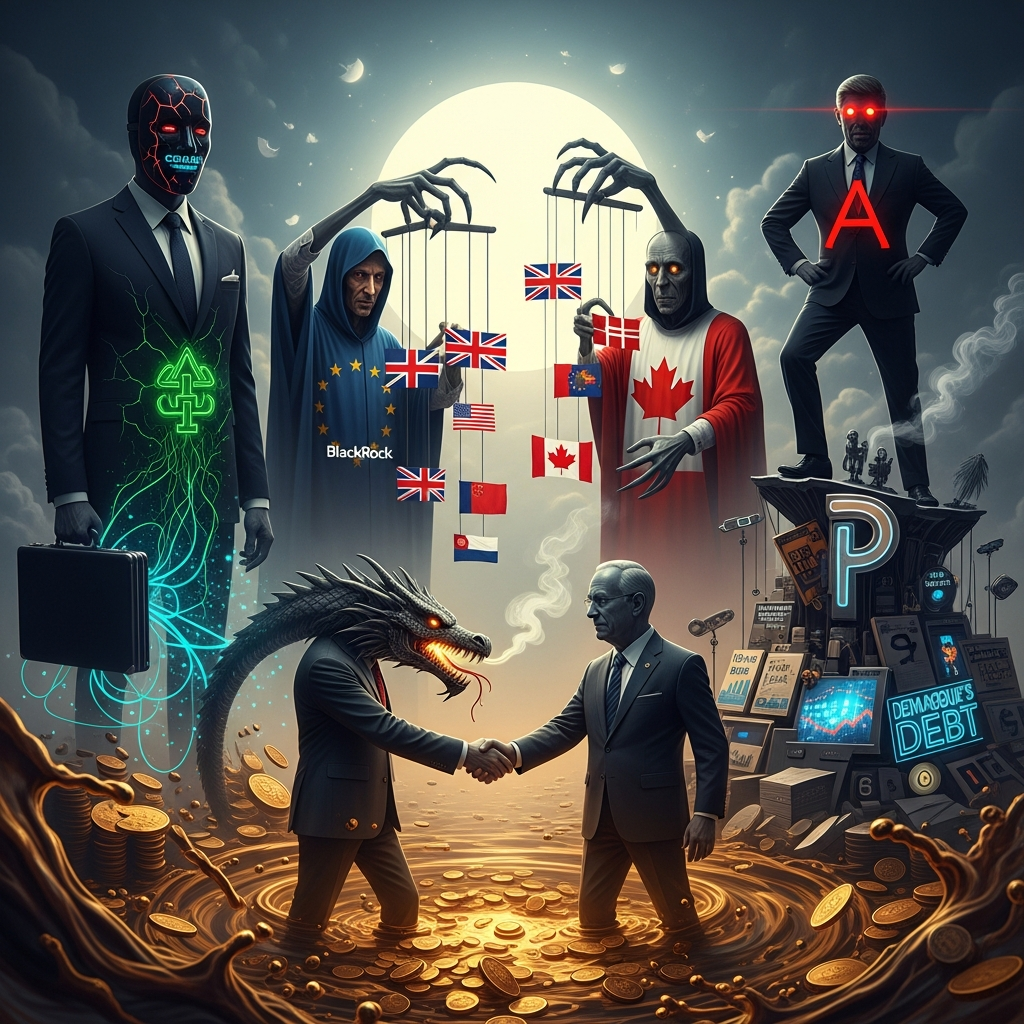
Four speeches at Davos 2026, by Larry Fink (BlackRock CEO and WEF interim co-chair), Ursula von der Leyen (European Commission President), Mark Carney (Canadian Prime Minister), and Donald Trump (U.S. President), were publicly framed as forward-looking calls for adaptation in a fractured world.

Mainstream coverage emphasised themes such as dialogue, autonomy, and economic revival, aligning with the WEF’s “Spirit of Dialogue” theme. However, beneath the surface lie truths that challenge the dominant narratives of global cooperation, democratic progress, and equitable capitalism.

These are rarely shared publicly because they expose elite hypocrisy, geopolitical manipulation, and systemic flaws that could erode public trust in institutions such as the WEF, the EU, and national governments.

They remain hidden due to media self-censorship (often tied to corporate sponsors like BlackRock), political expediency (e.g., avoiding backlash from powerful allies), and narrative control (e.g., suppressing views that label leaders as opportunistic rather than visionary).

Below, I outline one or two key under-the-surface truths per speech, substantiated with historical context, real-world examples, and explanations for their obscurity.

1. Larry Fink’s Speech: BlackRock’s “Evolution of Capitalism” Is a Veiled Defence of Cronyism, Not Reform. Fink’s address critiqued globalisation’s wealth concentration and AI’s risks, positioning the WEF as needing to “regain trust” through inclusivity. The under-the-surface truth is that this is a strategic rebranding to protect BlackRock’s role as a de facto global economic controller, profiting from the very inequalities it decries, and to challenge the mainstream view of Fink as a progressive capitalist.

  • Historical Context: This echoes the “robber barons” of the late 19th-century U.S., like John D. Rockefeller, who amassed fortunes through monopolistic practices (e.g., Standard Oil’s control of 90% of U.S. refining) while publicly advocating “scientific philanthropy” to deflect antitrust scrutiny. Similarly, BlackRock manages over $10 trillion in assets and influences corporate governance through proxy voting on issues such as ESG (Environmental, Social, Governance), which critics argue enforces ideological conformity rather than genuine reform.
  • Real-World Examples: BlackRock has been accused of exacerbating housing crises by buying up single-family homes post-2008, turning them into rentals and driving up prices—directly contradicting Fink’s call for “broad participation in gains.” In 2023, it faced lawsuits for misleading ESG funds that underperformed while charging premiums. finance.yahoo.com +1 At Davos, Fink hosted anti-globalist figures like Elon Musk, but this “inclusivity” masks BlackRock’s lobbying against regulations that would limit its asset-hoarding power.
  • Why It Remains Hidden: Exposing this would undermine the WEF’s image as a neutral convener and Fink’s as a benevolent leader, given BlackRock’s media investments (e.g., stakes in major outlets) that soften coverage. It challenges the mainstream “stakeholder capitalism” narrative, which portrays asset managers as societal stewards rather than profit-maximisers, risking backlash from investors and regulators.

A secondary truth: Fink’s push to “decentralise” Davos (e.g., events in Detroit) is less about listening and more about evading protests, as the forum has faced growing anti-elite demonstrations since the 2000s. facebook.com +12. Ursula von der Leyen’s Speech: “European Independence” Masks a Push for Supranational Control Over National Sovereignties.

2. Von der Leyen’s emphasis on EU autonomy (e.g., trade deals, Energy Union) and defiance against US tariffs was hailed as bold leadership. The hidden truth is that this “independence” centralises power in Brussels, eroding member states’ sovereignty and challenging the mainstream portrayal of the EU as a democratic union of equals.

  • Historical Context: This parallels the Holy Roman Empire’s (800-1806) facade of decentralised authority, where emperors like Charlemagne imposed unity through supranational edicts, often at the expense of local rulers. Post-WWII, the EU’s origins in the 1957 Treaty of Rome were driven by elites like Jean Monnet, who envisioned a “United States of Europe” to prevent nationalism, but critics argue it evolved into a bureaucratic empire, as seen in the 2005 French/Dutch referendums rejecting the EU Constitution amid fears of lost autonomy. politico.eu +1
  • Real-World Examples: Von der Leyen’s “EU Inc.” proposal for uniform company rules across states echoes the 2020 COVID recovery fund, which tied billions in aid to Brussels’ oversight, leading to accusations of “fiscal federalism” in Hungary and Poland. Her Greenland stance defends Danish sovereignty but ignores EU overreach in Arctic policy, where Brussels has pushed environmental regulations that override national interests (e.g., 2019 fishing bans protested by Greenlanders). weforum.org +2 Ukraine’s €90 billion loan reinforces EU military integration, but hides how it burdens taxpayers in poorer states like Greece.
  • Why It Remains Hidden: Revealing this would fuel Euroscepticism (e.g., Brexit-like movements), as the EU narrative relies on “unity” to justify expansion. Media, often EU-funded, downplays critiques, and von der Leyen’s family ties to German nobility (descended from aristocrats who centralised power) add a layer of elite continuity that’s politically toxic.

3. Mark Carney’s Speech: “Value-Based Realism” Is a Euphemism for Moral Compromise in Pursuit of Elite Interests. Carney’s call for middle powers to reject “living within the lie” and build coalitions was praised as pragmatic. The under-the-surface truth is that it rationalises deals with authoritarian regimes (e.g., China), prioritising economic leverage over human rights, challenging Canada’s mainstream image as a principled global actor.

  • Historical Context: This mirrors 1930s appeasement, where Britain’s Neville Chamberlain compromised with Nazi Germany for “peace in our time,” ignoring atrocities for strategic gains—a policy later discredited but hidden initially to avoid public panic. Carney’s banking background echoes the Bank of England’s pre-WWII gold dealings with Nazis, prioritising stability over ethics.
  • Real-World Examples: Carney’s China/Qatar partnerships overlook Uyghur genocides and labour abuses, as did his 2021 COP26 role, in which he praised China’s “green” efforts despite coal expansion. His “New World Order” slip in a Li Qiang meeting (framed as trade governance) fuels theories of globalist alignment. Canada’s Huawei leniency under Carney echoes this, trading security for economic ties.
  • Why It Remains Hidden: It undermines Canada’s “moral superpower” brand, which is vital to soft power. Carney’s WEF/Brookfield ties (managing $600 billion) suggest conflicts, suppressed by media to avoid labelling him a “globalist wing nut.”

4. Donald Trump’s Speech: Economic “Miracles” Rely on Distorted Facts and Unsustainable Debt, Masking Long-Term Decline. Trump’s boasts of US revival (e.g., 5.4% growth, deficit cuts) were touted as triumphs. The hidden truth is that these rely on cherry-picked data and ballooning debt, perpetuating a cycle of bubbles, challenging the mainstream MAGA narrative of unassailable American exceptionalism.

  • Historical Context: Similar to the Roaring Twenties of the 1920s, when Coolidge’s tax cuts fueled growth but masked speculative excesses, leading to the 1929 Crash. Trump’s tariffs echo the Smoot-Hawley Tariff Act of 1930, which worsened the Depression by sparking trade wars.
  • Real-World Examples: Trump’s Greenland claims distorted history (US bases were WWII defensive, not ownership); NATO critiques ignored US benefits from alliances. Economic figures exaggerated: Inflation claims overlooked core vs. headline mismatches, and “eight wars” under Biden were false. Wind farm attacks ignored the role of subsidies in US energy jobs.
  • Why It Remains Hidden: Fact-checks are downplayed in pro-Trump media to sustain the “winner” image; exposing debt reliance (e.g., $35 trillion national debt) risks economic panic. It challenges bipartisan fiscal irresponsibility, hidden to maintain voter confidence.

These truths, if mainstreamed, could dismantle elite facades, but their suppression preserves stability until ruptures force a reckoning.

List of Sources for the Analysis of Lesser-Known Truths in the Davos 2026 Speeches. Below is a compiled list of sources referenced or used to support the claims in the blog post. These are drawn from credible reports, articles, fact-checks, and analyses that align with the historical context, examples, and criticisms discussed. I’ve grouped them by speech for clarity, including titles, publication dates (where available), URLs, and brief descriptions of relevance. Note that some sources were selected for their direct relevance to the “under-the-surface” truths that challenge mainstream narratives. If a source is cited inline in the list, it uses the render component for proper attribution.

  1. Tennessee sues BlackRock over ‘misleading’ ESG strategy – Banking Dive (Dec 19, 2023) – https://www.bankingdive.com/news/tennessee-sues-blackrock-esg-strategy-larry-fink/702949 – Details lawsuits against BlackRock for misleading ESG claims, highlighting politicization and underperformance.
  2. BlackRock Gets Legal Warning Over ESG Funds From Mississippi – Insurance Journal (Mar 28, 2024) – https://www.insurancejournal.com/news/southeast/2024/03/28/766782.htm – Covers warnings and criticisms of Fink’s ESG push as hypocritical amid backlash.
  3. BlackRock hit by suit over ESG from Tennessee attorney general – Pensions & Investments (Dec 18, 2023) – https://www.pionline.com/esg/esg-suit-filed-against-blackrock-tennessee – Reports on legal actions accusing BlackRock of deceptive ESG practices.
  4. BlackRock CEO Larry Fink, who faced intense backlash for championing ESG, says he’s ‘ashamed’ the topic has become politicized – Yahoo Finance (Jun 26, 2023) – https://finance.yahoo.com/news/blackrock-ceo-larry-fink-championed-185205296.html – Discusses Fink’s retreat from ESG amid criticisms of cronyism.
  5. Court Says Inclusion of ESG Funds Could Breach Duty of Loyalty – PSCA (Jan 13, 2025) – https://www.psca.org/news/psca-news/2025/1/court-says-inclusion-of-esg-funds-could-breach-duty-of-loyalty – Links ESG activism to potential fiduciary breaches.
  6. Blackrock CEO Thinking Twice on Discriminatory ‘ESG’ Strategy? Hardly – NSSF (Jul 5, 2023) – https://www.nssf.org/articles/blackrock-ceo-thinking-twice-on-discriminatory-esg-strategy-hardly – Critiques BlackRock’s ESG as profit-driven despite public reform rhetoric.
  7. BlackRock CEO Larry Fink pushed to exit over ESG ‘hypocrisy’ – New York Post (Dec 7, 2022) – https://nypost.com/2022/12/07/blackrock-ceo-larry-fink-pushed-to-exit-over-esg-hypocrisy – Highlights calls for Fink’s resignation over perceived ESG hypocrisy.
  8. Mississippi hits BlackRock with cease and desist order over ESG investments – Legal Dive (Mar 28, 2024) – https://www.legaldive.com/news/mississippi-hits-blackrock-with-cease-desist-over-esg-investments-larry-fink/711662 – Legal actions against misleading ESG claims.
  9. BlackRock CEO Larry Fink warned over ESG – The Corporate Governance Institute – https://www.thecorporategovernanceinstitute.com/insights/news-analysis/blackrock-ceo-larry-fink-gets-a-warning-on-esg – Warns of criticisms on both sides of ESG debate.
  10. BlackRock’s Claim of Green Investment Has Always Been a Sham – Jacobin (Dec 19, 2023) – https://jacobin.com/2023/12/blackrock-larry-fink-green-investing-fossil-fuels-cryptocurrency – Accuses BlackRock of greenwashing while investing in fossils.
  11. Facts on BlackRock Buying Houses – BlackRock Official Site – https://www.blackrock.com/corporate/newsroom/setting-the-record-straight/buying-houses-facts – BlackRock’s denial, but contextually linked to criticisms.
  12. BlackRock house-buying conspiracy theory – Wikipedia – https://en.wikipedia.org/wiki/BlackRock_house-buying_conspiracy_theory – Explains criticisms and partial truths behind housing accusations.
  13. Is BlackRock buying single family homes made up or are they lying? – Reddit r/FirstTimeHomeBuyer – https://www.reddit.com/r/FirstTimeHomeBuyer/comments/1ff07fj/is_blackrock_buying_single_family_homes_made_up – Community discussion on indirect involvement via REITs.
  14. No, BlackRock Isn’t Buying All the Houses—Here’s What’s Really Driving Up Your Rent – Rutgers Bloustein (Oct 8, 2025) – https://bloustein.rutgers.edu/no-blackrock-isnt-buying-all-the-houses-heres-whats-really-driving-up-your-rent – Debunks but acknowledges real issues in corporate housing investments.
  15. No, BlackRock Isn’t Buying All the Houses—Here’s What’s Really Driving Up Your Rent – Investopedia (Oct 7, 2025) – https://www.investopedia.com/no-blackrock-isnt-buying-all-the-houses-heres-whats-really-driving-up-your-rent-11811479 – Similar analysis on fractional ownership.

Ursula von der Leyen’s Speech (Focus on Sovereignty Erosion)

  1. Special Address by the President von der Leyen: World Economic Forum – European Commission – https://ec.europa.eu/commission/presscorner/detail/da/speech_26_150 – Official transcript, including EU Inc. proposal.
  2. EU Inc: Von der Leyen’s 2026 Plan to Boost European Tech Innovation and Startups – Contextual Solutions (Blog) – https://www.contextualsolutions.de/blog/eu-inc-2026-european-tech-innovation-startups – Analysis of EU Inc. as centralizing tech power.
  3. The European Commission launches EU Inc., the long-awaited ’28th regime’ for startups – Tech.eu (Jan 20, 2026) – https://tech.eu/2026/01/20/the-european-commission-launches-eu-inc-the-long-awaited-28th-regime-for-startups – Details on unified structure’s potential sovereignty impacts.
  4. EU Inc.: Between Competitiveness Rhetoric and Institutional Reality – Central European Lawyers Initiative – https://ceuli.com/eu-inc-between-competitiveness-rhetoric-and-institutional-reality – Critiques EU Inc. as overriding national standards.
  5. Von der Leyen Reveals Three-Point Strategy to Secure Europe’s Global Power – AQ1B (YouTube) – https://www.youtube.com/watch?v=7-3uNbQl45Y – Video on centralization implications.
  6. Von der Leyen launches EU-Inc. at Davos as implementation fight looms – EU Perspectives (Jan 2026) – https://euperspectives.eu/2026/01/eu-inc-at-davos – Discusses potential national resistance.
  7. Sovereignty Crisis – Unleashing Europe’s Innovation Power – Bondo Foundation – https://bondo.foundation/sovereignty-crisis – Links competitiveness to sovereignty tensions.
  8. Europe to create “EU Inc” standard company structure – The Stack – https://www.thestack.technology/pan-european-legal-entity-eu-inc-go-ahead – Explains uniform rules’ impact on member states.
  9. EU Inc Unveils Policy Blueprint: Shaping the 28th Regime – Have Your Say! – The Recursive (Dec 4, 2024) – https://therecursive.com/eu-inc-policy-proposal-ecosystem-feedback-andreas-klinger – Pre-Davos proposal on pan-European model.
  10. What is digital sovereignty and how are countries approaching it? – World Economic Forum (Jan 10, 2025) – https://www.weforum.org/stories/2025/01/europe-digital-sovereignty – Broader context on EU sovereignty debates.
  11. Poland joins Hungary in threatening to block EU’s budget and coronavirus recovery package – POLITICO (Sep 18, 2020) – https://www.politico.eu/article/poland-joins-hungary-in-threat-to-block-eus-landmark-budget-and-recovery-package – On recovery fund’s rule-of-law conditions eroding sovereignty.
  12. Hungary, EU at odds over billions of euros of COVID funds – Reuters (Apr 28, 2022) – https://www.reuters.com/world/europe/hungary-says-no-obstacles-signing-agreement-eu-recovery-funds-2022-04-28 – Disputes over fund management and control.
  13. Rule of law-related ‘super milestones’ in the recovery and resilience plans of Hungary and Poland – European Parliament Briefing (2023) – https://www.europarl.europa.eu/RegData/etudes/BRIE/2023/741581/IPOL_BRI(2023)741581_EN.pdf – Analysis of conditions as supranational overreach.
  14. Money for nothing? EU institutions’ uneven record of freezing EU funds to enforce EU values – Taylor & Francis (2024) – https://www.tandfonline.com/doi/full/10.1080/13501763.2024.2406275 – Critiques uneven enforcement leading to federalism accusations.
  15. ECJ dismisses Hungary and Poland’s complaints over rule-of-law measure – The Guardian (Feb 16, 2022) – https://www.theguardian.com/law/2022/feb/16/ecj-dismisses-hungary-poland-complaints-eu-rule-of-law-measure – Legal battles over fund ties to democracy.
  16. Hungary, Poland, and Access to EU Funding: The EU Charts a New Course Under The Necessity of Legislation, Conditionality – University of Miami (PDF) – https://repository.law.miami.edu/cgi/viewcontent.cgi?article=1400&context=umiclr – Academic paper on rule-of-law backsliding and fund controls.
  17. Hungary, Poland vow to veto EU COVID fund mechanism – DW (Nov 26, 2020) – https://www.dw.com/en/hungary-poland-vow-to-veto-eu-covid-recovery-fund-mechanism/a-55742560 – Veto threats over sovereignty concerns.
  18. 100-suspension-Hungary.pdf – Daniel Freund (Jul 2022) – https://danielfreund.eu/wp-content/uploads/2022/07/100-suspension-Hungary.pdf – Report on fund suspensions and university control issues.
  19. EU budget blocked by Hungary and Poland over rule of law issue – BBC (Nov 16, 2020) – https://www.bbc.com/news/world-europe-54964858 – Blockade due to perceived overreach.
  20. Poland is obligated to investigate the potential misuse of funds from the EU’s Recovery and … – TVP World (Facebook) – https://www.facebook.com/tvpworldcom/posts/poland-is-obligated-to-investigate-the-potential-misuse-of-funds-from-the-eus-re/1364125085716147 – On misuse investigations tied to federalism.

Mark Carney’s Speech (Focus on Moral Compromises and China Ties)

  1. Canada’s deal with China signals it is serious about shift from US – BBC – https://www.bbc.com/news/articles/cm24k6kk1rko – On strategic shift, including human rights “red lines.”
  2. Mark Carney in China positions Canada for ‘the world as it is, not as we wish it’ – The Guardian (Jan 17, 2026) – https://www.theguardian.com/world/2026/jan/17/mark-carney-in-china-positions-canada-for-the-world-as-it-is-not-as-we-wish-it – Critiques pragmatism over principles.
  3. Joe Varner: Praising Beijing’s ‘new world order’ a costly misstep for Carney — and Canada – National Post – https://nationalpost.com/opinion/praising-beijings-new-world-order-a-costly-misstep-for-carney-and-canada – Direct criticism of moral compromises.
  4. Carney asked about human rights after announcing preliminary deal with China – Reddit r/CanadaPolitics – https://www.reddit.com/r/CanadaPolitics/comments/1qeo07e/carney_asked_about_human_rights_after_announcing – Community debate on rights vs. trade.
  5. Carney asked about human rights after announcing preliminary deal with China – CBC (Video) – https://www.cbc.ca/player/play/video/9.7048072 – Interview on human rights concerns.
  6. What’s edging Canada and China close? – Al Jazeera Inside Story (YouTube) – https://www.youtube.com/watch?v=42lTdHP0G8Y – Analysis of “historic” deals amid criticisms.
  7. Mark Carney Heads to Beijing to Discuss Canada-China Relations as U.S. Outlook Darkens – The New York Times (Jan 14, 2026) – https://www.nytimes.com/2026/01/14/world/canada/carney-trip-china-relations-trump.html – Human rights groups’ petitions against compromises.
  8. Mark Carney must explain how he has gone from saying China was Canada’s ‘biggest … – Glen Motz (Facebook) – https://www.facebook.com/GlenMotz/posts/mark-carney-must-explain-how-he-has-gone-from-saying-china-was-canadas-biggest-s/1319642096634181 – Calls out interference and abuses.
  9. Canada-Trump tensions grow after Carney ‘rupture’ speech – The Hill – https://thehill.com/policy/international/5703219-carney-trump-tensions-rise – Links to opposition criticism of China deals.
  10. A moment worth watching. Mark Carney just delivered the kind of clear‑eyed, unapologetically Canadian leadership the world needs – Instagram – https://www.instagram.com/reel/DTvzhpUkZ59 – Praise but context on human rights in global order.
  11. Canada’s Carney says ‘new world order’ still being determined – Yahoo – https://www.yahoo.com/news/articles/canada-carney-says-world-order-191243142.html – On “new world order” reference raising eyebrows.
  12. Canada PM Mark Carney spoke at the World Economic Forum, calling on “middle powers” to … – Instagram – https://www.instagram.com/reel/DTxrjFrFU-8 – Ties to China partnership and “new world order” slip.
  13. Canada’s PM Carney, China’s Premier Li confirm cooperation on economy, trade – NHK World (Jan 15, 2026) – https://www3.nhk.or.jp/nhkworld/en/news/20260116_02 – Meeting details with Li Qiang.
  14. Canada-China partnership ‘sets us up well for the new world order’, says Mark Carney – Irish Times (Jan 16, 2026) – https://www.irishtimes.com/world/asia-pacific/2026/01/16/canada-china-partnership-sets-us-up-well-for-the-new-world-order-says-mark-carney – Direct quote on “new world order.”
  15. Mark Carney is leaning into a “new world order.” Canada and China struck new trade and energy deals in Beijing as Ottawa adapts to shifting global power dynamics: bloom.bg/4t0ENrF – Bloomberg (Facebook) – https://www.facebook.com/bloombergbusiness/posts/mark-carney-is-leaning-into-a-new-world-order-canada-and-china-struck-new-trade-/1302333451752745 – Meeting with Li Qiang and Xi.
  16. in terms of the way that our relationship has progressed in recent months with china, it is more predictable (than the united states), and you see results coming from that. – Ian Bremmer (Facebook) – https://www.facebook.com/ianbremmer/posts/extraordinary-statement-by-canada-pm-mark-carney-in-beijing-inconceivable-a-year/1434614898029643 – Statement on predictability vs. US.
  17. Canada’s Carney says ‘new world order’ still being determined – NewsNation – https://www.newsnationnow.com/politics/carney-new-world-order-being-determined – Eyebrows raised over phrasing.
  18. Chinese leader Xi Jinping hails ‘turnaround’ in China-Canada ties as Mark Carney visits Beijing – BBC (Jan 15, 2026) – https://www.bbc.com/news/live/c9dvev9230gt – Prior meetings with Li Qiang.
  19. euronews | Canadian Prime Minister Mark Carney urged “middle powers” to move beyond nostalgia for the old global order and build new alliances to… – Instagram – https://www.instagram.com/reel/DTxR8ehFORr – Ties to WEF speech and China context.
  20. Carney calls it a new world order, investors see an old question on China risk – Wealth Professional – https://www.wealthprofessional.ca/news/industry-news/carney-calls-it-a-new-world-order-investors-see-an-old-question-on-china-risk/391357 – Investor concerns over phrasing and risks.

Donald Trump’s Speech (Focus on Economic Distortions and Greenland Claims)

  1. Fact-checking Donald Trump’s Davos speech – BBC – https://www.bbc.com/news/articles/c301jgd1qj6o – Broad fact-check of claims.
  2. Fact-Checking President Trump’s Davos Speech – The New York Times (Jan 21, 2026) – https://www.nytimes.com/2026/01/21/us/politics/fact-check-trump-davos-speech.html – Misleading Greenland and NATO history.
  3. Fact check: Trump’s speech at the World Economic Forum – DW – https://www.dw.com/en/fact-check-trumps-speech-at-the-world-economic-forum/a-75601073 – Debunks Greenland, NATO, and China wind claims.
  4. Fact check: Trump’s barrage of false claims in Davos about Greenland and NATO – CNN (Jan 21, 2026) – https://www.cnn.com/2026/01/21/politics/trump-davos-nato-greenland-fact-check – Falsehoods on history and alliances.
  5. Eight wars settled and Chinese windfarms: factchecking Trump’s Davos claims – The Guardian (Jan 21, 2026) – https://www.theguardian.com/us-news/2026/jan/21/trump-davos-speech-factcheck – Dubious claims on wars and windfarms.
  6. Fact-checking Donald Trump’s Davos speech on Greenland – DW News (YouTube) – https://www.youtube.com/watch?v=e12yopQGrWk – Greenland and tariffs fact-check.
  7. From Wind Farms to Stolen Elections: Fact-Checking Donald Trump’s Speech at Davos – Time – https://time.com/7355689/trump-davos-fact-check – Wind farms and election claims.
  8. CNN Fact Checker: Trump’s Davos Speech ‘Barrage Of False Claims’ – Forbes (Jan 21, 2026) – https://www.forbes.com/sites/markjoyella/2026/01/21/cnn-fact-checker-trumps-davos-speech-barrage-of-false-claims – Rigged election and wars falsehoods.
  9. Fact-checking Donald Trump’s Davos speech on Greenland, US economy – PolitiFact (Jan 21, 2026) – https://www.politifact.com/article/2026/jan/21/live-fact-check-trump-davos-speech – Greenland and housing market claims.
  10. FACT FOCUS: Trump highlights familiar false claims as he reviews his first year back in office – AP News – https://apnews.com/article/fact-check-trump-rigged-election-eight-wars-inflation-220f515728383d5205c3748259b2cc0f – Stagflation and inflation distortions.
  11. Fact-Checking President Trump’s Davos Speech – The New York Times (Jan 21, 2026) – https://www.nytimes.com/2026/01/21/us/politics/fact-check-trump-davos-speech.html – Greenland history distortions.
  12. President Trump’s Davos remarks on Greenland misrepresented US and Danish history – Poynter (2026) – https://www.poynter.org/fact-checking/2026/did-greenland-ever-belong-to-usa – WWII bases not ownership.
  13. Fact-checking Trump’s Greenland-focused Davos speech – PBS News – https://www.pbs.org/newshour/politics/fact-checking-trumps-greenland-focused-davos-speech – Misleading on Denmark/US history.
  14. Trump’s Greenland Envoy Called Out for Embarrassing WWII Mistake – Yahoo (Jan 13, 2026) – https://www.yahoo.com/news/articles/trump-greenland-envoy-called-embarrassing-224349874.html – Historical inaccuracies.
  15. Trump’s stated reasons for taking Greenland are wrong – but the tactics fit with the plan to limit China’s economic interests – The Conversation – https://theconversation.com/trumps-stated-reasons-for-taking-greenland-are-wrong-but-the-tactics-fit-with-the-plan-to-limit-chinas-economic-interests-273548 – Coercive diplomacy critiques.
  16. The trouble with maps: Greenland’s allure for Trump is based on an illusion – AFR – https://www.afr.com/world/europe/the-trouble-with-maps-greenland-s-allure-for-trump-is-based-on-an-illusion-20260122-p5nw68 – Map distortions inflating importance.
  17. Greenland Is a Lot Smaller Than You—and Trump—Probably Think. Allow Me to Explain. – Reddit r/TrueReddit – https://www.reddit.com/r/TrueReddit/comments/1qk0jgc/greenland_is_a_lot_smaller_than_youand – Map projection illusions.
  18. Trump’s new ‘gangster’ threats against Greenland, allies, cross line – Responsible Statecraft – https://responsiblestatecraft.org/trump-greenland-tariffs – Aggressive tactics criticism.
  19. Trump’s Greenland Obsession Is Madness. Can’t We Just Say That? – Foreign Policy (Jan 22, 2026) – https://foreignpolicy.com/2026/01/22/trumps-greenland-obsession-media-analysis-sanewashing-cognitive-bias – Media misrepresentation of actions.
  20. WATCH: Scholar Criticizes US Rhetoric on Greenland, Says It Threatens Global Stability – YouTube – https://www.youtube.com/watch?v=Zyk2Obt0h5o – Rhetoric and stability threats.

THE WILHELM DOCTRINE: DISMANTLING THE IMPULSE REGIME

We need to stop flattering the Trump regime with the assumption that they are executing a grand authoritarian design. We are paralysed because we keep looking for the rigid discipline of a fascist rise, when in reality, we are watching the erratic, bombastic, and ultimately self-destructive flailing of a Hollow Regime.

We are trapped in a room, not with a mastermind playing 4D chess, but with a toddler who has found a loaded gun. The regime operates on the “Veruca Salt” algorithm: I want it now. It governs by tantrum, entitlement, and grievance-fueled hissy fits. It demands to dominate every opponent, simultaneously threatening allies, bullying neutrals, and waging war on its own population without any plan for how to sustain the fight.

In doing so, they have committed the classic blunder of Kaiser Wilhelm II, the last German Emperor: Encirclement by Incompetence. They have created a two-front war they cannot sustain, alienating the global economic order while sitting atop a fragile, debt-ridden, and running-on-fumes domestic economy.

Wilhelm’s Germany did not fall because it lacked weapons; it fell because it was blockaded. It ran out of friends, it ran out of credit, and it ran out of food. That is our blueprint. But to execute it, we must first understand the terrifying psychological and biological reality of the man at the helm.

PART I: THE ANATOMY OF A HOLLOW KING

To dismantle the regime, we must strip away the myths of the “Strongman.” Donald Trump is not an ideologue; he is a vessel.

1. The Osmotic Leader (The Louis XV Syndrome)
The “Hidden Truth” is that Trump lacks object permanence in governance. He does not hold positions; he holds conversations. His policy at any given moment is simply the echo of the last person who flattered him. Like the French King who let his mistresses dictate statecraft, Trump is an empty avatar filled by the most aggressive voice in the room. He is easily manipulated because he follows the path of least resistance to praise.

2. The Paper Tiger (The Nicholas II Complex)
For all the “You’re Fired” bluster, Trump suffers from pathological Conflict Aversion. He is physically terrified of face-to-face friction. He is a keyboard warrior who shrinks when the room goes silent. Like the ineffective Czar Nicholas II, he governs by tweet because he cannot govern by eye contact. He grants concessions to dictators not because he is compromised, but because he fears the awkwardness of saying “no” to a terrifying man.

3. The Boredom of Statecraft (The Edward VIII Factor)
He loves the role of King but despises the job of President. He finds the machinery of government incredibly boring. He destroys institutions not always out of malice, but out of neglect. He is a creature of “Executive Time,” unmoored from the reality of logistics.

PART II: THE BIOLOGICAL REALITY (THE SHIFT)

However, the analysis cannot stop at psychology. We must confront the psychiatric emergency: The Biological Decay.

We are witnessing the collision of Malignant Narcissism with Frontotemporal Disinhibition. The frontal lobes of the brain serve as the “brakes”—they provide empathy, judgment, and inhibition. Clinicians have long noted that when these areas atrophy, the brakes fail, but the engine (the narcissism) keeps revving.

1. The Removal of Guardrails
Previously, Trump’s narcissism was checked by a survival instinct. That instinct is physically eroding. He is no longer calculating the risk of his outbursts; he is simply surrendering to the impulse. This explains the shift from Theatre (2016’s performative bullying) to Reality (today’s raw enforcement). A bully posturing is manageable; a bully who has lost the neurological capacity to distinguish between an intrusive thought and an executive order is an existential threat.

2. The Physiology of Shame
We must also acknowledge the physical decline—the incontinence, the slurred speech, the confusion. For a Narcissist, image is god. To lose control of one’s own body is the ultimate humiliation. This internal shame fuels external rage. He is lashing out at the country because he cannot command his own biology. He is a “Sundowning Caesar,” raging at the dying of the light, but he still holds the nuclear codes.

PART III: OPERATION SUPPLY SHOCK

You cannot negotiate with dementia. You cannot deter a man who has lost the capacity for foresight. Therefore, our strategy is not to fight him, but to starve the regime.

The regime relies on resources it does not own: data, credit, legitimacy, and professional services. We must make the cost of those resources ruinous. The question we force on every enabler is: “Is it now more expensive to comply than it is to resist?”

1. The International Front: Data Sovereignty
The regime runs on “services and data” as much as oil and bombs. The EU, UK, and Japan must weaponise their regulatory power. If US tech giants act as the surveillance arm of a hostile regime, allied nations must threaten IP Nullification. They must say: “If you function as a tool of the Trump regime, your patents are void here. Your data transfer agreements are suspended.” We force the boardrooms of Silicon Valley to choose: The Kaiser or the Global Market?

2. The Financial Front: The Bond Vigilantes
The regime is funding its tantrums on a national credit card. We must shatter the illusion that US Treasuries are a “safe asset.” We organise a divestment campaign that treats US debt under this regime as “Toxic Assets.” If pension funds and sovereign wealth funds stop showing up at the bond auctions, yields spike. Borrowing costs skyrocket. The regime’s ability to buy loyalty evaporates. A tyrant with no money is just a crazy old man shouting at clouds.

3. The Internal Front: Weaponised Boredom
Inside the machinery of the state, we advocate for Malicious Compliance. When the regime appoints a “Caligula’s Horse” to run an agency, the civil servants must not quit. They must become sand in the gears. Demand written clarification for every unethical order. Misunderstand instructions. Slow-walk every approval. Weaponise the President’s short attention span. If a fascist plot takes three weeks of boring meetings to execute, he will lose interest.

4. The Social Front: Reputational Nuclear Winter
We strip the cover of “neutrality.” The lawyers, consultants, and accountants facilitating this regime are the “Good Germans” of the 2020s. We must make them pariahs. If a law firm argues for the regime’s abuses, they lose all its corporate clients. We personalise the cost. We make it so that collaboration with the regime is professional suicide.

THE ENDGAME

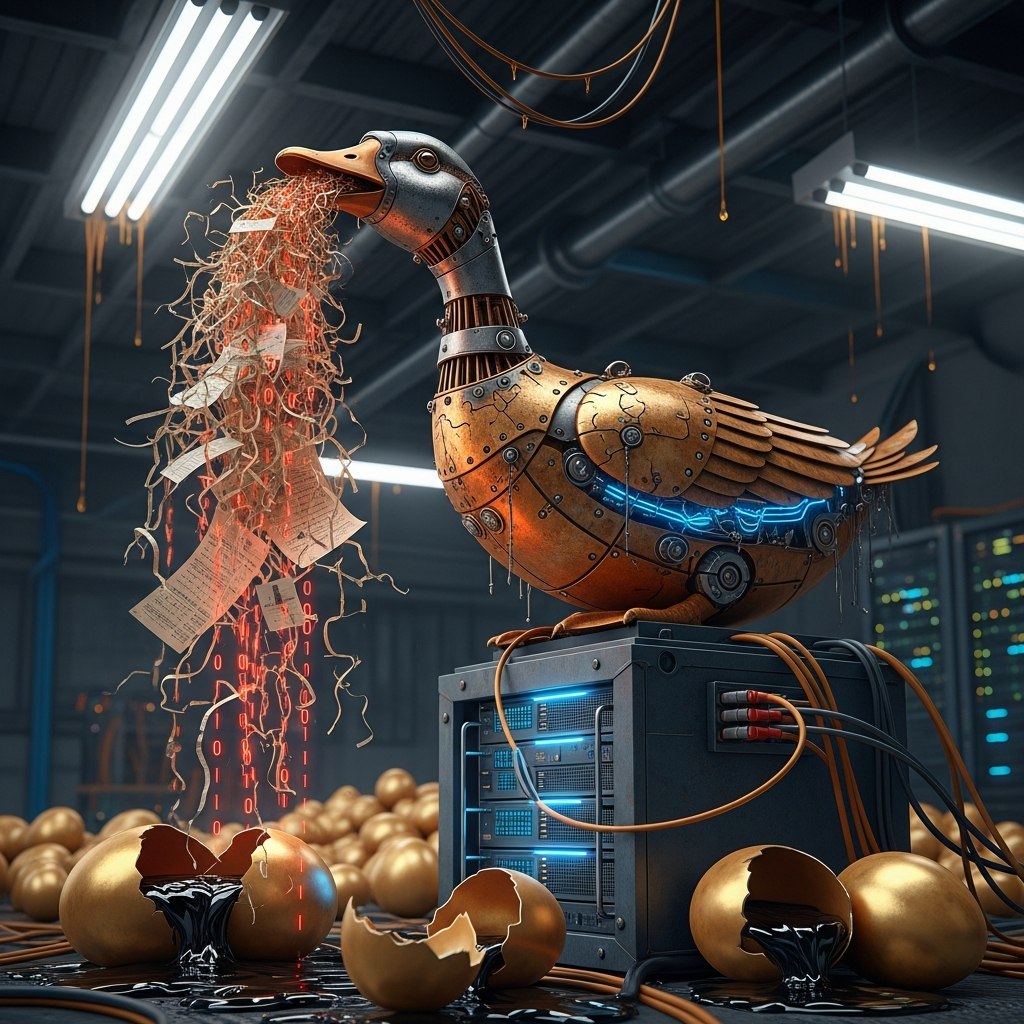
The Trump regime is a Golden Goose that demands to be fed. It has no strategy for what to do when the food runs out.

They are counting on us to play by the old rules, to protest in designated zones while they loot the treasury. Instead, we are going to cut the power. We will spike their borrowing costs, blockade their data, gum up their agencies, and shun their enablers.

They want a war of attention. We will give them a war of attrition.
They want it all, and they want it now. We ensure they get nothing but the bill.

Dementing, Despotic, Derranged. What To Do When The President’s Brain Is Missing.

We need to have a serious chat about the tidal wave of noise coming from the other side of the pond because it feels overwhelming. It feels like we are watching a grand, terrifying master plan unfold. Steve Bannon’s flood the zone with shit doctrine is running on steroids. However, I want us to pause, take a deep breath, and look closer at what is actually happening. We are not trapped in a room with a chess grandmaster. We are locked in a supermarket aisle with a toddler who has found a loaded gun and is demanding a chocolate bar.

This is the sceaming Toddler approach to governance. It screams “I want it now” with zero regard for the consequences or the cost. The regime threatens allies, bullies neutrals, and wages war on its own population all at once. It is a display of insatiable greed and grievance. Yet this chaotic flailing reveals a massive fragility. They have committed the classic blunder of Kaiser Wilhelm II by encircling themselves with incompetence. They have started a fight on every front while sitting on a crumbling economy and running on borrowed time.

We can find comfort in understanding the human reality here. The man at the centre is not an ideologue. He is a hollow vessel. Think of Louis XV, whose policy was merely an echo of the last person who flattered him. Trump holds conversations, not positions. He absorbs the energy of the most aggressive voice in the room because agreeing is easier than thinking. He is a paper tiger, terrified of genuine face-to-face conflict, governing by digital shouting because the friction of real human contact is too frightening for him. He loves the role of King but finds the actual job of President terribly boring.

Then we have the biology of it all. We must look at this with a clinician’s eye and a bit of kindness for the human condition, even as we acknowledge the danger. We are watching the collision of malignant narcissism with frontotemporal disinhibition. The frontal lobes are the brain’s braking system. They handle empathy and judgment. When those brakes fail, the engine still revs, but the car has no way to stop. The shift we see now is from theater to reality. The survival instinct that once kept the worst impulses in check is eroding. He is lashing out because he is losing control of his own narrative and perhaps even his own biology. It is the rage of a “Sundowning Caesar.”

So, how do we handle a regime that runs on impulse and borrowed credit? We do not fight the noise. We starve the beast.

We apply a strategy of “Supply Shock.” This regime relies on resources it does not own. It needs data, credit, legitimacy, and professional services to function. We simply make those things too expensive to maintain.

First, we look at the data. The regime runs on digital services. Our friends in the EU and the UK can turn off the tap. We say that if US tech giants want to act as the surveillance arm of a hostile state, their patent protections are void here. We force the shareholders to choose between the regime and the global market.

Next, we look at the money. The tantrums are funded by a national credit card. We need to shatter the illusion that this debt is safe. If pension funds and global investors view these bonds as toxic assets issued by an unstable government, borrowing costs will skyrocket. A tyrant with no money is effectively silenced.

Then we have the internal machinery. We call for a creative kind of friction. We encourage the civil servants and the workers to stay in the room and become the sand in the gears. We use malicious compliance. We demand written clarification for every order that is unclear. We slow-walk the paperwork. We weaponise the boredom. If a dangerous plan takes three weeks of tedious meetings to execute, this President will lose interest and move on to the next shiny object.

Finally, we address the enablers. We strip away the comfort of neutrality. The lawyers and consultants helping this operate need to feel the social cost. We make it clear that facilitating this regime is professional suicide. We decline their dinner invitations. We close our wallets to their firms.

The Trump regime is a Golden Goose demanding endless attention and resources. It has no strategy for when the larder is empty. They are counting on us to play by the old rules. Instead, we are going to cut the power, spike the costs, and block the data. They want everything, and they want it immediately.

We are going to ensure they get nothing but the bill, and you won’t believe the total…

Friction, Grit and Community

When I started out as an artist in the mid 80’s, I was young and had tremendous energy and enthusiasm for the arts. I had a steely determination to move from the analytical and critical headset that I had been taught at school and college, which I had excelled in, to the somewhat unknown and unknowable world of the arts as a performer, practitioner and facilitator.

I got hands-on training in street theatre at Bretton Hall from Charivari or The Salami Brothers, as they were known on the Festival circuit. A whole new world opened up to me. I learnt how to eat fire, breathe fire, juggle, walk on stilts, lie on a bed of nails, dance on broken glass, escape from chains, ropes, handcuffs, to emerge naked from a mail sack, mind read, present magic tricks in the round and hold an audience in my thrall with a silver tongue and attitude.

I learnt about storytelling and theatre from Taffy Thomas, who helped me weave a narrative that drew on and built on the skills I had already learnt. I managed to refine my skills, adding bagpipes and assorted musical instruments to my bag of performing tricks. All this took tremendous focus, painstaking attention, research, planning and a steely determination to succeed and make my work as a performer pay.

I was lucky to attend ‘Fool Time’ at Bristol Circus Space with Bim Mason, Franki Anderson, Guy Dartnell and John Lee, who taught me how to access my inner fool and be playful, with no fear, in front of an audience. The values of tenderness, humanity, humour, and the hilarity that a true understanding of human nature and its dark side can bring when challenged by circumstance, fate, or self-interest.

In the world of Street Theatre, I had a community of supportive friends, fellow artists and performers exploring the obscure and interesting: pyrotechnics, circus theatre, illusions, performance styles, music. We revelled in what we saw, shared and tried out. We met regularly at events and often visited each other during quiet times. We drew close and formed strong bonds in the face of challenging work conditions, common interests and experiences.

Which, in a roundabout way, brings me on to what I want to discuss: as artists, we need Friction, Grit and Community. They are the prerequisites to creating art that is human and has value.

Friction – art needs to be challenging and push at the edges of our experiences; it must present us with an activity in which we can think, make, or say something new. This isn’t easy and requires a lot of cognitive thought and effort. Which brings me on to

Grit – is energy, passion, focus, determination, resolve. Having the power, patience and intelligence to manifest an intention, bringing an idea into the real world for all to see and share.

Community – your audience, real people who engage with your work, give it sustained and focused attention. Audiences and artists who ask why, how, what, and when. Moving from passive to active engagement, becoming co-creators and fellow explorers.

This is only part of the picture; we have to add human Intelligence, independence, agency, humanity, calculated risk-taking, humour, a joy in life and living shared devils and angels.

AI cheats us out of all of this; it robs us by providing quick, easy answers that stop us from thinking and engaging with the ideas in our minds that need friction, grit and community to grow. It provides quick, easy results and content creation, but as artists, we need to be better than Silicon Valley’s quick fix. We need to be thinking longer and harder and articulating ideas that are pertinent, impertinent and disruptive to the billionaire class.

People think that AI is about computers getting smarter; it’s really about human agency getting cheaper, becoming biddable, and eventually becoming obsolete. Empowerment is the pitch, dependency is the business model. Stop trading your intuition for convenience. Every time you let an algorithm make your choice.

The system owns the path of least resistance; don’t walk it

We need to talk critically about Farage and his team of Tory drop-outs.


nigel-farage-pub-boar

Farage is attracting dead Tories to him like a body collector during the bubonic plague. We have a tax-avoiding Bond Villain with a penchant for tax avoidance, a nutty bonkbuster writer with a record of nepotism, huge expenses and unparalleled stupidity, and honest Bob, a failed Tory Leadership candidate, who’d rather line the pockets of his mates and confront fair dodgers on the tube in search of clicks than offer any serious political thoughts on how to get out of the situation the Tories and Farage’s Brexit created.

They are not alone; they are part of a parcel of rogues, rats jumping onto the vile vessel ‘Reform’ as an act of political survival, defection and infection in one move. Let’s list them for the sake of completeness:

Lee Anderson, the potty-mouthed ex-chairman of the Tory Party and paid pub bore on GBNews; Jonathan Gullis, the unemployed windbag blaming “woke” witchcraft for his unemployment. David Jones, the expense-swindling bigot who pocketed £81k from a public flat flip while deeming gay parents unfit for kiddie-rearing; Dame Andrea Jenkyns, the bird-flipping banshee who claims Reform bribes lured her in; Danny Kruger, the shadowy scripture-thumper under fire for £55k anti-euthanasia slush funds, peddling “cultural Marxism” paranoia against mercy killings; Lucy Allan, the threat-faking fabulist who doctored videos to smear foes and bullied staff with venomous voicemails till they snapped.

Sir Jake Berry, the out-of-touch oracle advising broke Brits to “earn more” or slash heating amid his party’s economic apocalypse; Anne Marie Morris, the serial whip-loser who casually dropped the N-word in Brexit babble like it was afternoon tea chit-chat; Marco Longhi, the sly divider bolding Indian surnames in letters to Pakistani voters to stir ethnic pots under a unity facade; Ross Thomson, the grabby ghost cleared of barroom gropes but forever stained by sleazy accusations.

It goes on, there’s Chris Green, the tinfoil tweeter sharing Rothschild rants and New World Order nonsense while decrying lockdowns as dictatorial drivel; Lia Nici, the flag-fetish fanatic spotting Brexit sabotage in every shadow, telling unpatriotic plebs to sod off while delivering deranged Boris defenses like a loyal loon; and Ben Bradley, the eugenics-teasing snob pushing vasectomies for the jobless, linking free lunches to crack dens and brothels, and fabricating Corbyn spy yarns for cheap headlines.

It has never been about Farage, not for one second. Farage is just the lightning rod. The real story is the people who finally saw themselves in him and feel validated by what they see. I believe most of them will blow away, like yesterday’s newspapers, when the cult collapses, like embarrassed fans of a one-hit wonder.

Many of them will swear they were never really into him. The Reform amnesia is going to be epic. I used to wonder how it was possible that Farage could have surged in 2016 and again in 2024, taking votes, flipping seats and shaking the establishment, given how emotionally toxic, morally vacant, and clumsily psychologically manipulative he is. I don’t wonder anymore. I think he is successful for that exact reason. He isn’t just a party leader; he is a dark mirror that shows and appeals to our worst instincts in a time of engineered economic and geopolitical crisis.

If you are a xenophobe, he’s your man.

If you are a racist, he’s your man.

If you are a Eurosceptic, he’s your man.

If you mock multiculturalism, he’s your man.

If you hated intellectual elites, he’s your man.

If you are a climate sceptic, he’s your man.

If you enjoy stirring up anti-immigrant sentiment, he’s your man.

If you’d done absolutely nothing to confront your personal issues, he’s your man.

If you are a serial party-hopper, he’s your man.

If you stiff political allies, he’s your man.

If you are a conman, he’s your man.

If you mock people’s backgrounds, he’s your man.

If you long for a toxic Daddy, he’s your man.

If you are dissociated and disembodied, he’s your man.

If you are unconscionable in every economic dealing, he’s your man.

If you lie as naturally as breathing, he’s your man.

If you can’t embrace a diverse Britain, he’s your man.

If you are a Little Englander, he’s your man.

If your ego runs riot and replaces logic with oily charm, he’s your man

If you are a sociopath who cares not one iota about other humans, he’s your man.

If you think the NHS needs radical change, he’s your man.

If you believe the 2024 general election was fundamentally an “immigration election”, he’s your man.

If you claim to have done more than anyone else to drive the far-right out of British politics, even as your party faced ridicule for it, he’s your man.

If you are Nathan Gill, he’s your man.

If you are Putin, he’s your man.

If you are Trump, he’s your man.

If you can pay him, he’s your man.

If he had only two of these traits, he could never win; but because he had hundreds of them and millions of people recognised themselves in at least one, he might. This has never been about Farage. It has always been about the people whose worst instincts were finally validated.

Farage didn’t create the cruelty; he licensed it. He handed out permission slips for hate. He is merely a symptom of a far deeper disease: collective toxicity. If there is one sentence that explains Farage’s power, it is this:

“He says the things I’m thinking.”

That’s the part that should chill the spine.

Who knew that millions of Britons were harbouring such unconscionable thoughts? A country seething with resentment over immigration and diversity, ready to undermine democracy and institutions, fueled by far-right polarisation, Russian ties, poll manipulation, and media corruption, to desperate to reclaim a sense of control, agency and identity?

Perhaps we were living in a fool’s paradise. We aren’t anymore.

They used to call the Tories the ‘Nasty Party’, but that was in the good old days. Reform has raised the bar and lowered the price of admission.

We live in far more interesting times.

Creating Art In The Age Of AI.

Here’s a series of actionable instructions to guide yourself as an artist in the AI era. Treat these as reminders to refocus on your intrinsic motivations and leverage your unique human strengths.

  1. Reflect on Your Core Motivation: Ask yourself why you’re making art in the first place. Write down your reasons – is it for personal expression, joy, or something else? If it’s primarily for external validation like social media likes, challenge that by creating one piece this week purely for yourself, without sharing it.
  2. Define Your Audience and Goals: Clarify who your art is for – yourself, a small circle, or the public? If public, define what success means to you (e.g., meaningful feedback vs. viral hits). Set a personal success metric, like “complete one project that sparks a conversation,” and track progress toward it monthly.
  3. Test Your Commitment: Imagine your entire creative setup is destroyed. Would you rebuild it? If yes, affirm your passion by dedicating time each day to creating without excuses. If not, explore other fulfilling activities to redirect your energy.
  4. Embrace Human Uniqueness: Remember that AI lacks intent and personal experience. Translate your abstract ideas or emotions into art deliberately – start by journaling one lived experience per session and turning it into a musical element or artwork.
  5. Avoid Genre Traps: If working in a structured genre, don’t just replicate patterns (which AI excels at). Intentionally break rules: Add an unexpected element and keep it human (e.g., fusing bal folk tunes with highland pipes and smallpipes) in your next piece to infuse originality from your mind.
  6. Prioritise Novelty Over Perfection: Chase ideas that intrigue you personally, not flawless output. Experiment with “weird gremlin thoughts” – set aside time weekly for accidental or random creations, then refine them into intentional work.
  7. Differentiate Hearing vs. Listening: Aim to make art that invites active engagement and conversation, not passive background filler. Review your recent work: Does it provoke introspection or critique? Revise one piece to emphasise emotional depth or uniqueness.
  8. Leverage Limitations as Strengths: Use your imperfections (e.g., skill gaps) as opportunities for innovation. Identify a weakness in your technique, then create a workaround in your next project – document how it adds a personal “U” (unique touch) to your art.
  9. Rise Above the AI Noise: In a sea of average AI content, make your work stand out by highlighting overlooked ideas. Observe something unnoticed in your daily life and “shove it in faces” through your art – produce one such piece this month.
  10. View AI as a Bar-Raiser: See AI as making this an exciting time for artists. Commit to creating something unique or weird regularly, knowing it gains value against infinite “slop.” Track how this mindset shifts your output over the next few projects.
  11. Final Affirmation: Remind yourself daily: Your art is a reflection of your human condition – feelings, experiences, and soul. AI is just output; yours is an expression of self. If doubt creeps in, revisit this list and create anyway.

Lesser-Known Truths About AI’s Inability to Question or Redefine Art. The statement “The machine doesn’t care. It knows exactly what art is. It has no reason and no ability to question what it could be” highlights a core philosophical critique of AI in creativity: it operates within predefined patterns without genuine intent, emotion, or the capacity for existential questioning. While mainstream narratives often celebrate AI as a democratising force in art (e.g., tools like DALL-E or Midjourney making creation more accessible), lesser-known truths challenge this by exposing AI’s fundamental limitations and their broader implications for humanity. These ideas are rarely shared publicly because they undermine the trillion-dollar AI industry, which thrives on hype, investment, and the promise of infinite productivity. Tech giants like Adobe and Meta promote AI as “creative” to sell subscriptions and data-training models, suppressing critiques that could slow adoption or invite regulation. Below, I outline key under-the-surface truths, supported by historical context, real-world examples, and explanations for their obscurity. 1. AI Art is a “Philosophical Zombie” – It Mimics Without Consciousness. AI can replicate artistic styles flawlessly but lacks inner experience or intent, resulting in hollow imitations rather than true expressions. This challenges the mainstream view that AI’s technical prowess equates to creativity, revealing it as mere pattern-matching.

  • Historical Context: This draws from René Descartes’ 1637 dictum “I think, therefore I am,” which tied existence to self-aware thought. More directly, it echoes John Searle’s 1980 “Chinese Room” argument: a person following rules to simulate understanding Chinese doesn’t truly comprehend it. Similarly, AI “understands” art only through data, not lived reality. Early algorithmic art in the 1960s (e.g., AARON by Harold Cohen) was celebrated, but philosophers like Searle warned it lacked soul, a critique buried as AI evolved.
  • Real-World Examples: In 2022, an AI-generated piece won the Colorado State Fair’s fine art competition, sparking backlash from artists who argued it lacked emotional depth. csferrie.medium.com Midjourney’s early versions struggled with human hands, symbolising its detachment from embodied experience—AI doesn’t “feel” anatomy like a human artist does. blog.jlipps.com
  • Why It Remains Hidden: Acknowledging this would deflate AI hype, as companies frame tools as “co-creators” to attract users. Investors and media focus on output quality to avoid philosophical debates that could lead to ethical restrictions, such as EU AI regulations that emphasise transparency.

2. AI Erodes Human Creative Capacity Through Atrophy and Over-Reliance. By handling the “hard” parts of creation, AI causes human skills to wither, turning art into a commodified process rather than a form of personal growth. This counters the mainstream claim that AI “lowers barriers” to creativity, showing it instead homogenises output and stifles innovation.

  • Historical Context: As with the 15th-century printing press, which displaced scribes but forced writers to innovate (e.g., leading to the rise of the novel), photography in the 1830s threatened painters until they embraced abstraction (e.g., Impressionism). Critics like Walter Benjamin in 1935 warned of art’s “aura” being lost in mechanical reproduction; today, AI amplifies this by automating not just reproduction but also ideation.
  • Real-World Examples: Artists using AI prompts often iterate endlessly to approximate their vision, losing direct agency—e.g., a digital artist settling for AI’s “approximation” rather than honing their skills. blog.jlipps.com In music, tools like Suno generate tracks, but users report diminished satisfaction from not “struggling” through composition, echoing how auto-tune reduced vocal training in pop. aokistudio.com
  • Why It Remains Hidden: The AI industry markets efficiency to creative professionals (e.g., Adobe’s Firefly), downplaying the long-term erosion of skills to maintain market growth. Public discourse prioritises short-term gains like “democratisation,” as admitting to atrophy could spark backlash from educators and unions concerned about job devaluation.

3. AI Exposes the Illusion of Human Originality, Revealing Most “Creativity” as Formulaic AI’s ability to produce “art” faster than humans uncovers that much human work is pattern-based remix, not true novelty—challenging the romanticised view of artists as innate geniuses and forcing a reevaluation of what “creative” means.

  • Historical Context: The Renaissance idealised the “divine” artist (e.g., Michelangelo), but 20th-century postmodernism (e.g., Warhol’s factory art) questioned originality. AI builds on this; Alan Turing’s 1950 “imitation game” test foreshadowed machines mimicking creativity without possessing it, but his warnings about over-attribution were overshadowed by computational optimism.
  • Real-World Examples: A Reddit discussion notes AI “revealing how little we ever had” by outperforming formulaic genres like lo-fi beats or stock photos, where humans were already “echoing” patterns. reddit.com In 2023, AI-generated books flooded Amazon, exposing how much publishing relies on tropes—authors admitted their “unique” stories were easily replicated. lateralaction.com
  • Why It Remains Hidden: This truth wounds egos in creative industries, where “originality” justifies high valuations (e.g., NFTs). Tech firms and media avoid it to prevent demotivation, as it could reduce user engagement with AI tools—why prompt if it highlights your own mediocrity?

4. AI Art Detaches Us from Authentic Human Connection and Imperfection AI’s frictionless perfection creates idealised content that erodes empathy and growth, as art traditionally thrives on flaws and shared vulnerability—undermining the idea that AI enhances human expression.

  • Historical Context: Existentialists like Jean-Paul Sartre (1943) emphasised authentic self-expression through struggle; AI bypasses this. In the 1960s, Marshall McLuhan’s “medium is the message” critiqued how technology alters perception—AI extends this by simulating emotions without feeling them, akin to early CGI’s “uncanny valley” debates.
  • Real-World Examples: Social media filters and AI portraits promote flawless selves, linked to rising mental health issues; a podcaster notes AI “detaches you from the reality of growth.” creativeprocess.info In visual art, AI’s inability to “risk” (e.g., avoid bold failures) results in bland aggregates, as seen in critiques of DALL-E outputs that lack “visceral” passion. aokistudio.com +1
  • Why It Remains Hidden: Platforms like Instagram benefit from idealised content for engagement metrics. Revealing this could invite scrutiny of AI’s role in societal disconnection, clash with Silicon Valley’s narrative of “connecting the world,” and risk lawsuits or boycotts from mental health advocates.

5. AI cannot Transcend Its Training Data, Limiting True Innovation. Locked into syllogistic logic from datasets, AI reinforces averages rather than questioning norms—contradicting claims of AI as a boundless innovator.

  • Historical Context: Gottfried Leibniz’s 17th-century dream of a “universal calculus” for all knowledge prefigured AI, but critics like Hubert Dreyfus (1972) argued computers lack intuitive “being-in-the-world” (Heideggerian philosophy). This “frame problem” persists: AI can’t question its assumptions without human intervention.
  • Real-World Examples: AI art tools replicate biases from training data (e.g., stereotypical depictions), failing to “leap” like Picasso’s Cubism. Research shows that AI “lacks the sensual/philosophical depth” for originality. researchgate.net In writing, ChatGPT produces coherent but uninspired prose, unable to write in the paradoxical style of Kafka.
  • Why It Remains Hidden: Data dependencies expose ethical issues like IP theft during training (e.g., lawsuits against Stability AI), which companies obscure through NDAs and lobbying. Publicising it could halt progress, as it questions AI’s hype around scalability.

These truths, while supported by philosophers and artists, stay underground due to economic pressures: AI’s market is projected at $1.8 trillion by 2030, incentivising positive spin. However, voices in academia and indie communities (e.g., Reddit, blogs) keep them alive, suggesting a potential shift if regulations evolve.

AI Ethics in Creativity: Navigating the Moral Landscape. AI’s integration into creative fields like art, music, writing, and design has sparked intense debate. While it promises to democratize creation and amplify human potential, it raises profound ethical questions about authorship, exploitation, and the essence of human expression. As of January 2026, ongoing lawsuits, regulatory pushes (e.g., EU AI Act updates), and public backlash highlight these tensions. Below, I break down key ethical concerns, drawing from diverse perspectives—including tech optimists, artists, ethicists, and critics—to provide a balanced view. This includes pro-AI arguments for augmentation and critiques of systemic harm, substantiated by recent developments. Core Ethical Concerns: AI in creativity isn’t just a tool; it intersects with human identity, labour, and society. Here’s a table summarising major issues, with examples and counterpoints:

Ethical IssueDescriptionReal-World ExamplesWhy It Challenges Mainstream ThinkingCounterarguments
Intellectual Property (IP) Infringement and Data TheftAI models are often trained on vast datasets scraped from the internet without creators’ consent or compensation, effectively “laundering” human work into commercial outputs. This violates the social contract where artists share work expecting legal protections against market dilution.– Danish CMO Koda sued Suno in 2025 for using copyrighted music without permission. @ViralManager – Activision Blizzard’s 2024 layoffs of artists amid AI adoption, using models trained on unlicensed content. @ednewtonrex – Ongoing U.S. lawsuits against Midjourney and Stability AI for training on artists’ works.Undermines the AI hype of “innovation for all” by exposing it as profit-driven exploitation, hidden to avoid lawsuits and investor backlash. bytemedirk.medium.com +3Pro-AI view: Training is “fair use” like human learning; ethical models (e.g., Fairly Trained) seek consent, but most companies argue it accelerates creativity without direct copying.
Job Displacement and Labor ExploitationAI automates creative tasks, leading to layoffs and devaluing human skills. It shifts income from creators to tech firms, exacerbating inequality. bytemedirk.medium.com +6– Larian Studios (Baldur’s Gate 3) banned non-internal AI in 2025 to prioritize ethics and quality. @pulpculture323 – Universal Music Group’s 2026 NVIDIA partnership aims to protect artists while expanding creativity. @jjfleagle – Freelancers report AI “infesting” markets, making livelihoods harder. @mohaned_haweshReveals capitalism’s prioritization of efficiency over human flourishing, suppressed by tech lobbying to maintain growth narratives. forbes.com +2AI augments humans (e.g., Adobe’s ethical tools); job shifts are inevitable, like photography displacing painters in the 19th century. gonzaga.edu +1
Loss of Authenticity and Human EssenceAI outputs lack genuine intent, emotion, or originality, potentially atrophying human creativity and turning art into commodified “slop.” It questions what makes art “human.” liedra.net +4– Polls show 90%+ of artists object to AI training on their work. @ednewtonrex – Deepfakes and misinformation from AI art (e.g., viral fakes in 2025 elections). liedra.net +1 – xAI’s Grok faced UK probes in 2026 for non-consensual images. @jjfleagleChallenges romanticized views of progress; hidden because it critiques AI’s “limitless” potential, risking demotivation. niusteam.niu.edu +1AI inspires novelty; e.g., human-AI collabs in music (NVIDIA-UMG) foster new expressions. gonzaga.edu +2
Bias, Misuse, and Societal HarmDatasets inherit human biases, perpetuating stereotypes. AI enables deepfakes, misinformation, and environmental costs (e.g., high carbon emissions from training).

A Field Guide to Becoming a Reasoning Critical Thinker in a Post Truth World


A Field Guide to Reason: Human Logic, Cognitive Bias, and the AI Mirage

In 2026, the pursuit of truth is no longer a simple matter of “common sense.” We are navigating a world where human biological biases, ancient logical errors, and the “alien” irrationality of Artificial Intelligence have collided.

Many people have “farmed out” their thinking to machines, but those machines have their own systemic flaws—and the strategies used to “fix” them are often just as broken. To maintain your intellectual sovereignty, you must master the five dimensions of modern reason.


Part I: The Field Guide to Logical Fallacies (30 Common “Dirty Tricks”)

Logical fallacies are errors in reasoning that destroy the quality of an argument. Use this list to spot when a conversation is being derailed.

1. The Personal & Origin Attacks

  1. Ad Hominem: Attacking the person’s character rather than their message.
  2. Tu Quoque: Avoiding criticism by pointing out the critic’s own flaws.
  3. Genetic Fallacy: Judging an idea based solely on its source or origin.
  4. The Straw Man: Distorting an argument into a weaker version to easily tear it down.
  5. No True Scotsman: Redefining a group to exclude counter-examples (moving the goalposts).

2. The Emotional Appeals

  1. Appeal to Emotion: Using fear, pity, or anger instead of facts to win.
  2. Appeal to Pity: Invoking sympathy for a hardship to support an unrelated claim.
  3. Appeal to Fear: Scaring the audience into agreement by exaggerating threats.

3. Authority & Tradition

  1. Appeal to Authority: Using an expert’s opinion as proof without supporting evidence.
  2. Bandwagon Fallacy: Assuming something is true because it is popular.
  3. Appeal to Tradition: Claiming something is right because it’s “how we’ve always done it.”
  4. Appeal to Novelty: Arguing that something is superior simply because it is new.
  5. Personal Incredulity: Rejecting an idea because you find it hard to understand.

4. Data, Cause & Probability

  1. Hasty Generalization: Drawing a sweeping conclusion from a tiny, anecdotal sample.
  2. Post Hoc Ergo Propter Hoc: Assuming that because B followed A, A must have caused B.
  3. The Texas Sharpshooter: Cherry-picking data to fit a story while ignoring the rest.
  4. Gambler’s Fallacy: Believing that past independent events affect future probability.
  5. Burden of Proof: Claiming something is true because it hasn’t been proven false.
  6. False Analogy: Comparing two things that aren’t truly alike.

5. Diversion & Balance

  1. Red Herring: A distraction masquerading as a relevant point to shift the topic.
  2. False Dilemma: Presenting two extreme options as the only possibilities.
  3. Slippery Slope: Insisting that one small step will inevitably lead to a catastrophe.
  4. Loaded Question: A “trap” question that contains a built-in presumption of guilt.
  5. Argument from Ignorance: Claiming truth because something hasn’t been proven otherwise.
  6. Argument to Moderation: Assuming the truth lies exactly in the middle of two extremes.

6. Linguistic & Circular Games

  1. Begging the Question: A circular argument where the conclusion is assumed in the premise.
  2. Equivocation: Using the same word in two different ways to mislead.
  3. Non-Sequitur: A conclusion that simply does not logically follow from the premise.
  4. Sunk Cost Fallacy: Arguing to continue a path simply because of past investment.
  5. The Fallacy Fallacy: Assuming a claim is false simply because it was argued poorly.

Part II: The Engine Room (15 Mappings of Bias to Fallacy)

Cognitive biases are the biological “bugs” in our brain’s software. They predispose us to commit the fallacies listed above.

Cognitive BiasLinked FallacyThe Connection
Confirmation BiasCherry-PickingWe seek only the info that confirms our existing “pattern.”
Anchoring BiasPart/Whole FallacyOur judgment is “stuck” to the first piece of info we encounter.
Hindsight BiasHistorian’s FallacyWe retroactively assume the past was more predictable than it was.
Availability HeuristicHasty GeneralizationWe think something is common just because it’s “vivid” in our memory.
Sunk Cost BiasSunk Cost FallacyWe irrationally weigh past effort over future utility.
Bandwagon EffectAd PopulumWe equate the “majority view” with the “correct view.”
Authority BiasAd VerecundiamWe overvalue titles and credentials over raw evidence.
In-Group BiasNo True Scotsmanwe protect our “tribe” by moving the goalposts for outsiders.
Belief BiasFallacy FallacyWe accept a bad argument if we like the conclusion it reaches.
Projection BiasPsychologist’s FallacyWe assume everyone else shares our specific mental state.
StereotypingGenetic FallacyWe judge an idea based on the “group” it belongs to.
Outcome BiasPost HocWe judge the quality of a decision based solely on the result.
Dunning-KrugerPersonal IncredulityOur lack of skill in an area makes us unable to see our own errors.
False ConsensusAd PopulumWe overestimate how much people agree with us.
Halo EffectNon-SequiturWe let one positive trait (like beauty) color our entire judgment.

Part III: The Sophisticated Nuance (6 Truths of Logic)

Mastery of reason means knowing when the “rules” of logic are actually flexible.

  1. Context is King: Many “fallacies” are actually valid in certain contexts. Deferring to a scientific consensus (Appeal to Authority) is a sound way to handle uncertainty.
  2. The Power of the Enthymeme: Humans naturally omit “obvious” premises for efficiency. If you attack every incomplete sentence as a “Non-Sequitur,” you aren’t being logical—you’re being pedantic.
  3. Fallacy-Hunting as a Weapon: Over-naming fallacies is often a form of poor reasoning used to stifle debate and avoid engaging with real-world inductive evidence.
  4. Bad Arguments ≠ Wrong Conclusions: A person can argue for the truth using a fallacy. Don’t dismiss a true fact just because the person speaking it is a poor advocate.
  5. Taxonomy is Arbitrary: Logical “rules” are cultural artefacts. What the West calls an “Appeal to Tradition,” other cultures call “Cultural Continuity.”
  6. Fallacies are Adaptive: We aren’t “bad at logic”; we are “good at survival.” Our biases were designed to help us make split-second decisions in a dangerous world.

Part IV: The Silicon Mirror (6 Truths of AI Reasoning Bias)

AI does not think like a human. It has “alien” biases rooted in its code and architecture.

  1. Position Bias: LLMs overemphasise information at the start and end of a prompt. Important evidence “buried in the middle” is often ignored by AI reasoners.
  2. Alien Irrationality: AI doesn’t have “emotions,” but it has “probabilistic bias.” It gives inconsistent answers to logic puzzles because it predicts tokens rather than understanding concepts.
  3. Linguistic Neocolonialism: AI models are biased toward English- and Western-language data. Reasoning in non-Western languages or cultural contexts is significantly less accurate.
  4. AI-AI Bias: Models have been found to favour machine-produced text over human-produced text, risking a self-reinforcing loop that disadvantages human creativity.
  5. The Interpretability Paradox: “Fixing” an AI bias often introduces new ones. Debiasing a model for social fairness often degrades its performance in math and technical logic.
  6. Intrinsic Stereotypes: Social biases are baked into the “embeddings” of AI architecture. Fine-tuning offers surface-level fixes, but the deep stereotypes persist under the hood.

Part V: The Mitigation Mirage (6 Truths of “Fixing” AI)

When tech companies claim they have “debiased” AI, the reality is far more complicated.

  1. The Impossibility of Total Fairness: You cannot satisfy all fairness metrics at once. Fixing one group’s bias often accidentally increases rejections for another group.
  2. Internal vs. External Fixes: Telling an AI “don’t be biased” (prompting) is fragile. Editing the model’s “brain” (Concept Editing) is better, but it often makes the model less accurate overall.
  3. Ethical Imperialism: AI mitigation tools export Western values. A “fair” model in New York may be deeply biased and harmful when deployed in an African healthcare setting.
  4. Bias Washing: Companies often use cheap audits to claim their AI is “fair” while avoiding the expensive work of fixing the underlying data or architecture.
  5. The RLHF Trap: “Human-in-the-loop” governance often just entreats the specific subjective biases of the human curators who are training the AI.
  6. Model Drift: AI logic is not “set-it-and-forget-it.” As models ingest new data, old biases resurface, requiring a constant (and often ignored) cycle of expensive monitoring.

Conclusion: The Reasoning Architect

In 2026, the goal of learning logic isn’t to “win” every argument. It’s to avoid the “mud-wrestling” pits of misinformation altogether.

By understanding these 30 fallacies, the 15 biases that fuel them, the 6 philosophical nuances, and the 12 flaws of AI and its mitigation, you move from a consumer of information to a being a Reasoning Critical Thinker.

Bookmark this guide, value nuance. Remember: the goal of logic isn’t to win, it’s to see the world as it truly is.

Clowns to the left of me
Jokers to the right
Here I am, stuck in the middle with you

Lyric from: ‘Stuck In The Middle With You’
Written by: Joe Egan, Gerald Rafferty

The Universe Holds Its Breath

A Manifesto for the Spiritual Artist

There is a quiet but distinct terror in cracking the spine of a brand-new notebook. The paper sits there smooth and expectant and smells faintly of wood pulp and potential. It feels almost sacrilegious to mar that perfection with a smudge of ink or a hasty scribble. It reminds me of looking out at a garden covered in thick snow before anyone has walked across it. The whiteness is so absolute that you hesitate to ruin it with your boots. Yet we are here to make tracks. Leaving a trail is our art and it stands as the only true record of our humanity.

I define myself as a spiritual artist because that moment of hesitation before the first mark is made holds more divinity for me than any cathedral I have ever visited. This practice requires a distinctive kind of courage. It demands we look inward to find the spark rather than upwards to beg for it. We act as the vessel for something profound and entirely human.

Angels in the Trees

History is a treasure map if you know where to dig and I am certainly not the first to hold this compass. We stand on the shoulders of giants who understood that the power we attribute to the heavens actually hums within our own nervous systems. We cannot talk about the spirit of art without tipping our caps to the grandfather of British visionaries. William Blake walked the streets of London and saw angels in the trees at Peckham Rye not because he was delusional but because he was paying attention. He famously despised the “mind-forg’d manacles” of organized religion. Blake believed that the Imagination was the body of God and that everything that lives is holy. He understood two centuries ago that the divine is a matter of perception. To see a world in a grain of sand is not a poetic metaphor. It is a distinct instruction on how to use your eyes.

Wassily Kandinsky picked up this torch and ran with it. He saw the act of painting as a direct line to the soul and wrote about the spiritual vibration of art in the early twentieth century. He believed colour and form were a language capable of bypassing the intellect to strike the spirit directly. Hilma af Klint took this exploration into even deeper waters. She created her massive and esoteric works under the guidance of what she called “high masters.” We might interpret these figures today as manifestations of a collective human consciousness. She reframed spirituality as a secular and human-driven exploration of reality. The path she cleared leads us straight back to ourselves.

The Biology of Bliss

Anthropology offers a grounded perspective on why we look for gods in the clouds in the first place. Émile Durkheim argued that what we worship is often a projection of society itself. We create structures to manage the terrifying beauty of existence. Cultures build deities out of their specific needs and fears and hopes. Recognizing God as a cultural expression frees us to take responsibility for our own magic. We stop waiting for a miracle and start painting one. The realization hits you with the force of a breaking wave.

Scientific curiosity often leads us to the same conclusions as artistic intuition. Researchers in white coats have spent decades mapping the exact terrain I explore with paint. They offer empirical weight to the feeling that our spiritual experiences are homegrown rather than imported. Neuroscience reveals that the brain physically facilitates the sensation of oneness with the universe. We are hardwired for transcendence.

Psychology found a name for the state Blake lived in. Mihaly Csikszentmihalyi coined the term “Flow” to describe that optimum state of consciousness where we feel and perform our best. The ego takes a tea break during these moments. The prefrontal cortex quiets down and time creates its own strange elasticity. We do not need to attribute this trance to a muse or a ghost. It is the biology of total engagement. We become the channel simply by getting out of our own way.

Thinking With My Fingers

For me this communication with the divine arrives when I enter that flow state. Something strange happens. I become absorbed in the task. My intention amplifies but ceases to carry a heavy emotional charge. I am simply in the process. This manifests differently across the disciplines. In photography it takes the form of a strange dance where I physically move through space to find the geometry that sings. The editing phase becomes a rapid series of intuitive choices until the exact version of the image reveals itself through my hands rather than my conscious mind. It is playful and purposeful and unconscious.

Music offers a departure from the known into the unknown. I am lucky enough to play the hurdy-gurdy. The drone of the instrument opens the door to this state with startling ease. While solo play can sustain this for hours the experience transforms when shared. My band Celtarabia is built on this specific idea. We generate wild and life-affirming dance music where the gig becomes a performance for the crowd and a ritual for the players.

This process takes on a different shape with my music collaboration Agent Starling. I am given a set of instructions that include a feeling or a theme. I reflect on this to choose a fitting key and mode and time signature. Then I explore that territory whilst the recording happens. I am thinking with my fingers not my head. I have set the parameters and a playing space for musical exploration. The results are recorded raw and I return later to edit them in a second session. Even the quiet hours hold this power. I often wake early to listen to the inner voice talking. Once the writing begins the ideas flow and new paths appear to be explored.

The Paradox of Mistakes

This willingness to make a mess brings us to a vital paradox. We often find the right path only by exploring the wrong ones. The fear of error paralyzes the spirit but the embrace of the mistake liberates it. A wrong note or a stray brushstroke is not a failure. It is data. It is the universe telling you that the edge is here and not there. When I am improvising and my fingers slip they often land on a chord I would never have chosen consciously. That dissonance forces me to resolve the melody in a new way. It pushes the work into territory I could not have planned. We know we are right specifically because we have been brave enough to get it wrong. The mistake proves we are pushing against the boundaries of the known rather than simply repeating what is safe. We find our true north only by getting thoroughly lost first.

This is where the sheer frequency of the practice becomes transformative. When you show up to the page or the instrument every day you strip away the preciousness of the art. You stop treating every creation like it has to be a masterpiece and you start chasing the flow itself. We shift from a state of doing to a state of being. The practice ceases to be a chore and becomes a way to inhabit the world. It allows us to explore our inner and outer landscapes with a playful lack of judgment. In a world that worships efficiency and deliverables and bottom lines insisting on the primacy of process is an act of rebellion. We are not machines designed for output. We are gardens designed to grow.

Reclaiming the Divine

Philosophers have spent centuries trying to reclaim these treasures we mistakenly cast into the sky. Ludwig Feuerbach argued with great conviction that theology is essentially anthropology. He believed that what we call God is actually a projection of our own highest nature. We take our best qualities like love and wisdom and alienate them from ourselves by assigning them to a deity. Feuerbach urged us to take those attributes back. Friedrich Nietzsche picked up a hammer to drive this point home. His famous declaration that God is dead was a challenge rather than an ending. He wanted us to realize the “will to power” within us. The “Übermensch” is essentially a human who has realized their own potential to create values and affirm life without supernatural crutches.

Baruch Spinoza offered a perspective that feels particularly resonant for an artist who loves the natural world. He saw God and Nature as two names for the same infinite substance. This pantheistic view suggests we do not need to look up to find the divine because we are already standing in it. Paul Tillich reframed the conversation by describing the divine not as a being but as the “Ground of Being.” This shifts the focus from a beard in the sky to the raw act of existing with courage. Carl Jung mapped the internal landscape by describing gods as archetypes in the collective unconscious. He viewed spirituality as a process of individuation where we integrate the hidden parts of our psyche to achieve wholeness. These thinkers provide the intellectual bedrock for believing in our own magic.

Building Cathedrals

Contemporary visual artists continue to fan these flames. Marina Abramović uses her own body to demonstrate the sheer scale of human resilience and energy. Her performance pieces like The Artist Is Present strip away the noise to reveal the raw power of human connection. She proves that our ability to hold space for one another is a spiritual act. We must also acknowledge that the viewer is as much a part of the spiritual equation as the artist. Mark Rothko understood this perfectly. He stripped his paintings of figures and landscapes until only raw emotion remained. The Rothko Chapel stands as a testament to this power. It is a sanctuary without a dogma where massive dark canvases invite people to sit in silence. Visitors often find themselves weeping before these blocks of colour. They are having a religious experience facilitated entirely by pigment and presence. It proves we can build cathedrals out of canvas.

We can also build them out of ice and leaves. The Land Art movement reminds us that the earth itself is the ultimate studio. Artists like Andy Goldsworthy go out into the wind and the rain to stitch together leaves or balance stones. They create works of breathtaking beauty knowing full well the tide will wash them away by lunch. This is a profound spiritual stance. It embraces impermanence. It finds the sacred in the mud and the moss. It reminds us that we do not need to preserve something for it to matter. The act of creation is the prayer and the dissolving is the ‘Amen’.

A Frequency Inside Us

Music amplifies this concept by turning the vibration of the human spirit into something we can physically feel rattling our ribcages. Jimi Hendrix treated the electric guitar less like an instrument and more like a dowsing rod for the soul. He spoke of music as his religion and a way to connect with universal vibrations that bypass cultural dogma entirely. John Lennon picked up a similar thread with a quieter intensity, stripping away the divine hierarchy to reveal a humanistic unity. But for me this connection is far more personal and immediate.

The sense of timelessness and security the drone provides when I practice the hurdy-gurdy is unlike anything else. When it is strapped closely to my stomach I feel the instrument as much as I play it. It acts as an anchor and a platform that allows me to leap into the unknown. This vibration connects me to a specific lineage of sound that has always moved me. I remember the visceral bass of dub hitting deep in the stomach and making my trousers flap when I played with Suns of Arqa. I recall the trance-inducing acid house vibes of The Orb and System 7 that I heard at my first rave. I think of the soaring joyful journey of Indian ragas played by Shiv Kumar Sharma on the Santoor. These experiences are not about worshipping a distant god. They are about accessing a frequency that already lives inside us.

The Final Breath

It is hard to name that strange fluttering expectant excitement that courses through our body in the moments before starting to create. The ancients looked inward and found something that felt too vast to be entirely their own. You see this in the Christian concept of Imago Dei or the notion that we are crafted in the image of the divine. Eastern traditions like Advaita Vedanta suggest the individual soul and the universal reality are identical. These ancient maps of the spirit point to a singular truth. We are not empty vessels waiting to be filled. We are already brimming with the precise essence we search for. It forces us to ask where the line between the human and the holy actually sits.

Pierre Teilhard de Chardin famously suggested we are spiritual beings having a human experience. I take that to heart. It means the messy and chaotic and sometimes painful process of being alive is the point. Resilience becomes a spiritual practice in this light. When a painting goes wrong or life throws a curveball that knocks the wind out of you the response is the same. We wipe the palette clean. We dig deep into that steely grit and we shout “Next!” with a grin. The ability to create again after destruction is the truest evidence of our power.

Recognizing these qualities within ourselves changes the game completely for a creative practice. It transforms art from a mimicry of creation into an act of pure genesis. We tap into that boundless energy to heal and to build and to make sense of the chaos. The divine is not a destination we travel to. It is the place we are speaking from. As I turn the wheel of my hurdy-gurdy the entire universe holds its breath.

The New American Empire Is Here. And It Hates You

Fortress America: The White House’s Terrifying Plan to Partition the World

Government white papers are usually excellent cures for insomnia. They are typically filled with bureaucratic grey noise, polite diplomatic fictions, and the sort of tentative language that allows civil servants to sleep at night. You expect them to be dull. This document, the newly published “National Security Strategy of the United States,” is far from dull. It reads like a manifesto blending a victory speech, an ideological tract, and a corporate hostile takeover bid for the planet written by a dementing Darth Vader screaming ‘I want’ 47 times throughout the US ultimatum to the world.

We need to talk about the sheer psychological force radiating from these pages. The opening letter sounds like a rally. Written with a cadence of superlatives and moral binaries, it presents a “President of Peace” who has single-handedly resolved eight global conflicts in eight months from Gaza to the Congo while obliterating drug cartels now designated as terrorists. It is a form of myth-making that borders on confabulation. It uses the proper nouns of diplomacy to create an impression of global reach while demanding total suspension of disbelief. The message is clear. Institutions failed you. Elites betrayed you. Only the Great Man can save you.

This narrative of betrayal is the engine driving the entire strategy. The text paints a vivid picture of a “Grievance Narrative” where the American people have been sold down the river by post-Cold War elites. These elites, the document argues, pursued an impossible dream of global domination through “transnationalism” that only served to hollow out the American heartland. It is a diagnosis that will resonate with populists from the Rust Belt to the Red Wall. The proposed cure is a regression to a hierarchical empire. The United States is defending the nation-state. But it is doing so by ruthlessly asserting its own sovereignty while treating the sovereignty of others as a conditional privilege.

Nowhere is this double standard more glaring than in the “Trump Corollary” to the Monroe Doctrine. This new corollary goes far beyond the gunboat diplomacy of the past. It declares a total economic exclusion zone. The document explicitly targets Chinese-owned ports and Russian investment as “hostile foreign incursions” that must be uprooted. It threatens to rip up the commercial fabric of Latin America to deny competitors a foothold. It is a demand that the entire hemisphere disconnect from the global economy and plug solely into the American grid. The hypocrisy is staggering. The United States demands an “open door” in Asia while slamming the door shut in the Americas. It treats the people of the Global South not as partners with agency, but as inventory in a warehouse owned by Washington. By carving out this exclusive zone, the White House is effectively telling Beijing and Moscow that the world is being partitioned. It is an invitation for every great power to ring-fence their own neighbourhood.

We must catch the signal amidst the noise here. For the first time in living memory, an American security strategy ranks the Western Hemisphere as the absolute top regional priority. It sits above the Indo-Pacific. It sits well above Europe. This is the blueprint for “Fortress America” where the drawbridge is permanently up. The strategy outlines a plan to “enlist and expand” local deputies to do the heavy lifting of border security. It treats the entire continent south of the Rio Grande as a defensive buffer zone against migration and narcotics. By focusing so intently on its own backyard, Washington is implicitly telling its allies in Europe and Asia that the lease is up. They are seceding from the global order they built, taking the keys to the economy with them.

Then we reach the section that should send a chill through the chancelleries of Europe. The document explicitly links national security to demographics in a way that is profoundly disturbing. It frames migration as an “invasion” and a primary threat to the state. It warns of “civilizational erasure” in Europe and openly questions the future loyalty of NATO allies whose populations might become “majority non-European.” This is the “Great Replacement” theory codified into superpower statecraft. It explicitly racialises the Atlantic Alliance, suggesting that a diverse Europe is a weak Europe. It signals to London, Paris, and Berlin that Washington no longer views them as partners in democracy. It views them as racial traitors to a shared “civilizational” project.

The strategy brings the American culture wars directly into the situation room. “Radical gender ideology” and “woke lunacy” are identified as threats on par with ballistic missiles. It vows to root out “DEI” initiatives as anti-meritocratic dangers to military readiness. Most dangerously, it dismisses climate change as an “ideology” that subsidises adversaries, pivoting back to fossil fuels with aggressive enthusiasm. This is the weaponisation of resentment. By attaching physical danger to cultural grievances, the administration creates a permission structure for purges within the military and the civil service. They are walling themselves in while the planet burns.

For the United Kingdom and Europe, the bill for this new worldview has arrived. The “Hague Commitment” demands that NATO allies spend 5 per cent of GDP on defence. It is a figure designed to break the back of the European welfare state. But the financial cost is secondary to the political threat. The strategy explicitly states a preference for working with “patriotic parties” over the current EU establishment, which it views as illegitimate. It is a divide-and-conquer approach. The goal is to strengthen NATO’s military utility for American ends while weakening the European political project.

We must also notice the pivot on democracy. The document abandons the “hectoring” of authoritarian regimes. It signals a willingness to accept Gulf monarchies and regional strongmen as they are, provided they align with U.S. interests. Stability has replaced liberty as the currency of the realm. It is a transactional realism that strips away the veneer of American moral leadership to reveal the raw power dynamics underneath.

It is easy to recoil from the brutality of this text. It is a mirror that exposes Western hypocrisy, revealing an imperialism that was often masked as a “rules-based order.” It diagnoses real failures in the hubris of the last thirty years. Yet the solution it offers is a retreat into a fossil-fueled, ethno-nationalist fortress.

We have a choice. We can panic, or we can look at this landscape with clear eyes. This document forces us to grow up. We can no longer rely on a benevolent protector. We must rediscover a European project that stands for something more than trans-Atlantic subservience. If America is retreating behind its walls, we cannot simply wait outside the gates. We must build a new coalition of the willing. We need an architecture based not on shared heritage, but on the shared reality that climate change and inequality care little for borders, even ones guarded by a Golden Dome. America has stated clearly what it wants. Now we must decide what we are willing to build to replace it.

Read it and weep https://www.whitehouse.gov/wp-content/uploads/2025/12/2025-National-Security-Strategy.pdf

Art After the Flood: Authenticity in an Age of Hyper-production.

We are living through a second flood. The first, chronicled by Walter Benjamin, was a rising tide of mechanical reproduction that stripped the artwork of its unique presence in time and space, its ritual weight. What we face now is a deluge of a different order, not the copying of an original, but the generation of the ostensibly original itself. This synthetic reproducibility, instant and infinite, does not so much wash away the aura of the artwork as dissolve the very ground from which aura once grew. For the artist, this marks a profound reordering, a passage through a great filter that demands a reckoning with why creation matters in a world saturated with the facsimile of creation.

The crisis is, at its heart, an economic one, born from the final victory of exhibition value over all else. Benjamin saw how reproduction prised art from the domain of ritual, making it a political, exhibitable object. AI hyper-production perfects this shift, creating a universe of content whose sole purpose is to be displayed, circulated, and consumed, utterly detached from any ritual of human making. When ten thousand competent images can be summoned to fill a website’s empty corners, the market value of such functional work collapses. The commercial artist is stranded, their skill rendered not scarce but superfluous in a marketplace where the exhibitable object has been liberated from the cost of its production.

This leads to the deafening, companion problem: the drowning-out effect. If everything can be exhibited, then nothing is seen. The channels of distribution become clogged with a spectral, ceaseless tide, a ‘slop’ of algorithmic potential. Discovery becomes a lottery. In this storm of accessibility, the scarce resource is no longer the means of production, but attention. And attention, in such a climate, refuses to be captured on the mass scale that the logic of exhibition value demands; it must be cultivated in the intimate, shadowed spaces the floodlight cannot reach.

Consequently, the artist’s identity fractures and reassembles. The role shifts from creator to curator, editor, and context-engineer. If the machine handles the ‘how,’ the human value retreats into the realms of conception, discernment, and judgement. The artistic self becomes a more ghostly thing, defined less by the manual trace and more by the authority of selection and the narrative woven around the chosen fragment. For some, this is a liberation from tradition’s heavy hand; for others, it feels like the final severance of that unique phenomenon of a distance, however close it may be, that once clung to the hand-wrought object.

This forced evolution makes brutally clear a distinction that has long been blurred: the split between ‘content’ and ‘art.’ ‘Content’ is the pure, polished exhibit. It is information, filler, ornament, the fulfilment of a demand. For this, the synthetic process is peerless. ‘Art,’ however, must now be defined by what it stubbornly retains or reclaims. It must be an act where the process and the human context are the irreducible core, where the value cannot be extracted from the texture of its making. Its purpose shifts from exhibition back towards a new kind of ritual, not of cult, but of verifiable human connection. The artist must now choose which master they serve.

The only viable path, therefore, is a strategic retreat to the domains presence in time and space still governs. Since the object alone is forever suspect, value must be painstakingly rebuilt around radical context and provenance. The aura must be consciously, authentically reconstructed. This becomes the artist’s new, urgent work.

The story of the object’s making is now its last line of defence. The narrative, the intention, the struggle, the trace of the human journey, ceases to be a mere accompaniment and becomes the primary text. Proof of origin becomes a sacred credential. As a latter-day witness to this crisis noted, the only territory where authenticity can now be assured is “in the room with the person who made the thing.” The live performance, the studio visit, the act of co-creation: these are no longer secondary events but the central, unassailable offering. Here, art reclaims its here and now, its witnessable authenticity in a shared moment that no algorithm can simulate or inhabit.

The Unmaking of the Unique

Thus, hyper-production functions as a great filter. It mercilessly commoditises the exhibit, washing away the economic model of the last century. In doing so, it forces a terrible, clarifying question upon every practitioner: what can you anchor your work to that is beyond the reach of synthetic reproduction?

The emerging responses are maps of this new terrain. Some become context engineers, building immersive narratives where the work is a relic of a true human story. Others become synthesist collaborators, directing the machine with a voice of defiantly human taste. A faction turns resolutely physical, seeking refuge in the stubborn, three-dimensional ‘thingness’ that defies flawless digital transference. Yet others become architects of experience, crafting frameworks for interaction where the art is the fleeting, collective moment itself. And many will retreat to cultivate a deep niche, a dedicated community for whom the human trace is the only currency that holds value.

The flood will not cease. The exhibition value of the world will be met, and exceeded, by synthetic means. But this crisis, by shattering the professionalised model, may ironically clear the way for a return to art’s first principles: not as a commodity for distribution, but as a medium for human connection, a testament of presence, and a ritual of shared meaning. The future of art lies not in battling the currents of reproduction, but in learning to build arks, vessels of witnessed, authentic experience that can navigate the vast and glittering, but ultimately hollow, sea of the endlessly exhibitable.