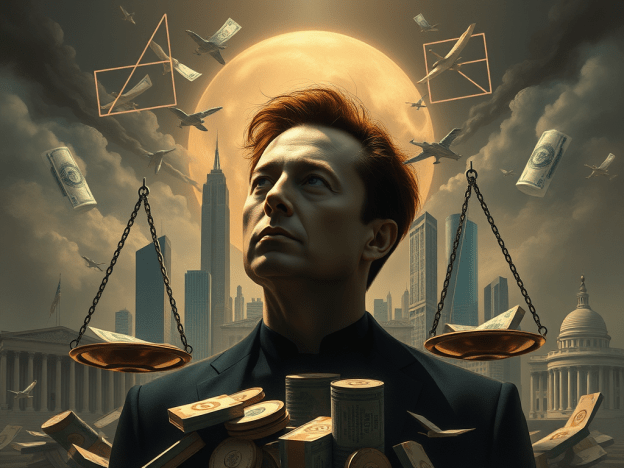
Elon Musk: The Unelected Power Broker and the Erosion of Democracy
Musk doesn’t need to hold political office to exert enormous influence. His wealth grants him unparalleled access to policymakers and the ability to shape regulations in his favour. Tesla, for instance, has benefited enormously from government subsidies, while SpaceX’s contracts with the U.S. military make Musk a key player in geopolitics. This paradox—profiting from public resources while railing against government oversight—reveals the contradictions of Musk’s self-styled libertarianism.
Meanwhile, his relationships with authoritarian regimes, such as Tesla’s operations in China, raise serious concerns. When billionaires like Musk negotiate with governments that suppress free speech and labour rights, they don’t just profit; they legitimise these regimes. Musk’s political influence isn’t confined to any one nation-state—it’s global, unaccountable, and deeply undemocratic. He has been criticised for echoing Chinese state propaganda regarding Taiwan, suggesting it should become a “special administrative zone” of China, a position that aligns with the Chinese government’s stance but is rejected by Taiwan.
Musk’s Meddling: From US Elections to European Referendums
Musk’s influence isn’t limited to backroom deals; it actively shapes public discourse and political outcomes. In the US, his interventions have become increasingly brazen. Leading up to the 2022 midterm elections, he explicitly endorsed Republican candidates, urging his then-110 million Twitter followers to vote for a Republican Congress to counter the Democratic presidency. This wasn’t just a casual tweet; it was a calculated political move by a man who understands the power of his platform. More recently he has been accused of promoting “Great Replacement” conspiracy theories, which has led to his being labelled an extremist by the Anti-Defamation League.
He has also attacked George Soros, a prominent Jewish philanthropist and supporter of progressive causes, comparing him to the comic book villain Magneto and accusing him of hating humanity. These comments have been widely condemned as antisemitic, playing into age-old tropes about Jewish control and manipulation.
In Europe, Musk’s actions have been no less controversial. Leading up to the Irish referendums on family and care in 2024, X was criticised for its lax approach to political advertising and the spread of misinformation. Despite the platform’s supposed policies on transparency, it was revealed that numerous ads targeting Irish voters were not properly disclosed or labelled. The lack of transparency surrounding who was paying for these ads raised concerns about foreign interference and the potential for undue influence on the democratic process. Moreover, disinformation about the referendums, including false claims about the proposed changes to the constitution, proliferated on the platform. X’s failure to effectively address this misinformation, despite repeated warnings from civil society groups and the Irish Electoral Commission, highlighted the platform’s shortcomings in safeguarding democratic processes. While these ads did not come directly from Musk, his refusal to adequately moderate content on X created an environment where misinformation could thrive, impacting the democratic process.
Musk’s interference in UK politics, while less direct, is no less concerning. His vocal support for Brexit in the past, framed as a fight against “unelected bureaucrats,” conveniently ignored the fact that he himself operates as an unelected power broker on a global scale. More recently, his pronouncements on UK immigration policy, often echoing right-wing talking points, have added fuel to an already heated debate. For example, he has amplified misleading claims about the number of undocumented immigrants entering the UK, contributing to a climate of fear and hostility. He has also weighed in on issues like the Ultra Low Emission Zone (ULEZ) in London, criticising the policy and aligning himself with opponents who claim it unfairly burdens drivers. His interventions may seem sporadic, but they contribute to a broader pattern of a powerful, unelected figure using his platform to influence public opinion and, by extension, political outcomes. In January 2024, he met with the UK prime minister, Rishi Sunak, to discuss artificial intelligence.
The New Feudalism of Technology
Perhaps nowhere is Musk’s power more evident than in his control over critical infrastructure like Starlink. Initially lauded for providing internet access to underserved regions, Starlink has become a chilling example of what happens when essential services are controlled by private individuals. Musk’s decision to limit Starlink’s use in Ukraine during the Russian invasion—reportedly denying access to Ukrainian forces for offensive operations near Crimea—underscores the problem: geopolitical decisions that impact millions shouldn’t rest on the whims of a single billionaire. In September 2023, excerpts from a biography of Musk revealed he had secretly ordered Starlink to be turned off near the Crimean coast to disrupt a Ukrainian attack on the Russian fleet. This revelation sparked international condemnation and raised serious questions about the unchecked power of private individuals in matters of war and peace.
The same concerns apply to his ventures into artificial intelligence. Musk has warned against the existential risks of AI while simultaneously profiting from its development through companies like OpenAI (formerly) and Neuralink. These contradictions are not just personal hypocrisies; they reflect a broader structural issue: the concentration of technological power in unregulated private hands. Democracy cannot thrive when billionaires act as self-appointed gatekeepers of humanity’s future.
A Direct Challenge to Democratic Institutions
Musk’s disdain for government oversight isn’t just rhetoric—it’s a direct challenge to democratic accountability. From defying environmental regulations to attempting to weaken labour protections, his actions erode the principle that corporations should answer to the public. In a democracy, power is meant to flow upward from the people. Musk’s approach inverts that, placing wealth and innovation above collective governance.
Worse still, his amplification of election conspiracies on X undermines trust in democratic processes. By giving oxygen to baseless claims about electoral fraud, Musk doesn’t just spread misinformation—he erodes the public’s faith in the systems that underpin democracy itself. In a time when democratic institutions are already under pressure, this kind of recklessness is not just irresponsible; it’s dangerous. He has repeatedly used his platform to boost conspiracy theories, including false claims about the 2020 US presidential election being stolen. These actions have contributed to a climate of distrust and division, further polarising the political landscape.
The Myth of the Benevolent Billionaire
Much of Musk’s appeal lies in his grand visions—colonising Mars, solving climate change with electric cars, and building AI systems to merge humans and machines. These projects are often framed as altruistic, even revolutionary. But at their core, they reflect a techno-utopian ideology that assumes billionaires can and should determine humanity’s future.
Take Musk’s Mars ambitions. On the surface, colonising another planet sounds like the ultimate expression of human ingenuity. But the unspoken implication is that governance on Mars—a place Musk has described as needing “direct democracy”—would be dictated by the people who fund its colonization. In other words, by Musk himself. The dream of escaping Earth’s problems becomes, in reality, a blueprint for replicating its inequalities in a new context.
The Fight for Democracy
The rise of Elon Musk is not just a story about one man’s power—it’s a cautionary tale about the fragility of democracy in the face of unregulated wealth and privatised authority. If we are serious about defending democracy, we must confront the systemic issues that allow billionaires like Musk to wield such disproportionate influence.
This means regulating monopolistic platforms like X to ensure they serve public interests, not private profits. It means reclaiming critical infrastructure like Starlink for public ownership or, at the very least, subjecting it to stringent democratic oversight, so life-altering decisions aren’t made in private boardrooms. It means taxing the ultra-wealthy and redistributing power and resources so democracy can be a shared endeavour, not a billionaire’s playground.
Most importantly, it means challenging the narrative that innovation and democracy are incompatible. The future doesn’t have to be dictated by a handful of billionaires—it can be shaped collectively, by and for the many. Musk’s vision may be grand, but democracy is a bigger idea, and it’s one worth fighting for. We must advocate for greater transparency in political advertising, strengthen regulations against the spread of misinformation, and hold platforms like X accountable for their role in shaping public discourse. The future of democracy depends on it.
In an age when wealth and influence are increasingly concentrated in the hands of a few, Elon Musk stands as both a symbol and an architect of a disturbing trend: the erosion of democratic norms by unchecked billionaire power. Through his control of critical platforms, his sway over governments, and his techno-utopian rhetoric, Musk exemplifies how private wealth can distort public life. This isn’t just about one man’s ambition—it’s about the broader crisis of democracy under siege from the concentrated power of capital.
The Privatization of the Public Sphere
When Elon Musk acquired X (formerly Twitter), he didn’t just buy a company; he took control of one of the most influential public squares in history. Social media platforms like X function as de facto public spaces, where ideas are debated, movements are born, and policies are scrutinized. Yet under Musk’s ownership, X has veered sharply from its already imperfect role as a facilitator of democratic discourse. His self-proclaimed commitment to “free speech” has, in practice, created an environment ripe for disinformation and hate speech, undermining the informed debate that democracy requires.
But Musk’s influence doesn’t stop at platform policy. With millions of followers hanging on his every tweet, Musk uses X to shape public narratives—on elections, wars, and even corporate regulation. His tweets are not merely the musings of a private individual; they are strategic interventions in the public discourse, often aligning with his corporate and personal interests. When one man can drive global conversations with a single post, democracy’s promise of collective decision-making looks increasingly fragile.
Billionaire Influence in the Political Arena
Musk doesn’t need to hold political office to exert enormous influence. His wealth grants him unparalleled access to policymakers and the ability to shape regulations in his favor. Tesla, for instance, has benefited enormously from government subsidies, while SpaceX’s contracts with the U.S. military make Musk a key player in geopolitics. This paradox—profiting from public resources while railing against government oversight—reveals the contradictions of Musk’s self-styled libertarianism.
Meanwhile, his relationships with authoritarian regimes, such as Tesla’s operations in China, raise serious concerns. When billionaires like Musk negotiate with governments that suppress free speech and labor rights, they don’t just profit; they legitimize these regimes. Musk’s political influence isn’t confined to any one nation-state—it’s global, unaccountable, and deeply undemocratic.
The New Feudalism of Technology
Perhaps nowhere is Musk’s power more evident than in his control over critical infrastructure like Starlink. Initially lauded for providing internet access to underserved regions, Starlink has become a chilling example of what happens when essential services are controlled by private individuals. Musk’s decision to limit Starlink’s use in Ukraine during the Russian invasion underscores the problem: geopolitical decisions that impact millions shouldn’t rest on the whims of a single billionaire.
The same concerns apply to his ventures into artificial intelligence. Musk has warned against the existential risks of AI while simultaneously profiting from its development through companies like OpenAI (formerly) and Neuralink. These contradictions are not just personal hypocrisies; they reflect a broader structural issue: the concentration of technological power in unregulated private hands. Democracy cannot thrive when billionaires act as self-appointed gatekeepers of humanity’s future.
A Direct Challenge to Democratic Institutions
Musk’s disdain for government oversight isn’t just rhetoric—it’s a direct challenge to democratic accountability. From defying environmental regulations to attempting to weaken labor protections, his actions erode the principle that corporations should answer to the public. In a democracy, power is meant to flow upward from the people. Musk’s approach inverts that, placing wealth and innovation above collective governance.
Worse still, his amplification of election conspiracies on X undermines trust in democratic processes. By giving oxygen to baseless claims about electoral fraud, Musk doesn’t just spread misinformation—he erodes the public’s faith in the systems that underpin democracy itself. In a time when democratic institutions are already under pressure, this kind of recklessness is not just irresponsible; it’s dangerous.
The Myth of the Benevolent Billionaire
Much of Musk’s appeal lies in his grand visions—colonizing Mars, solving climate change with electric cars, and building AI systems to merge humans and machines. These projects are often framed as altruistic, even revolutionary. But at their core, they reflect a techno-utopian ideology that assumes billionaires can and should determine humanity’s future.
Take Musk’s Mars ambitions. On the surface, colonizing another planet sounds like the ultimate expression of human ingenuity. But the unspoken implication is that governance on Mars—a place Musk has described as needing “direct democracy”—would be dictated by the people who fund its colonization. In other words, by Musk himself. The dream of escaping Earth’s problems becomes, in reality, a blueprint for replicating its inequalities in a new context.
The Fight for Democracy
The rise of Elon Musk is not just a story about one man’s power—it’s a cautionary tale about the fragility of democracy in the face of unregulated wealth and privatized authority. If we are serious about defending democracy, we must confront the systemic issues that allow billionaires like Musk to wield such disproportionate influence.
This means regulating monopolistic platforms like X to ensure they serve public interests, not private profits. It means reclaiming critical infrastructure like Starlink for public ownership, so life-altering decisions aren’t made in private boardrooms. It means taxing the ultra-wealthy and redistributing power and resources so democracy can be a shared endeavor, not a billionaire’s playground.
Most importantly, it means challenging the narrative that innovation and democracy are incompatible. The future doesn’t have to be dictated by a handful of billionaires—it can be shaped collectively, by and for the many. Musk’s vision may be grand, but democracy is a bigger idea, and it’s one worth fighting for.
 Quentin Budworth