Tag Archives: history

THE WILHELM DOCTRINE: DISMANTLING THE IMPULSE REGIME

We need to stop flattering the Trump regime with the assumption that they are executing a grand authoritarian design. We are paralysed because we keep looking for the rigid discipline of a fascist rise, when in reality, we are watching the erratic, bombastic, and ultimately self-destructive flailing of a Hollow Regime.

We are trapped in a room, not with a mastermind playing 4D chess, but with a toddler who has found a loaded gun. The regime operates on the “Veruca Salt” algorithm: I want it now. It governs by tantrum, entitlement, and grievance-fueled hissy fits. It demands to dominate every opponent, simultaneously threatening allies, bullying neutrals, and waging war on its own population without any plan for how to sustain the fight.

In doing so, they have committed the classic blunder of Kaiser Wilhelm II, the last German Emperor: Encirclement by Incompetence. They have created a two-front war they cannot sustain, alienating the global economic order while sitting atop a fragile, debt-ridden, and running-on-fumes domestic economy.

Wilhelm’s Germany did not fall because it lacked weapons; it fell because it was blockaded. It ran out of friends, it ran out of credit, and it ran out of food. That is our blueprint. But to execute it, we must first understand the terrifying psychological and biological reality of the man at the helm.

PART I: THE ANATOMY OF A HOLLOW KING

To dismantle the regime, we must strip away the myths of the “Strongman.” Donald Trump is not an ideologue; he is a vessel.

1. The Osmotic Leader (The Louis XV Syndrome)
The “Hidden Truth” is that Trump lacks object permanence in governance. He does not hold positions; he holds conversations. His policy at any given moment is simply the echo of the last person who flattered him. Like the French King who let his mistresses dictate statecraft, Trump is an empty avatar filled by the most aggressive voice in the room. He is easily manipulated because he follows the path of least resistance to praise.

2. The Paper Tiger (The Nicholas II Complex)
For all the “You’re Fired” bluster, Trump suffers from pathological Conflict Aversion. He is physically terrified of face-to-face friction. He is a keyboard warrior who shrinks when the room goes silent. Like the ineffective Czar Nicholas II, he governs by tweet because he cannot govern by eye contact. He grants concessions to dictators not because he is compromised, but because he fears the awkwardness of saying “no” to a terrifying man.

3. The Boredom of Statecraft (The Edward VIII Factor)
He loves the role of King but despises the job of President. He finds the machinery of government incredibly boring. He destroys institutions not always out of malice, but out of neglect. He is a creature of “Executive Time,” unmoored from the reality of logistics.

PART II: THE BIOLOGICAL REALITY (THE SHIFT)

However, the analysis cannot stop at psychology. We must confront the psychiatric emergency: The Biological Decay.

We are witnessing the collision of Malignant Narcissism with Frontotemporal Disinhibition. The frontal lobes of the brain serve as the “brakes”—they provide empathy, judgment, and inhibition. Clinicians have long noted that when these areas atrophy, the brakes fail, but the engine (the narcissism) keeps revving.

1. The Removal of Guardrails
Previously, Trump’s narcissism was checked by a survival instinct. That instinct is physically eroding. He is no longer calculating the risk of his outbursts; he is simply surrendering to the impulse. This explains the shift from Theatre (2016’s performative bullying) to Reality (today’s raw enforcement). A bully posturing is manageable; a bully who has lost the neurological capacity to distinguish between an intrusive thought and an executive order is an existential threat.

2. The Physiology of Shame
We must also acknowledge the physical decline—the incontinence, the slurred speech, the confusion. For a Narcissist, image is god. To lose control of one’s own body is the ultimate humiliation. This internal shame fuels external rage. He is lashing out at the country because he cannot command his own biology. He is a “Sundowning Caesar,” raging at the dying of the light, but he still holds the nuclear codes.

PART III: OPERATION SUPPLY SHOCK

You cannot negotiate with dementia. You cannot deter a man who has lost the capacity for foresight. Therefore, our strategy is not to fight him, but to starve the regime.

The regime relies on resources it does not own: data, credit, legitimacy, and professional services. We must make the cost of those resources ruinous. The question we force on every enabler is: “Is it now more expensive to comply than it is to resist?”

1. The International Front: Data Sovereignty
The regime runs on “services and data” as much as oil and bombs. The EU, UK, and Japan must weaponise their regulatory power. If US tech giants act as the surveillance arm of a hostile regime, allied nations must threaten IP Nullification. They must say: “If you function as a tool of the Trump regime, your patents are void here. Your data transfer agreements are suspended.” We force the boardrooms of Silicon Valley to choose: The Kaiser or the Global Market?

2. The Financial Front: The Bond Vigilantes
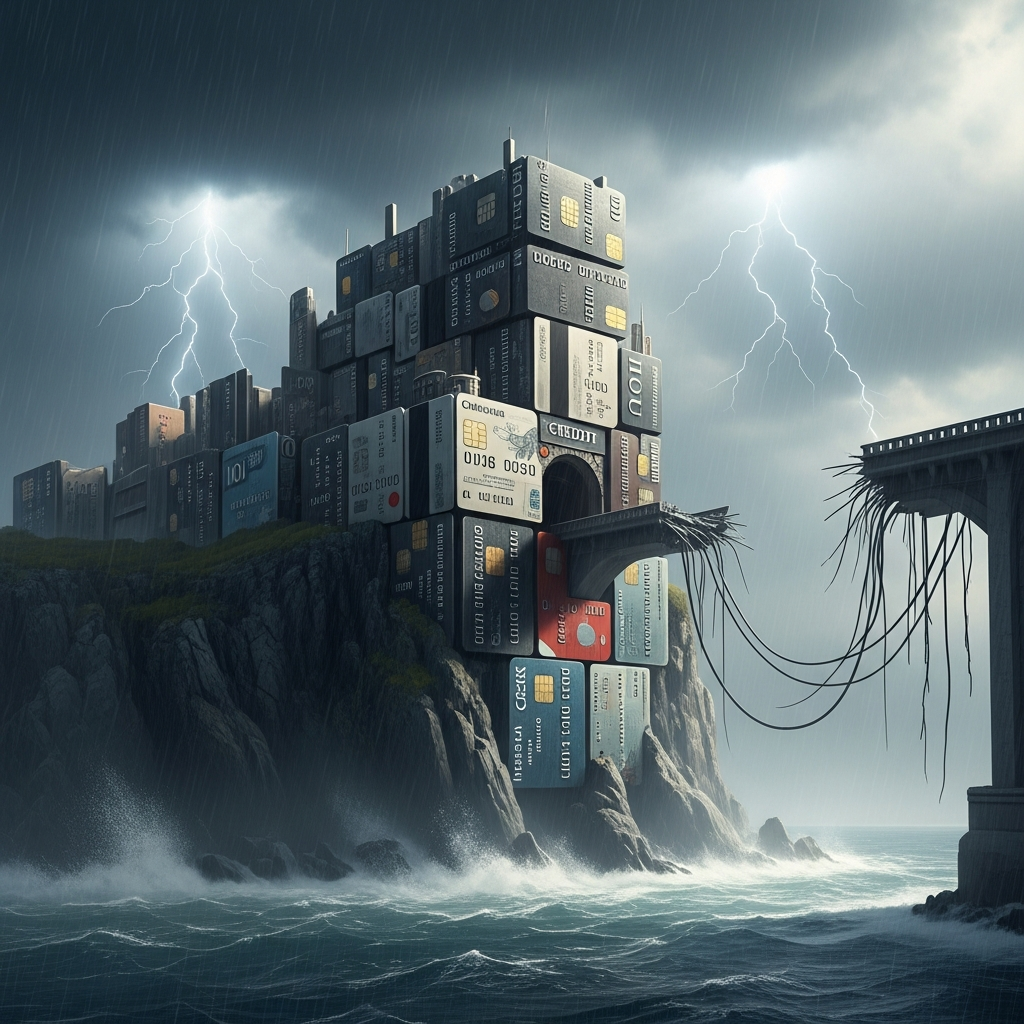
The regime is funding its tantrums on a national credit card. We must shatter the illusion that US Treasuries are a “safe asset.” We organise a divestment campaign that treats US debt under this regime as “Toxic Assets.” If pension funds and sovereign wealth funds stop showing up at the bond auctions, yields spike. Borrowing costs skyrocket. The regime’s ability to buy loyalty evaporates. A tyrant with no money is just a crazy old man shouting at clouds.

3. The Internal Front: Weaponised Boredom
Inside the machinery of the state, we advocate for Malicious Compliance. When the regime appoints a “Caligula’s Horse” to run an agency, the civil servants must not quit. They must become sand in the gears. Demand written clarification for every unethical order. Misunderstand instructions. Slow-walk every approval. Weaponise the President’s short attention span. If a fascist plot takes three weeks of boring meetings to execute, he will lose interest.

4. The Social Front: Reputational Nuclear Winter
We strip the cover of “neutrality.” The lawyers, consultants, and accountants facilitating this regime are the “Good Germans” of the 2020s. We must make them pariahs. If a law firm argues for the regime’s abuses, they lose all its corporate clients. We personalise the cost. We make it so that collaboration with the regime is professional suicide.

THE ENDGAME

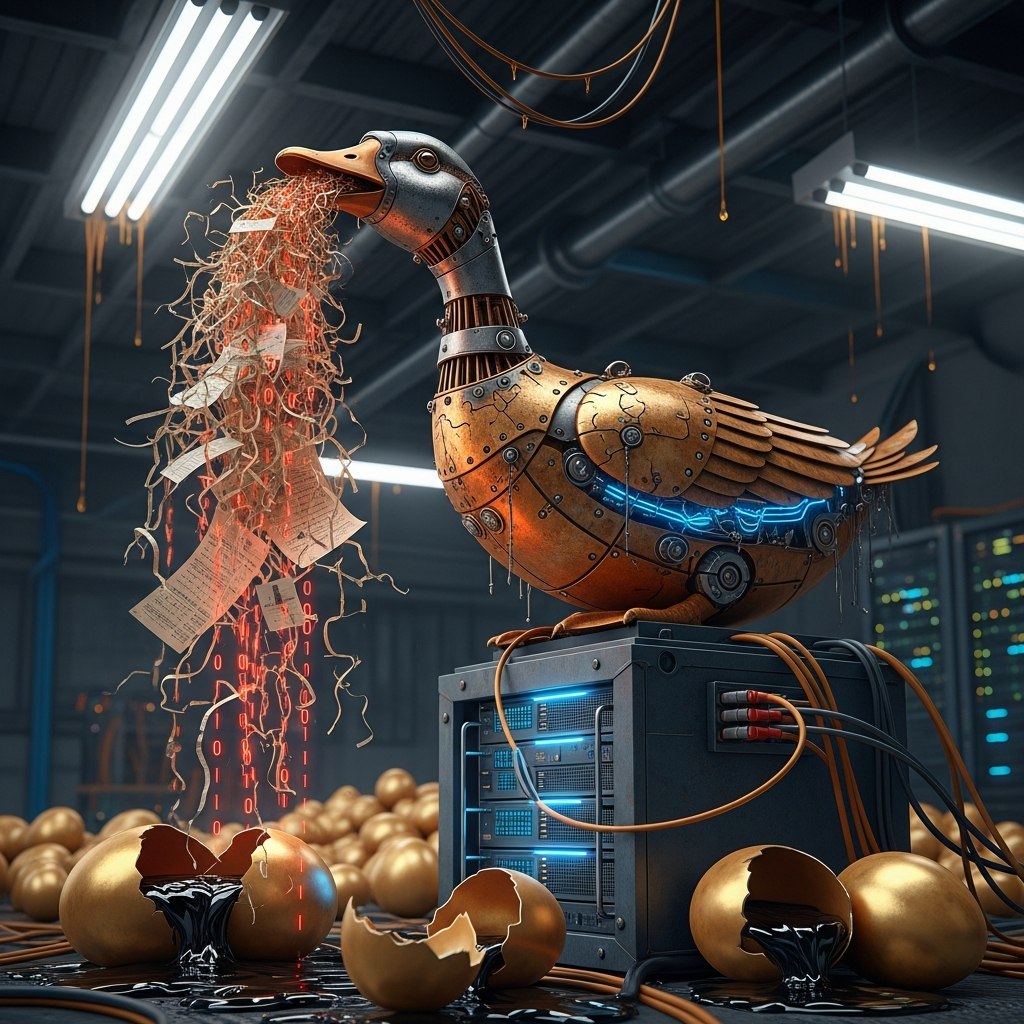
The Trump regime is a Golden Goose that demands to be fed. It has no strategy for what to do when the food runs out.

They are counting on us to play by the old rules, to protest in designated zones while they loot the treasury. Instead, we are going to cut the power. We will spike their borrowing costs, blockade their data, gum up their agencies, and shun their enablers.

They want a war of attention. We will give them a war of attrition.
They want it all, and they want it now. We ensure they get nothing but the bill.

Dementing, Despotic, Derranged. What To Do When The President’s Brain Is Missing.

We need to have a serious chat about the tidal wave of noise coming from the other side of the pond because it feels overwhelming. It feels like we are watching a grand, terrifying master plan unfold. Steve Bannon’s flood the zone with shit doctrine is running on steroids. However, I want us to pause, take a deep breath, and look closer at what is actually happening. We are not trapped in a room with a chess grandmaster. We are locked in a supermarket aisle with a toddler who has found a loaded gun and is demanding a chocolate bar.

This is the sceaming Toddler approach to governance. It screams “I want it now” with zero regard for the consequences or the cost. The regime threatens allies, bullies neutrals, and wages war on its own population all at once. It is a display of insatiable greed and grievance. Yet this chaotic flailing reveals a massive fragility. They have committed the classic blunder of Kaiser Wilhelm II by encircling themselves with incompetence. They have started a fight on every front while sitting on a crumbling economy and running on borrowed time.

We can find comfort in understanding the human reality here. The man at the centre is not an ideologue. He is a hollow vessel. Think of Louis XV, whose policy was merely an echo of the last person who flattered him. Trump holds conversations, not positions. He absorbs the energy of the most aggressive voice in the room because agreeing is easier than thinking. He is a paper tiger, terrified of genuine face-to-face conflict, governing by digital shouting because the friction of real human contact is too frightening for him. He loves the role of King but finds the actual job of President terribly boring.

Then we have the biology of it all. We must look at this with a clinician’s eye and a bit of kindness for the human condition, even as we acknowledge the danger. We are watching the collision of malignant narcissism with frontotemporal disinhibition. The frontal lobes are the brain’s braking system. They handle empathy and judgment. When those brakes fail, the engine still revs, but the car has no way to stop. The shift we see now is from theater to reality. The survival instinct that once kept the worst impulses in check is eroding. He is lashing out because he is losing control of his own narrative and perhaps even his own biology. It is the rage of a “Sundowning Caesar.”

So, how do we handle a regime that runs on impulse and borrowed credit? We do not fight the noise. We starve the beast.

We apply a strategy of “Supply Shock.” This regime relies on resources it does not own. It needs data, credit, legitimacy, and professional services to function. We simply make those things too expensive to maintain.

First, we look at the data. The regime runs on digital services. Our friends in the EU and the UK can turn off the tap. We say that if US tech giants want to act as the surveillance arm of a hostile state, their patent protections are void here. We force the shareholders to choose between the regime and the global market.

Next, we look at the money. The tantrums are funded by a national credit card. We need to shatter the illusion that this debt is safe. If pension funds and global investors view these bonds as toxic assets issued by an unstable government, borrowing costs will skyrocket. A tyrant with no money is effectively silenced.

Then we have the internal machinery. We call for a creative kind of friction. We encourage the civil servants and the workers to stay in the room and become the sand in the gears. We use malicious compliance. We demand written clarification for every order that is unclear. We slow-walk the paperwork. We weaponise the boredom. If a dangerous plan takes three weeks of tedious meetings to execute, this President will lose interest and move on to the next shiny object.

Finally, we address the enablers. We strip away the comfort of neutrality. The lawyers and consultants helping this operate need to feel the social cost. We make it clear that facilitating this regime is professional suicide. We decline their dinner invitations. We close our wallets to their firms.

The Trump regime is a Golden Goose demanding endless attention and resources. It has no strategy for when the larder is empty. They are counting on us to play by the old rules. Instead, we are going to cut the power, spike the costs, and block the data. They want everything, and they want it immediately.

We are going to ensure they get nothing but the bill, and you won’t believe the total…

The New American Empire Is Here. And It Hates You

Fortress America: The White House’s Terrifying Plan to Partition the World

Government white papers are usually excellent cures for insomnia. They are typically filled with bureaucratic grey noise, polite diplomatic fictions, and the sort of tentative language that allows civil servants to sleep at night. You expect them to be dull. This document, the newly published “National Security Strategy of the United States,” is far from dull. It reads like a manifesto blending a victory speech, an ideological tract, and a corporate hostile takeover bid for the planet written by a dementing Darth Vader screaming ‘I want’ 47 times throughout the US ultimatum to the world.

We need to talk about the sheer psychological force radiating from these pages. The opening letter sounds like a rally. Written with a cadence of superlatives and moral binaries, it presents a “President of Peace” who has single-handedly resolved eight global conflicts in eight months from Gaza to the Congo while obliterating drug cartels now designated as terrorists. It is a form of myth-making that borders on confabulation. It uses the proper nouns of diplomacy to create an impression of global reach while demanding total suspension of disbelief. The message is clear. Institutions failed you. Elites betrayed you. Only the Great Man can save you.

This narrative of betrayal is the engine driving the entire strategy. The text paints a vivid picture of a “Grievance Narrative” where the American people have been sold down the river by post-Cold War elites. These elites, the document argues, pursued an impossible dream of global domination through “transnationalism” that only served to hollow out the American heartland. It is a diagnosis that will resonate with populists from the Rust Belt to the Red Wall. The proposed cure is a regression to a hierarchical empire. The United States is defending the nation-state. But it is doing so by ruthlessly asserting its own sovereignty while treating the sovereignty of others as a conditional privilege.

Nowhere is this double standard more glaring than in the “Trump Corollary” to the Monroe Doctrine. This new corollary goes far beyond the gunboat diplomacy of the past. It declares a total economic exclusion zone. The document explicitly targets Chinese-owned ports and Russian investment as “hostile foreign incursions” that must be uprooted. It threatens to rip up the commercial fabric of Latin America to deny competitors a foothold. It is a demand that the entire hemisphere disconnect from the global economy and plug solely into the American grid. The hypocrisy is staggering. The United States demands an “open door” in Asia while slamming the door shut in the Americas. It treats the people of the Global South not as partners with agency, but as inventory in a warehouse owned by Washington. By carving out this exclusive zone, the White House is effectively telling Beijing and Moscow that the world is being partitioned. It is an invitation for every great power to ring-fence their own neighbourhood.

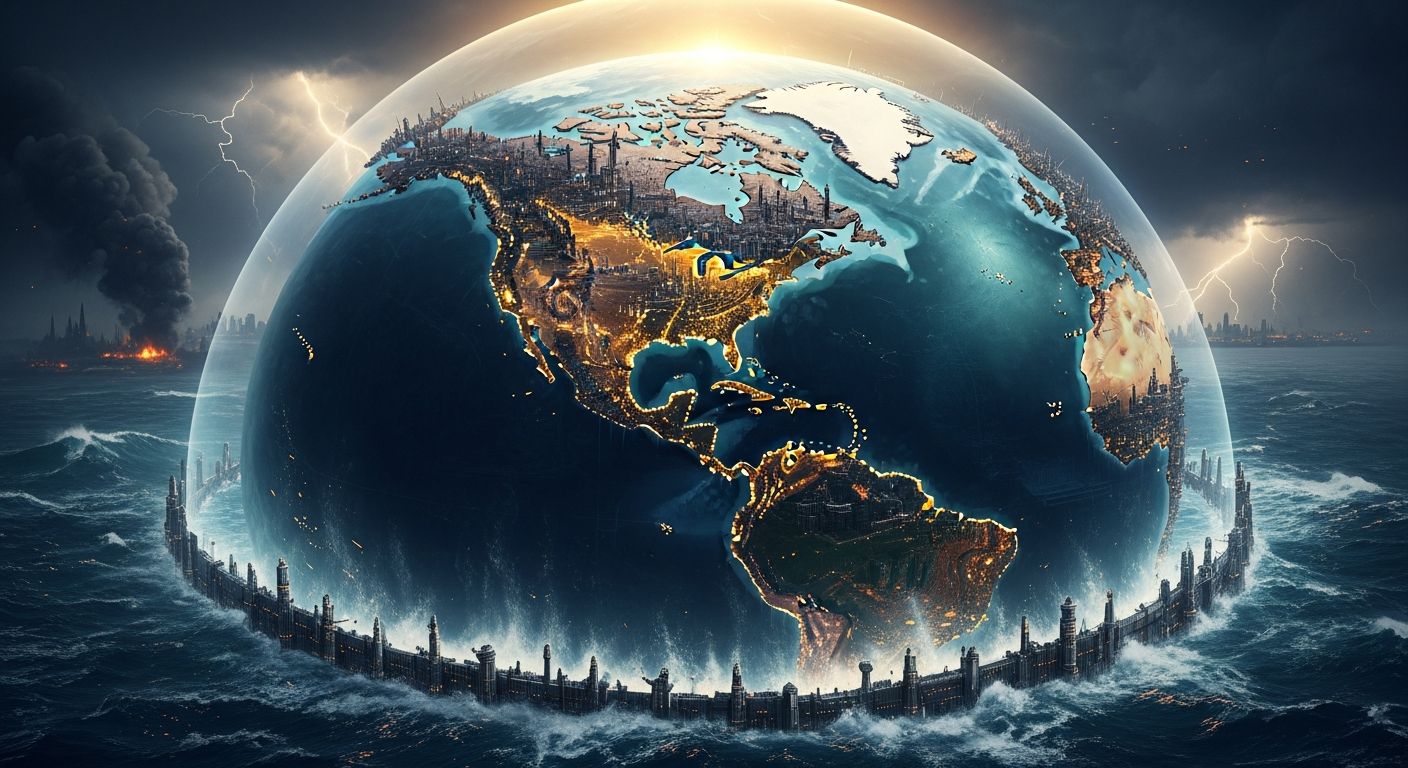
We must catch the signal amidst the noise here. For the first time in living memory, an American security strategy ranks the Western Hemisphere as the absolute top regional priority. It sits above the Indo-Pacific. It sits well above Europe. This is the blueprint for “Fortress America” where the drawbridge is permanently up. The strategy outlines a plan to “enlist and expand” local deputies to do the heavy lifting of border security. It treats the entire continent south of the Rio Grande as a defensive buffer zone against migration and narcotics. By focusing so intently on its own backyard, Washington is implicitly telling its allies in Europe and Asia that the lease is up. They are seceding from the global order they built, taking the keys to the economy with them.

Then we reach the section that should send a chill through the chancelleries of Europe. The document explicitly links national security to demographics in a way that is profoundly disturbing. It frames migration as an “invasion” and a primary threat to the state. It warns of “civilizational erasure” in Europe and openly questions the future loyalty of NATO allies whose populations might become “majority non-European.” This is the “Great Replacement” theory codified into superpower statecraft. It explicitly racialises the Atlantic Alliance, suggesting that a diverse Europe is a weak Europe. It signals to London, Paris, and Berlin that Washington no longer views them as partners in democracy. It views them as racial traitors to a shared “civilizational” project.

The strategy brings the American culture wars directly into the situation room. “Radical gender ideology” and “woke lunacy” are identified as threats on par with ballistic missiles. It vows to root out “DEI” initiatives as anti-meritocratic dangers to military readiness. Most dangerously, it dismisses climate change as an “ideology” that subsidises adversaries, pivoting back to fossil fuels with aggressive enthusiasm. This is the weaponisation of resentment. By attaching physical danger to cultural grievances, the administration creates a permission structure for purges within the military and the civil service. They are walling themselves in while the planet burns.

For the United Kingdom and Europe, the bill for this new worldview has arrived. The “Hague Commitment” demands that NATO allies spend 5 per cent of GDP on defence. It is a figure designed to break the back of the European welfare state. But the financial cost is secondary to the political threat. The strategy explicitly states a preference for working with “patriotic parties” over the current EU establishment, which it views as illegitimate. It is a divide-and-conquer approach. The goal is to strengthen NATO’s military utility for American ends while weakening the European political project.

We must also notice the pivot on democracy. The document abandons the “hectoring” of authoritarian regimes. It signals a willingness to accept Gulf monarchies and regional strongmen as they are, provided they align with U.S. interests. Stability has replaced liberty as the currency of the realm. It is a transactional realism that strips away the veneer of American moral leadership to reveal the raw power dynamics underneath.

It is easy to recoil from the brutality of this text. It is a mirror that exposes Western hypocrisy, revealing an imperialism that was often masked as a “rules-based order.” It diagnoses real failures in the hubris of the last thirty years. Yet the solution it offers is a retreat into a fossil-fueled, ethno-nationalist fortress.

We have a choice. We can panic, or we can look at this landscape with clear eyes. This document forces us to grow up. We can no longer rely on a benevolent protector. We must rediscover a European project that stands for something more than trans-Atlantic subservience. If America is retreating behind its walls, we cannot simply wait outside the gates. We must build a new coalition of the willing. We need an architecture based not on shared heritage, but on the shared reality that climate change and inequality care little for borders, even ones guarded by a Golden Dome. America has stated clearly what it wants. Now we must decide what we are willing to build to replace it.

Read it and weep https://www.whitehouse.gov/wp-content/uploads/2025/12/2025-National-Security-Strategy.pdf

The Great Unraveling: Living in Gramsci’s Global Interregnum

We are living in the parenthesis between epochs. Writing from a Fascist prison cell, Antonio Gramsci described this liminal space with chilling foresight: “The crisis consists precisely in the fact that the old is dying and the new cannot be born; in this interregnum a great variety of morbid symptoms appear.”

Nearly a century later, his observation feels unnervingly prescient. The world is suspended in what can be understood as a global interregnum—an extended, unsettled transition in which familiar structures of governance, economics and social order are crumbling, while coherent replacements remain only partially formed, visible more as glimpses than blueprints.

The Morbid Symptoms of Our Time

Look around. The symptoms emerge not as isolated crises, but as overlapping polycrises—a chorus of systemic failures. The neoliberal order that defined the late 20th century stutters and stalls, its promise of endless growth colliding with planetary limits and deepening inequality. In its weakening, we witness the rise of what Gramsci might have called our era’s “monsters”: authoritarianism in democratic clothing, xenophobic populism feeding on economic anxiety, and technological shifts that pledge liberation while threatening new forms of control.

Geopolitically, the world operates with multiplying centres of gravity. The post-war liberal international order—once the sun around which global politics revolved—now loses its pull. We see this in the fraying of long-standing alliances, the return of great-power tensions many thought were historical relics, and conflicts from Ukraine to Gaza that expose the limits of existing diplomatic mechanisms. The world is not yet multipolar, but it is increasingly nonpolar—a dangerous limbo where old rules no longer hold and new ones remain unwritten.

New Powers and the Vacuum They Fill

Into this vacuum step unlikely actors. Technology titans—today’s equivalent of mercenary captains—wield influence comparable to nation-states, shaping policy and public discourse with little accountability. Their platforms become our public squares; their algorithms, the invisible hands guiding economies and elections. This shift in power echoes historical interregnums, where economic forces redraw political maps long before new structures take shape.

At the same time, the environmental foundations of our civilisation show alarming fractures. Climate change embodies the ultimate polycrisis—ecological, economic, political and existential all at once. It acts as both consequence and accelerator of our interregnum, revealing how the old growth model now feeds on its own collapse.

The Spectrum of Possible Futures

Where does this lead? Several paths branch from our present uncertainty:

  1. The Authoritarian Resolution: Democratic norms erode further, replaced by digital surveillance states and corporate-backed strongmen offering stability in exchange for freedom.
  2. The Progressive Transformation: A deliberate, difficult turn toward regenerative economics, participatory democracy and global cooperation centred on sustainability and equity.
  3. The Chaotic Fragmentation: Current trends deepen into systemic failure—more collapsed states, global trade splintered into hostile blocs, climate displacement triggering unprecedented crises.
  4. The Techno-Oligarchic Horizon: Power consolidates not in nations but in corporate entities controlling essential technologies, from AI to bioengineering, creating a digital feudalism.

Navigating the In-Between

What the idea of interregnum emphasises is agency. This is not just something happening to us; it is a space we inhabit and can shape. The “morbid symptoms” are warnings, not inevitabilities.

Meaningful response means acting on multiple levels at once:

Politically, we must reinvent multilateralism for a fragmented world—creating spaces for dialogue that recognise new power realities without abandoning human rights.

Economically, we need to build resilience—localising essential supplies while sustaining global cooperation, testing post-growth models that do not equate progress with extraction.

Technologically, we must set ethical boundaries before capability outruns governance, especially with artificial general intelligence approaching as either a vital tool or an existential risk.

Ecologically, the task is a just transition—moving rapidly beyond fossil fuels while supporting communities disrupted by both climate impacts and economic change.

Labour Pains of What Comes Next

Perhaps the hardest part of living through an interregnum is psychological. We are conditioned to expect linear progress or cyclical return, not this prolonged disorientation. The temptation is to retreat into nostalgia for a simpler past or to surrender to despair.

And yet history suggests these between-times, however painful, are also spaces of remarkable creativity. The Renaissance emerged from medieval crisis. The modern international system was born from world war’s ashes. The old must decay enough to make room for the new.

Our task, then, is not to wish the interregnum away, but to move through it with clear sight and steady will. To help birth the “new” waiting to emerge—systems centred on ecological renewal rather than extraction, on fair distribution rather than accumulation, on shared governance rather than concentrated power.

The parenthesis will close. What follows depends profoundly on what we choose to nurture in this uncertain, fertile and dangerous in-between. The interregnum is not our destination, but our crucible. What emerges from it will be shaped by what we value, whom we stand with and the courage we find in this twilight of an old world.

The Politics of Hope & The Economics of Care: A Radical New Vision For Britain

It is time for change, and it’s happening now. Real green shoots, new progressive ideas, are breaking through the manufactured concrete consensus that the only direction is right and then far-right.

People are resonating with that deep ache for something fundamentally different, a yearning for a world not defined by the relentless pursuit of profit or the cynical machinations of power, but by genuine human connection and collective well-being. We’ve had enough of the politics of despair, the economics of extraction. What we desperately need now is a politics of hope and an economics of care.

This isn’t just a nice idea; it’s an urgent necessity in a UK landscape dominated by a uni-party consensus that offers little more than managed decline, all while the far-right seeks to deepen the chasms between us. The ‘Friendly fascism’ and centrist authoritarianism we see here thrives on a profound lack of hope, on the exhaustion wrought by a system that consistently prioritises abstract market forces over the tangible needs of people. The hypernormalisation of austerity, the dehumanising rhetoric aimed at anyone struggling to survive, the relentless information overload – it’s all designed to drain our will to fight for something better.

So, what do we actually do? We plant the seeds of that hope, and we cultivate that care, refusing to let the cynicism of others define our future. For me, and for a growing chorus of voices, that means actively building a political movement that embodies these very principles – and that’s precisely what we’re doing with the Green Party. While others offer more of the same, praying at the altar of Neo-liberalism and allowing big money and foreign influence to dictate their every move, we are forging an alternative rooted in genuine compassion and a vision for a just future.

A politics of hope means daring to imagine a country where everyone has a safe, warm home, where our NHS is not just protected but properly funded, where our communities are vibrant and resilient, and where our planet is not sacrificed for short-term gain. It means challenging the insidious lie that there is no alternative to the current trajectory. And an economics of care means fundamentally reorienting our priorities: away from endless growth and towards meeting the needs of all, ensuring dignity for workers, protecting our precious natural resources, and fostering genuine well-being over corporate spreadsheets. It means valuing the essential work of caring for each other, for our children, for our elders, and for our environment, not just the financial transactions that boost GDP.

The culture war, stoked by the far-right and amplified by a complicit media, is a deliberate distraction from this fundamental shift. It’s designed to keep us from uniting around shared values of hope and care. We must see through it and expose it for what it is: a cynical ploy to protect the interests of the powerful by fragmenting the rest of us. When they scream about ‘woke’ ideology, we talk about universal basic income, robust public services, and truly affordable housing – the bedrock of an economics of care.

Fascists thrive on scarcity and fear. A politics of hope and an economics of care counters this directly by affirming abundance and mutual aid. We refuse to let them redefine who is ‘deserving’ of care; we insist that every life has intrinsic value. And when it comes to the Labour and Conservative uni-party, beholden as they are to big money, we expose their rhetoric for what it is: a thinly veiled defence of the status quo, offering managed decline instead of genuine transformation. Austerity instead of abundance.

My own journey has shown me that breaking through these entrenched narratives requires persistent, empathetic communication. We need to reach those who feel disillusioned, those who have been let down by decades of Neo-liberal consensus, and show them that hope isn’t naive – it’s a powerful engine for change. The Green Party’s rapid growth isn’t just about environmentalism; it’s about a fundamental commitment to a politics of hope and an economics of care, a vision that resonates deeply with people who are tired of being told there’s no alternative.

Paulo Freire’s call for critical consciousness is absolutely paramount here. We must question the very foundations of an economic system that prioritises profit over people, and a political system that claims to be democratic while being controlled by external forces. We must empower ourselves, and our communities, to imagine and build an entirely new way of organising society – one based on collaboration, compassion, and true sustainability.

Yes, the fight is monumental. The forces of cynicism and greed are deeply entrenched. But we cannot surrender. We must protect our humanity, our empathy, and our capacity for hope, because these are our most potent weapons. Join your local Green Party. Get involved. Speak truth to power. Demand a politics of hope and an economics of care, not just as abstract ideals, but as the foundational principles of a society truly fit for the 21st century. The most anti-fascist act any of us can make, in the face of managed decline and manufactured misery, is to stubbornly, defiantly, hold onto that vision and work every single day to bring it into vibrant, caring reality.

Autocracy in the digital space.

We were all raised on stories of obvious tyranny. We were taught to look for the book burnings and the public shamings. We were told to listen for the sound of the cage door slamming shut. But what happens when the cage has no bars? What happens when the prison isn’t a place, but a state of mind, meticulously constructed to feel like freedom?

This is the world of informational autocracy. It’s a far slicker, more sophisticated beast than the clumsy dictatorships of the last century. It doesn’t need to rule by fear when it can rule by manufactured consent. This new model of power doesn’t abolish elections; it mimics them, ensuring the outcome is a foregone conclusion while maintaining a veneer of legitimacy. It doesn’t ban the free press; it buys it, starves it of advertising, or floods the zone with so much state-sponsored noise that the truth is simply drowned out. Look at Putin’s Russia, Orbán’s Hungary, or Erdoğan’s Turkey. The playbook is the same: project an image of competence and stability, paint all opposition as chaotic or treacherous, and ensure the majority of the public never gets a clear enough signal to know the difference. The primary goal is not to terrorise the population, but to convince them. And the engine room of this entire operation is the device in your pocket.

Enter the social media platform: the greatest accelerator of informational autocracy ever invented. These systems are not neutral tools; they are battlegrounds designed for a very specific kind of warfare. Their algorithms, built not for truth but for traffic, are perfectly tuned to reward the divisive, the sensational, and the outrageous. It’s no accident that, on platforms like X, false political stories are proven to spread 70% faster than the truth. Outrage is profitable. Division drives engagement. In this environment, an autocrat’s propaganda isn’t just another post—it’s premium fuel for a machine designed to run on it. We are not just the audience; we are the unwitting foot soldiers, sharing and amplifying narratives that fracture our own societies. But this battle isn’t just for the hearts and minds of the masses. There’s a more specific, more strategic target in its sights.

Every society has an “informed elite”—that small but crucial group of journalists, academics, professionals, and artists who have the access and the training to see through the noise. In the old world, an autocrat had to arrest or exile them. In the new world, the strategy is far more subtle. Social media allows the regime to monitor them, identifying dissenters for a quiet campaign of shadow-banning, legal threats, or professional exclusion. Even more effectively, it allows them to be co-opted. A slice of the elite is turned into well-paid influencers, their credibility used to launder regime propaganda. The very tool that could expand the ranks of the informed by democratizing information also shatters their authority, turning public discourse into a chaotic free-for-all where a verified expert has the same algorithmic weight as a state-funded troll farm.

It leaves us in the crossfire of a silent, borderless war. The tactics perfected in Moscow and Beijing are now exported globally, seeping into the bedrock of democracies. This is the slow poison: the erosion of public trust, the exhaustion of civic life, and the creeping sense that objective truth no longer exists. This is the ultimate goal. The aim isn’t just to win an argument; it’s to create an environment where the very idea of a shared reality seems naive. It is to foster a deep, weary cynicism that leads to democratic fatigue, where we disengage not because we are forced to, but because we are too tired to continue.

So, what is the way out? It is not to find a mythical, uncompromised platform or to wait for a single heroic leader. The resistance begins with a conscious and deliberate act of what can only be called informational hygiene. It starts with us. We must become fierce curators of our own information, deliberately seeking out and paying for quality, independent journalism. We must take our conversations offline and into the real world, rebuilding the connective tissue of society in our own communities. And above all, we must build our own resilience as if it were armour. They are counting on our burnout. An exhausted, cynical public is their ideal political landscape.

This is the work. It is not glamorous. It is not easy. But it is real. The most radical act in an age of quiet persuasion is a loud and curious mind. Keep yours sharp. Keep it open. And never, ever let them convince you to close it.

Flipping the Switch: The Digital Pound in the Wrong Hands

The Digital Pound: A Tyrant’s Dream Come True.

You’ve heard all the promises about the Digital Pound. That it’s safe. That your privacy is guaranteed. But you have to ask yourself one brutal question: what happens when the people making those promises are gone? Because in the hands of an authoritarian regime, the system they are building today becomes the perfect weapon for controlling you tomorrow. This isn’t an academic exercise; it’s a warning. The infrastructure of a digital cage is being assembled right now, and what matters isn’t the current design, but what it will become in the wrong hands.

This isn’t just an academic exercise. History is littered with democracies that faltered. To build this infrastructure without considering the worst-case scenario is not just naive; it is reckless. In the event of an authoritarian takeover, the digital pound, linked to a Digital ID, would not be a tool of convenience. It would be the most perfect instrument of state control ever conceived.

The first and most immediate change would be the weaponisation of surveillance. All the current safeguards—GDPR, promises of data privacy, the separation between the Bank and private wallet providers—would be swept away overnight. An authoritarian state would rewrite the laws, bypass regulations, or simply coerce private companies to hand over the data. The system is already designed for traceability; a new regime would just have to point it in the right direction. Every transaction, every donation, every purchase would become an open book to the state, revealing your networks, your beliefs, and your loyalties. Financial privacy would cease to exist.

This leads directly to the next implication: conditional access to your own life. Today, they promise it’s a choice. Under an authoritarian regime, that choice would vanish. The digital pound would become mandatory, and cash, the last bastion of anonymity, would be aggressively phased out. We’ve seen how quickly existing financial systems can be turned against citizens. During the 2016 coup attempt in Turkey, the government froze the bank accounts of thousands of suspected dissidents. A digital pound would make this process frictionless and absolute.

Your access to money, and therefore your ability to buy food, pay rent, or travel, would be tied directly to your compliance. A centralised Digital ID would become the linchpin of a social credit system, where your right to participate in the economy is granted or denied based on your loyalty to the regime. Step out of line, and you could be switched off. Not arrested, not charged, just silently and efficiently excluded.

With this power, our fundamental civil liberties would be dismantled. The right to protest, to assemble, and to speak freely would be neutered. An authoritarian state could reprogramme the digital pound in an instant. It could block donations to opposition groups, restrict travel to protest locations, or even limit what you are allowed to purchase. The “silent denial of a transaction” would become the state’s most effective tool for suppressing dissent, creating a chilling effect that would silence opposition far more effectively than any police force.

And in a final, devastating step, such a regime could use the digital pound to manipulate the economy for its own ends. It could issue “helicopter money” directly into citizens’ wallets to shore up loyalty, but with strings attached—programmable funds that can only be spent on state-approved goods. It could even revalue the currency overnight, forcing everyone into the new system and wiping out the savings of those who resist.

The democratic checks and balances we rely on today are fragile. They can be eroded or dismantled. The infrastructure we build, however, is permanent. To create a centralised system that fuses identity and money is to build a cage. We may be promised that the door will remain unlocked, but in the hands of an authoritarian ruler, that door would be slammed shut and bolted. The Digital Pound would become the ultimate enforcer, turning every citizen into a subject, their freedom contingent on the flick of a switch.

https://www.bankofengland.co.uk/the-digital-pound

New Look Fascism: Hiding In Plain Sight

We all know the old footage. The stark, monochrome marches, the rigid salutes, the frenzied crowds. It’s the ghost that haunts our modern world, and we’ve convinced ourselves we’d spot its return a mile off. We tell ourselves, “Never again,” with a quiet confidence that comes from knowing the enemy’s uniform. But what if the uniform has changed? What if the new fascism isn’t wearing jackboots, but a tailored suit, a tech bro’s hoodie, or the ironic grin of a meme?

That’s the unsettling truth we have to face. The aesthetics of authoritarianism have undergone a quiet but total redesign for the 21st century. It’s a friendlier, more insidious form that creeps in not with the bang of a dictator’s fist on a podium, but with the soft, persuasive glow of a smartphone screen. It’s less about stormtroopers and more about Silicon Valley’s vision of a tech-utopia, less about blood-and-soil rallies and more about the curated nostalgia of a “lost” masculinity. To my own mind, the most dangerous trick it’s pulled is making the whole thing feel like one big, bad taste joke.

Take a look around. The Italian Futurist Artists glorified war and speed; today’s tech oligarchs preach a gospel of progress, selling us a shiny, minimalist future where their corporations, not nations, are in charge. It’s a vision of power wrapped in the cool, unobjectionable aesthetics of a corporate keynote. And when that feels too cold, it offers Solar Punk—a beautiful, green-washed dream of harmony that can so easily be twisted to justify eco-fascist ideas of population control and exclusion. It’s utopia as a sales pitch, and it’s dangerously persuasive.

But the real shift, the one that leaves many of us feeling like we’re shouting into a void, is the weaponisation of irony. The symbols of hate have been replaced by cartoon frogs and anime girls. The dehumanising rhetoric is hidden behind layers of “just banter, mate.” It’s a shield of plausible deniability that allows cruel ideologies to spread through gaming chats and podcast bro culture, targeting young men who feel adrift. When you try to point out the nastiness lurking beneath the surface, you’re instantly labelled a humourless “snowflake.” It’s a brilliant, frustrating tactic: they make the world meaningless, so that caring about anything at all becomes a sign of weakness.

And now, we have AI. This, to me, feels like the final stage of this aesthetic hollowing-out. We’re being flooded with AI-generated slop—politicised art created without a shred of human conviction or creativity. It’s the ultimate tool for aestheticising politics, turning historical atrocities and genocidal fantasies into just another piece of content, stripped of all weight and horror. When everything can be faked and every image is just empty aesthetics, how do we hold on to truth?

So, how do we push back against something that’s designed to be slippery, ironic, and everywhere? I don’t claim to have all the answers, but I believe it starts with a kind of stubborn, clear-eyed authenticity.

First, we have to get better at reading the aesthetics. We need a new kind of literacy that looks past the what and questions the how. Why does that political ad look like a video game trailer? Why is that leader communicating entirely in memes? We have to name the tactics when we see them, pulling back the curtain on the irony and the aesthetic whitewashing.

More importantly, we have to offer a better, truer story. You can’t fight a sense of belonging built on hatred with a list of policy points. We need to build real, tangible communities—through unions, local projects, mutual aid—that give people a genuine stake and a connection that no online cult can match. And we need to champion art and narratives that are unafraid of complexity and rich with empathy, that offer a vision of a future worth fighting for, one that includes everyone.

Ultimately, it comes down to a simple, profound choice: we have to insist on meaning. In a world that’s being deliberately drained of it, we must value truth over fiction, complexity over simplistic lies, and the inherent dignity of every person over the fascist’s cruel hierarchy of worth.

It’s not about winning an online argument or a single election. It’s a long, persistent effort to build a world where people feel secure and respected enough to see the new fascism for what it is: a seductive, well-designed package with nothing but emptiness inside. And that requires us to be, above all else, true to ourselves.

The Keep Sane in Troubled Times Playbook
1. Develop Critical Aesthetic Literacy
The first step is to recognise the weaponisation of aesthetics. This means moving beyond analysing what is said to how it is presented.

  • Teach Media Literacy 2.0: Go beyond identifying fake news. Teach people to deconstruct visual rhetoric: Why does a political ad use a specific type of animation? Why does a leader’s social media feed look like a meme page? What emotions is a corporate “utopian” video trying to evoke, and what material realities does it hide?
  • Name the Tactics: Publicly label the strategies when you see them. Point out the irony-poisoning, the co-option of subcultures, the use of AI slop to flood the zone. By making the mechanics visible, you rob them of their power.

2. Rebuild Trust through Material Politics and Local Organising
Fascism feeds on alienation, despair, and the collapse of trust in institutions. The most powerful antidote is to demonstrate that collective, democratic action can improve people’s lives.

  • Focus on Material Conditions: Shift the conversation from the abstract culture war to concrete, material issues: affordable housing, healthcare, wages, unionisation, climate resilience. Fascism offers scapegoats; a real alternative must offer solutions that address the root causes of anxiety.
  • Strengthen Local Community: Support and participate in local unions, tenants’ associations, mutual aid networks, and community gardens. These organisations build real-world solidarity, trust, and collective power that is immune to online manipulation. They provide a sense of belonging that is not based on hatred of an “other”.

3. Create Competing, Hopeful Narratives and Aesthetics
You cannot defeat a powerful aesthetic with a dry policy paper. The left and centre must relearn the art of storytelling and vision-building.

  • Articulate a Positive, Inclusive Future: Solar Punk, as mentioned, has positive potential. We need compelling, artistically rendered visions of a future that is both technologically advanced and socially just, ecologically sustainable, and inclusive. This vision must be attractive enough to compete with the nostalgic fantasies of the far right.
  • Support Art and Culture that Builds Empathy: Fund, celebrate, and amplify art, films, music, and games that celebrate complexity, diversity, and human dignity. Counter the dehumanising caricatures with rich, humanising stories.

4. Strategic, Unified Opposition and Deplatforming
While open debate is ideal, the video correctly shows that these movements often argue in bad faith, using debate as a platform to spread conspiracies.

  • Do Not Normalise: Avoid treating fascist ideology as a legitimate point of view in political discourse. The goal is not to “debate” whether some people are inferior, but to isolate and discredit those ideas. Media outlets have a responsibility not to platform figures who traffic in replacement theory or Holocaust denial for “balance”.
  • Strengthen Institutional Guardrails: Defend and strengthen independent journalism, an independent judiciary, free and fair elections, and the rule of law. Support projects that document hate speech and extremist networks. This is the unsexy, bureaucratic work that is essential for democracy’s survival.

5. Personal Responsibility and Courage

  • Interrupt Casual Bigotry: Do not let racist, homophobic, or antisemitic “jokes” slide in personal conversations. A calm, firm response like, “I don’t find that funny,” or “Why do you say that?” can disrupt the normalisation process.
  • Support Victims: Stand in solidarity with those targeted by hate. If you see someone being harassed, be a proactive bystander. This demonstrates that the community will not tolerate intimidation.
  • Protect Your Mental Space: The constant barrage of corrosive content is designed to exhaust and demoralise. It is essential to log off, engage in real-world communities, and protect your capacity for empathy and hope. You cannot fight a long-term battle while burned out.

The Core Challenge: Rejecting Meaninglessness
The video concludes that the ultimate goal of this aestheticisation is to make everything meaningless. Therefore, the most profound act of resistance is to insist on meaning.

This means:

  • Valuing Truth: Upholding the distinction between fact and fiction.
  • Valuing Complexity: Rejecting simplistic, us-vs-them narratives in favour of nuanced understanding.
  • Valuing Human Dignity: Constantly affirming the inherent and equal worth of every person, against the hierarchy of worth that fascism promotes.

Countering this new fascism is not about winning a single election or a viral online battle. It is a long-term, cultural, and political project to rebuild a society where people feel secure, respected, and hopeful enough to reject the seductive but deadly lies of fascism in any aesthetic guise.

Polycrisis What Polycrisis? Metacrisis What Metacrisis?

1. Polycrisis

Core Idea: A Polycrisis is an event where multiple, distinct crises interact in a way that the overall impact is far greater than the mere sum of each crisis’s individual effects. The crises are interconnected and exacerbate one another, creating a cascading failure across systems.

Key Characteristics:

  • Multiple, Separate Crises: It begins with several identifiable crises (e.g., an energy crisis, a food crisis, a geopolitical crisis).
  • Synergistic Interaction: These crises are not happening in isolation. They are interconnected, so that one crisis worsens another.
  • Cascading Effects: A shock in one system (like finance) triggers failures in another (like supply chains), which then impacts a third (like political stability).
  • Systemic Nature: The problem is not the individual crises themselves, but the dysfunctional connections between the systems they inhabit.
  • Manageable (in theory): The individual component crises can, in principle, be addressed with existing tools and frameworks, though the interaction makes it extremely difficult.

Classic Example: The 1970s Oil Shock

  1. Geopolitical Crisis: The OPEC oil embargo.
  2. Energy Crisis: A sharp rise in oil prices, causing fuel shortages.
  3. Economic Crisis: Stagflation (high inflation + high unemployment + slow growth).
    These three crises fed into each other, creating a global polycrisis that was more severe than any one of them alone.

Recent Example: The COVID-19 Polycrisis
The pandemic interacted with and amplified pre-existing crises:

  • Health Crisis: The virus itself.
  • Supply Chain Crisis: Lockdowns disrupted global logistics.
  • Economic Crisis: Massive stimulus, leading to inflation.
  • Geopolitical Crisis: Increased tensions between major powers.
    The interaction of these elements created a global situation far more complex and damaging than the pandemic alone.

Analogy: An orchestra where several sections (strings, brass, woodwinds) all start playing the wrong notes at the same time. The result is a cacophony that is much worse than a single musician being out of tune. The problem is the combination of failures.


2. Metacrisis

Core Idea: The Metacrisis (or The Meta-Crisis) is a broader, deeper concept. It refers not to a set of interacting crises, but to the underlying, shared root system that generates these polycrises and individual crises in the first place. It’s the “crisis of crises.”

Key Characteristics:

  • A Single, Meta-Problem: The Metacrisis is itself a singular, overarching phenomenon—a failure at the level of our operating system for civilization.
  • Root Cause Focus: It points to the deep, often invisible, assumptions, values, and structures that make our systems prone to crisis. These include:
    • Short-termism in economics and politics.
    • Hyper-extractive relationship with the planet.
    • Reductionist worldview that ignores complexity and interconnectedness.
    • Outdated narratives about progress, growth, and human nature.
  • Generative: The Metacrisis doesn’t just describe current problems; it explains why we keep creating new ones. It’s the “crisis-generating system.”
  • Paradigm-Level: Solving the Metacrisis requires a fundamental shift in our consciousness, values, and paradigms—not just technical fixes or policy reforms.

Example: The Limits to Growth & Value Systems
The Metacrisis can be seen in the collision between our infinite-growth economic model and the finite boundaries of the planet (climate change, biodiversity loss). The polycrises that result are food shortages, extreme weather events, and migration crises. The Metacrisis is the underlying flaw: an economic and cultural system that is fundamentally misaligned with the biophysical reality of the Earth.

Analogy: If a computer keeps crashing due to different software errors (polycrises), the Metacrisis is the deeply flawed and outdated operating system that is the common source of all these errors. Fixing one software bug (solving one crisis) won’t help for long; the entire operating system needs an upgrade.


Comparison Table: Polycrisis vs. Metacrisis

FeaturePolycrisisMetacrisis
NatureAn event or situation of interacting crises.The underlying context or root system that generates crises.
ScopeMultiple, separate crises interacting.A single, overarching meta-problem.
FocusThe symptoms and their synergistic effects.The root causes and the “source code” of our systems.
Temporal ViewPrimarily looks at the present convergence of crises.Looks at the long-term patterns that lead to recurring crises.
Solution ApproachSystem management: Better coordination, resilience, and managing interconnections.System transformation: A fundamental shift in paradigms, values, and goals.
AnalogyMultiple organ failures in a patient, each making the others worse.The underlying chronic disease or unhealthy lifestyle that made the patient vulnerable.

In short: A Polycrisis is the terrifying storm you are trying to navigate. The Metacrisis is the broken navigation system, the faulty weather models, and the reason you built a ship unfit for the ocean in the first place. You need to manage the storm (polycrisis) to survive, but you must fix the underlying flaws (metacrisis) to avoid the next one.

How To Beat Reform

Core Strategic Principle: Diagnosis Before Prescription

Think of the 1970s and you think of flared trousers and Abba. You probably don’t think of Nazi salutes on British streets.

But for a time, the far-right National Front (NF) was a terrifying force in UK politics. Its skinhead gangs terrorised immigrant communities. Its leaders were open Hitler admirers. And in the 1977 elections, over 200,000 people voted for them.

Then, they were crushed. Not in a war, but by a brilliant, gritty campaign that united punk rockers, grandparents, trade unions and communities. Today, as a new wave of populism gains traction, the lessons from that victory are not just history – they’re a handbook.

Here’s how it was done, and how it applies now.

Lesson 1: Stop Debating, Start Disrupting

The anti-fascists of the ’70s knew a crucial truth: you can’t reason someone out of a position they weren’t reasoned into. So they didn’t try. Instead, their strategy was simple: make it impossible for the NF to function.

They physically blocked their marches. They packed their meetings and shouted them down. The goal wasn’t to win an argument; it was to create such a logistical nightmare that the authorities were forced to ban events and the Nazis were too ashamed to show their faces.

The Modern Application: Today, the town hall meeting has been replaced by the social media algorithm. The tactic of disruption isn’t just about physical blocking—which can backfire against a legal party—but about a more sophisticated, multi-pronged assault. This means flooding the digital space with compelling counter-content, using ‘pre-bunking’ techniques to inoculate the public against predictable manipulation, and actively ‘de-branding’ their language by refusing to parrot loaded terms. Instead of “stop the boats,” the debate becomes about “fixing the asylum system.” The goal remains the same: to deny their narrative the clean air it needs to breathe.

Lesson 2: Expose the Core, Not Just the Policies

The NF tried to hide its Nazi core behind a veneer of ‘respectable’ racism. Anti-fascists ripped this mask off. They circulated photos of leader John Tyndall in his not-at-all-a-Nazi-uniform and highlighted his speeches praising Hitler. The result? The more moderate followers fled, and the party splintered. The label ‘Nazi’ stuck because the evidence was overwhelming.

The Modern Application: This isn’t about slapping the ‘fascist’ label on every opponent. It’s about rigorous exposure. Who endorses this party? What do their policies logically lead to? When a candidate is found to have made extremist statements, the question to the leadership is simple: “Do you condone this? If not, what are you doing about it?” Force them to either repudiate their fringe or be defined by it. The battle is to expose the underlying narrative of national humiliation and purging, no matter how sanitised the language.

Lesson 3: Apply Institutional and Economic Friction

Beyond the battle of ideas lies the less visible but equally critical war of institutional accountability. The 1970s activists understood that pressure had to be applied at every level. When the Hackney Gazette ran an NF advert, its staff went on strike.

The Modern Application: The contemporary equivalent is wielding strategic economic and legal pressure. This means holding corporate donors publicly accountable, supporting rigorous challenges to potential campaign spending breaches, and demanding that media platforms couple any coverage with immediate, contextual fact-checking. The objective is to create friction—to make supporting or enabling populism a professionally and reputationally costly endeavour. This isn’t about silencing opposition, but about enforcing the rules and standards that populists seek to erode, ensuring demagoguery carries a tangible price.

Lesson 4: Out-Create Them. Make Hope Go Viral.

This was the masterstroke. While some groups fought in the streets, the Anti-Nazi League and Rock Against Racism (RAR) fought for the culture. They realised that to win over a generation, you couldn’t just be against something; you had to be for something better.

RAR staged legendary gigs that paired white punk bands like The Clash with Black reggae acts. Their 1978 carnival in London attracted 100,000 people—a joyful, defiant celebration that made the NF look like the miserable, hate-fuelled sect they were.

“This ain’t no fucking Woodstock. This is the Carnival against the Nazis!” – Red Saunders, RAR co-founder

The Modern Application: This is the most critical lesson. Populism feeds on pessimism and cultural despair. The antidote is to build a more compelling, positive, and inclusive vision. Where is the modern equivalent of RAR? It’s about supporting creators, artists, and community initiatives that showcase a confident, modern Britain. It’s about telling stories of successful integration and shared future, making ‘hope’ more viral than ‘fear’.

Lesson 5: Protect Your Own. Community is Armour.

When the state failed to protect them, targeted communities organised their own defence. The Southall Youth Movement and others made their neighbourhoods ‘no-go zones’ for racists, patrolling streets and confronting threats directly. This wasn’t just about physical safety; it was about building unbreakable social and political resilience.

“What did we  share with the white left? We learned from them   as well. We shared the vision of a new world,  our world, a world in which we were all equal,   a fairer world.” – Tariq Mahmood, activist

The Modern Application: The threats today are often more digital and psychological than physical, but the principle is the same. This means strengthening local community bonds, supporting organisations that monitor and combat hate crime, and building robust support networks. Critically, this work must be underpinned by a ‘marathon, not a sprint’ mentality. The defeat of the National Front was not the work of a single election cycle but a sustained, multi-year effort. The modern challenge is to build resilient, long-term infrastructure—’the bakery’—that can withstand populist waves by addressing the underlying grievances of isolation and economic despair they exploit.

The Uncomfortable Truth for Today

The crucial difference is that Reform UK is not the National Front. It is a populist party, not a fascist paramilitary one. Applying the 1970s playbook isn’t about mindlessly copying tactics; it’s about intelligently adapting the principles.

The battle against the NF was won by a coalition that understood this was a war fought on multiple fronts simultaneously. It required the raw energy of street-level disruption, the sharp wit of cultural creation, the shrewdness of political exposure, and the patient, grinding work of institutional and legal challenge.

To effectively challenge modern populism demands the same holistic courage. It is not enough to out-create them online if their economic enablers face no consequences. It is not enough to win a legal battle if the cultural narrative of grievance remains unchallenged. The lesson of the 1970s is that victory comes not from a single masterstroke, but from the relentless, coordinated application of pressure everywhere it counts. The question is whether we can build a movement with the strategic depth to fight on all those fronts at once.