Tag Archives: mindfulness

Your Brain Isn’t Broken. It’s Creative

The Engine and the Armour: A Truer Story of Creativity
It starts with profound curiosity doesn’t it? That low-level hum beneath the surface of things. The sense that you can’t quite switch your own brain off. You’re in the supermarket, trying to remember if you need milk, but you’re also cataloguing the precise tone of fluorescent hum from the overhead lights, the discordant percussive rhythmic rattle of trolley wheels, and the quiet, tragic history etched on the face of the man staring at the price of coffee. For many, this is just background noise and mindless distraction. For you, it’s the entire orchestra, and you’re standing right in front of the brass section.

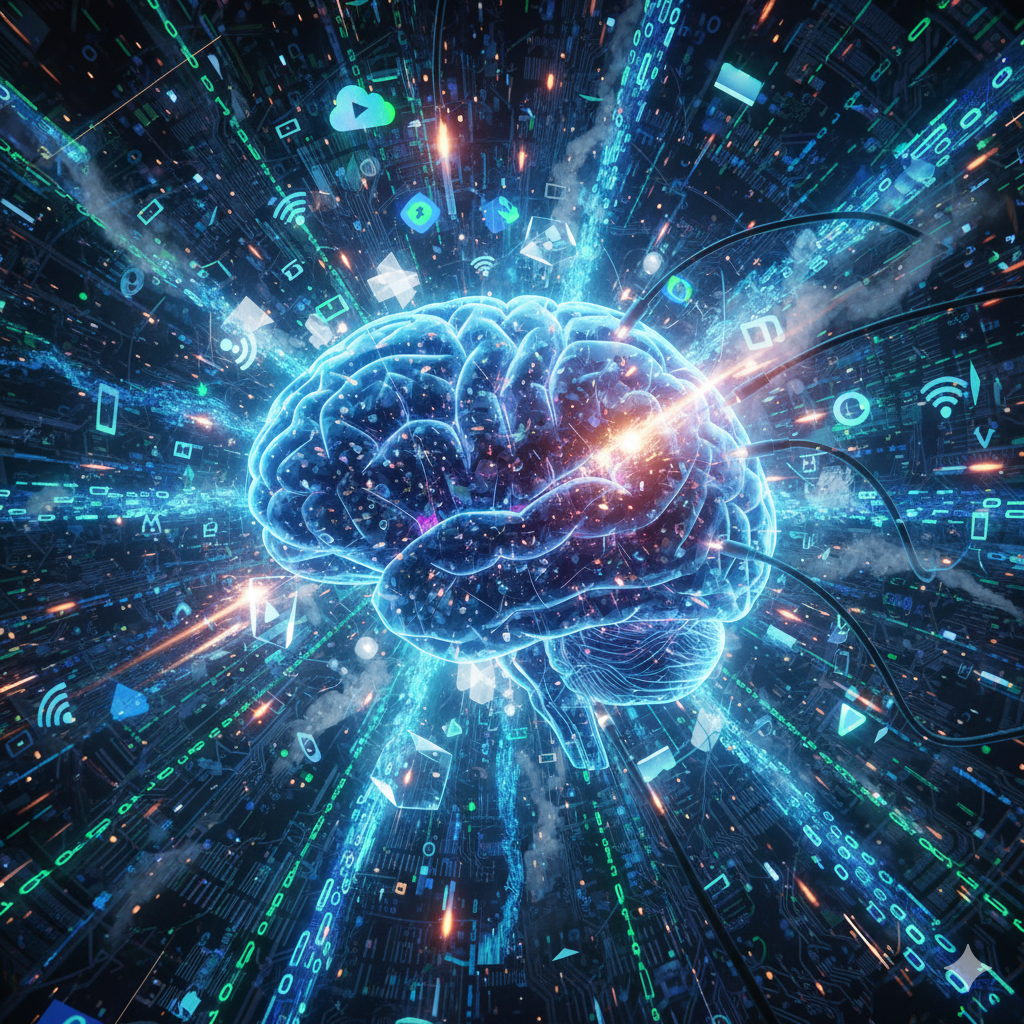
This isn’t a poetic exaggeration; it’s a neurological reality. Your brain isn’t just passively receiving more data; it’s wired for a different kind of processing. We now understand this as a dynamic, chaotic dance between three key neural networks. There’s the Default Mode Network (DMN), the brain’s dreamer, spinning daydreams and forging wild connections. There’s the Executive Control Network (ECN), the project manager, trying to focus and evaluate those ideas. And mediating between them is the Salience Network, the scout that constantly scans the horizon, deciding what’s interesting enough to deserve your attention.

In many creative people, the connectivity between these networks is unusually high. The dreamer and the manager are in a constant, frantic conversation, and your scout is working overtime. This is the very mechanism that allows you to see patterns others miss. It’s also why it feels like you can’t turn it off. But to frame this experience purely as a burden is to tell only half the story. The truth is far more powerful.

Chapter 1: The Addictive Pull of Deep Focus

Here’s the part the tragic artist myth always leaves out. The reason you can’t switch off isn’t just some curse. It’s because, when channelled, that relentless mental energy triggers one of the most powerful and rewarding states a human can experience: flow. Coined by psychologist Mihaly Csikszentmihalyi, flow is that sacred state of total immersion where time dissolves, your sense of self evaporates, and the act of creating becomes its own magnificent reward. It’s what makes the process autotelic, the joy is in the doing, not the done.

This isn’t just a feeling; it’s a neurochemical cascade. Theories like Self-Determination Theory tell us that we are intrinsically motivated by a need for autonomy, competence, and connection. The creative act is a direct line to satisfying those needs. As you engage, your brain rewards you with dopamine surges in the striatum, reinforcing the behaviour and making it deeply pleasurable. This is what makes creativity addictive in the best possible way, not just an obligatory coping strategy. You’re not just offloading sensory data to survive; you are chasing the profound, intrinsically rewarding high of mastery. It’s a private, powerful truth. Which makes the public lie we’re told all the more infuriating.

Chapter 2: The Lie of the Lone Genius

Our culture loves a simple hero narrative, doesn’t it? The lone genius, struck by a bolt from the blue, toiling in a dusty garret to produce a masterpiece all on their own. It’s a romantic story. It’s also a convenient and profoundly damaging lie. The truth is that creativity isn’t a solo performance; it’s a team sport. It’s what Brian Eno, a master of these things, brilliantly termed ‘scenius’.

The polar opposite of genius scenius is the idea that groundbreaking work emerges not from a single mind, but from the collective intelligence and energy of a scene. Think of the Bloomsbury Group, tearing up the literary rulebook over tea and fierce arguments. Think of the punk scene in 1970s London, a glorious, feedback-drenched conversation happening in grubby pubs and rehearsal rooms. Innovation doesn’t happen in a vacuum. It happens in conversation, in collaboration, in the fertile friction of minds rubbing up against one another.

So why does the myth of the lone genius persist? Because it’s incredibly useful. It serves a clear economic and social function. A single, tortured genius is a simple, compelling product to market. A collaborative, messy ‘scenius’ is not. More insidiously, it atomises us. By telling creatives they should be toiling away alone, it keeps them disconnected, less powerful collectively, and far easier to exploit in industries built on precarious, gig-based work. It allows a small group of cultural gatekeepers to bestow the ‘genius’ label, maintaining a power structure that is far from meritocratic. The myth of the lone genius isn’t just wrong; it’s a cage with no bars, designed to keep us from realising our collective strength.

This is why the composition of a ‘scenius’ is so critical. A homogenous scene is a stagnant one. If everyone in the room comes from the same background, shares the same reference points, and holds the same assumptions, you don’t get innovation—you get an echo chamber. The cultural river becomes dangerously shallow. True, world-changing creativity is almost always the product of friction between different perspectives and experiences. Fighting for genuine diversity and inclusion in our creative fields isn’t just a moral good; it is a strategic imperative for any culture that wants to progress.

Chapter 3: An Engine for Growth, Not Just Survival

So yes, the cost can be brutal. That survey finding 73% of musicians experience anxiety and depression is real and it matters. But it’s a profound mistake to see art only as a coping mechanism for trauma. While it absolutely can be a powerful therapeutic tool, its purpose extends far beyond mere survival. To create is to experience a unique form of well-being, what the Greeks called “eudaimonia”—the joy that comes from living a life of purpose and growth.

In an age where artificial intelligence can generate slick, novel content in seconds, this distinction has never been more vital. AI can replicate patterns, but it cannot replicate the messy, embodied, human experience that gives art its soul. It hasn’t felt heartbreak or stood in a supermarket overwhelmed by the sheer chaos of existence. Our creativity, our ability to connect, to feel, to find meaning in the chaos, is not just a nice-to-have. It is our last truly wild resource, and our most valuable strategic asset.

The Pragmatic Path: How to Service the Engine

Understanding all this is one thing. Living it is another. In an economy increasingly dominated by AI, nurturing our uniquely human creativity isn’t a soft skill; it is the most important work we can do to make ourselves indispensable. It’s not enough to validate the feeling of being overwhelmed; we need a practical toolkit to navigate it. If your creativity is an engine, not a curse, then it requires maintenance. This isn’t about suppressing your nature; it’s about learning how to handle a high-performance machine without burning out.

First, practise neurological hygiene. Your hyper-aware brain is taking a constant beating. Mindfulness isn’t some fluffy wellness trend; it’s a direct intervention. Start small. Ten minutes of deep breathing before you even look at a screen creates a vital buffer. A body scan, where you simply pay attention to physical sensations from your feet upwards, can ground you when your mind is racing. This activates your parasympathetic nervous system—the body’s own braking mechanism—and gives you a moment of quiet agency in the storm.

Second, build resilience through radical self-compassion. The “lone genius” myth leaves no room for failure, which is, of course, the most essential part of the creative process. Reframe your inner critic. Instead of seeing a failed experiment as a personal failing, see it as data. Keep a journal of small wins. When you feel that familiar pang of alienation, pause and remind yourself: “This feeling is a known occupational hazard for people like me. I am not alone in this.” This isn’t self-indulgent; it’s a strategic move to build the emotional stamina you need for the long haul.

Third, defend your environment. In 2025, our attention is the most valuable commodity on earth, and everything is designed to steal it. You have to fight back. It’s not optional. Establish non-negotiable digital boundaries. Have screen-free times or zones. Crucially, get outside. Spend time in nature—forest bathing, a walk by the sea—to recalibrate your senses away from the urban assault. Counterintuitively, the best way to refuel your creativity is often to engage in low-pressure hobbies entirely unrelated to your main work. Cook a meal, fix a bike, do something with your hands that has no audience and no stakes.

Fourth, actively build your ‘scenius’. Don’t wait for community to find you. Seek out artist groups, online or in person. Share your work, but more importantly, share your process and your struggles. Find a mentor. Offer to mentor someone else. Start a collaborative project with the sole aim of distributing the cognitive load and sparking unexpected ideas. Connection is the antidote to the existential drain of feeling like you’re the only one seeing the world this way.

Finally, look after the machine itself. The link between mind and body isn’t mystical; it’s physiological. You cannot sustain high-level creative output on a diet of caffeine, booze, digital dopamine or anxiety. Prioritise sleep as if it were a critical project deadline, because it is. Move your body in a way that feels good, not punishing. And if the overload becomes chronic and debilitating, seek professional support. Finding a therapist who specialises in the mental health of creative people isn’t an admission of defeat; it’s an intelligent investment in your most valuable asset.

Your creativity is not just your armour against an overwhelming world. It is the very engine that propels you through it. Our job is not to wish for a different, simpler brain, but to learn how to service the magnificent, complex, and powerful one we have.

Your Burnout Is Their Political Strategy

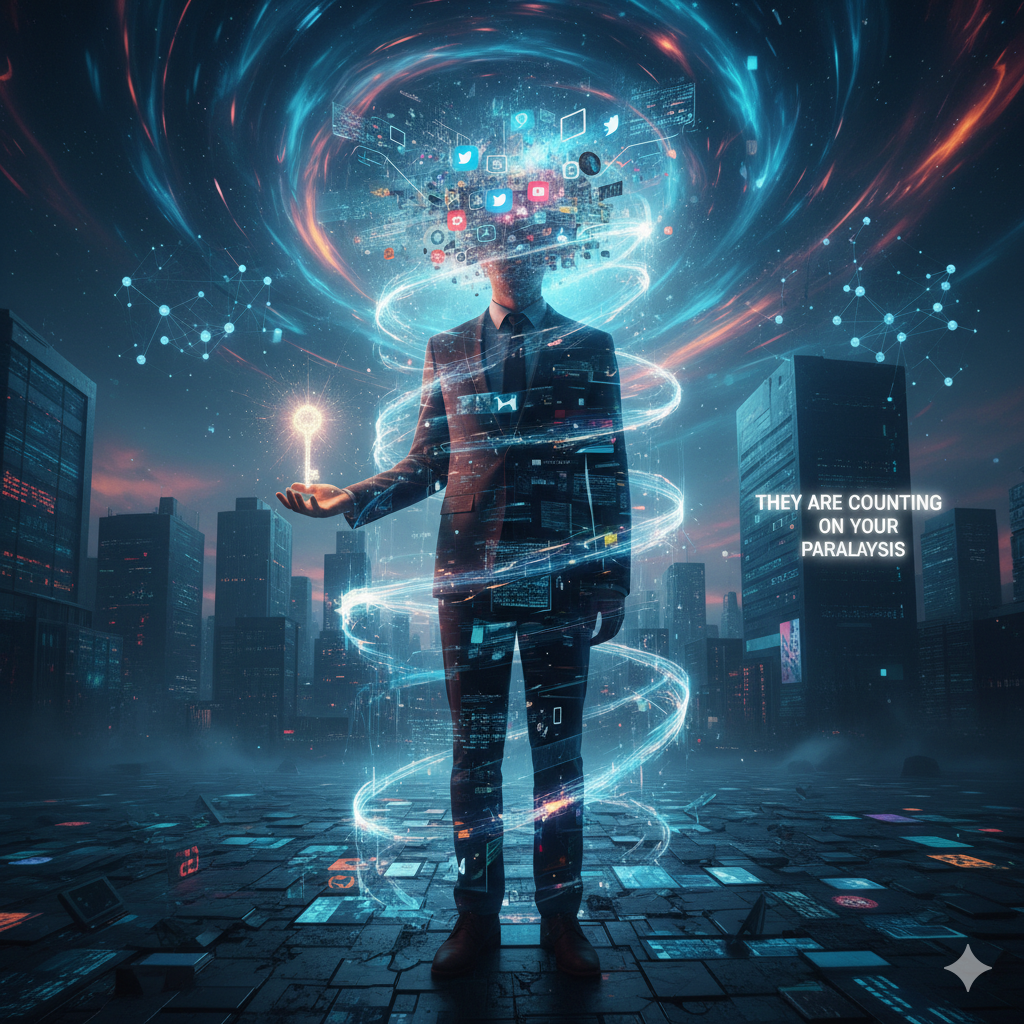
Fascism has changed, as kids we were taught to look out for the jackboots and salutes now the bars aren’t made of iron anymore; they’re made of information, and the prison isn’t a place, but a state of mind. It’s one thing to see the shape of this new cage, but another thing entirely to know how to unlock the door. The sheer scale of it all can feel paralysing. That is precisely what they are counting on. But the antidote isn’t a single, heroic act of rebellion. It’s the small, consistent, and deliberate practice of clear-headed defiance. These individual acts aren’t the endgame, though. They are the training ground for rebuilding public trust and collective power from the ground up.

So here’s what you do.

First, become a fierce curator of your information and a trusted amplifier of the truth. Stop doomscrolling. Stop passively accepting the algorithm’s feed as reality. Deliberately seek out independent voices, local journalists, and long-form content. If you can afford it, pay for quality journalism; it is the last line of defence. And once you find a piece of solid reporting or a vital local story, your job is to share it. Not by screaming into the void online, but by sending it directly to three or five people in your life who you know will take it seriously. Be the signal, not the noise.

Second, take your conversations from the social sphere into the civic one. Breaking your echo chamber is vital, but it cannot end with a chat over a pint. You must take that renewed understanding offline and into the real world. Join something. A local library, a school parents’ association, a tenants’ union, a conservation group. Find the most boring-sounding local committee you can. Power abhors a vacuum, and these hyper-local spaces have been abandoned, left to those with narrow agendas. Go and fill them. This is where the connective tissue of society is either woven or unravels. This is the difference between talking about politics and doing politics.

Finally, build your resilience as if it were armour, because it is. Recognise that this fight is a marathon, not a sprint. They are counting on your burnout. An exhausted, cynical, and overwhelmed public is their ideal political climate. Every time you log off, go for a walk, and come back clear-headed, you are actively thwarting a political strategy. Replenish your spirit not as an escape, but as a necessary act of training for the long road ahead. A resilient, clear-headed, and good-humoured citizen is a nightmare for those who rely on our exhaustion.

This is the work. It is not glamorous. It is not easy. But it is real. The most radical act in an age of quiet persuasion is a loud and curious mind. Keep yours sharp. Keep it open. And never, ever let them convince you to close it.

Above all, choose hope and vote Green.

The Quiet Rebellion: My Yearning For A Slower Life

I’ve been feeling this ache lately, a deep, nagging pull to step away from the world’s noise. Not to die, or even to give up, but to log off properly. I fantasise about disappearing into a life where I can grow herbs, play and write tunes, scribble poems, doodle in the margins of a notebook no one will ever read, and work a job so ordinary it doesn’t consume me. It’s not about failing but finding a kind of freedom I can’t seem to grasp amidst the constant hum of notifications and deadlines. I miss slow things, slow mornings where I can sip tea without checking my phone, slow friendships that grow over long, meandering chats, slow art that doesn’t need to be shared, slow romance that unfolds in shy glances rather than swipes. Everything in my life feels like it needs a deadline, but I’ve come to realise the best parts of being alive take time to bloom, more time than I’ve been willing to admit.

I feel like we’ve built towers of distraction, mental noise on top of something ancient and quiet, something I can still feel deep in my bones. That urge to plant, write, and just be is still there, but it’s buried under the endless scroll of my screen. I’ve found a way to cope, though, a sort of quiet ritual that helps me reclaim those slower rhythms: when my mind is loud, I write; when it’s empty, I read; when it’s racing, I walk; when it’s tired, I sleep; and when it’s sharp, I create. These small acts have become my way of pushing back against a world that demands I keep running, even when I’m desperate to slow down.

When my mind gets loud, all those thoughts crashing into each other, I grab a pen and let them spill onto the page. It’s messy; sometimes it’s just a list of worries, and sometimes it’s a half-formed tune, idea, revelation, reflection or a doodle, an exorcism of sorts, and it helps. The other day, I wrote a few lines about the herbs I wish I were growing. If only the local ruminants weren’t such constant hungry visitors to my garden, it felt like breathing again.

When my mind goes blank, after it’s been drained dry by too many emails, notifications or the desperate attention-seeking, catastrophising news cycle, I read a book or pick up an instrument to relax and play.

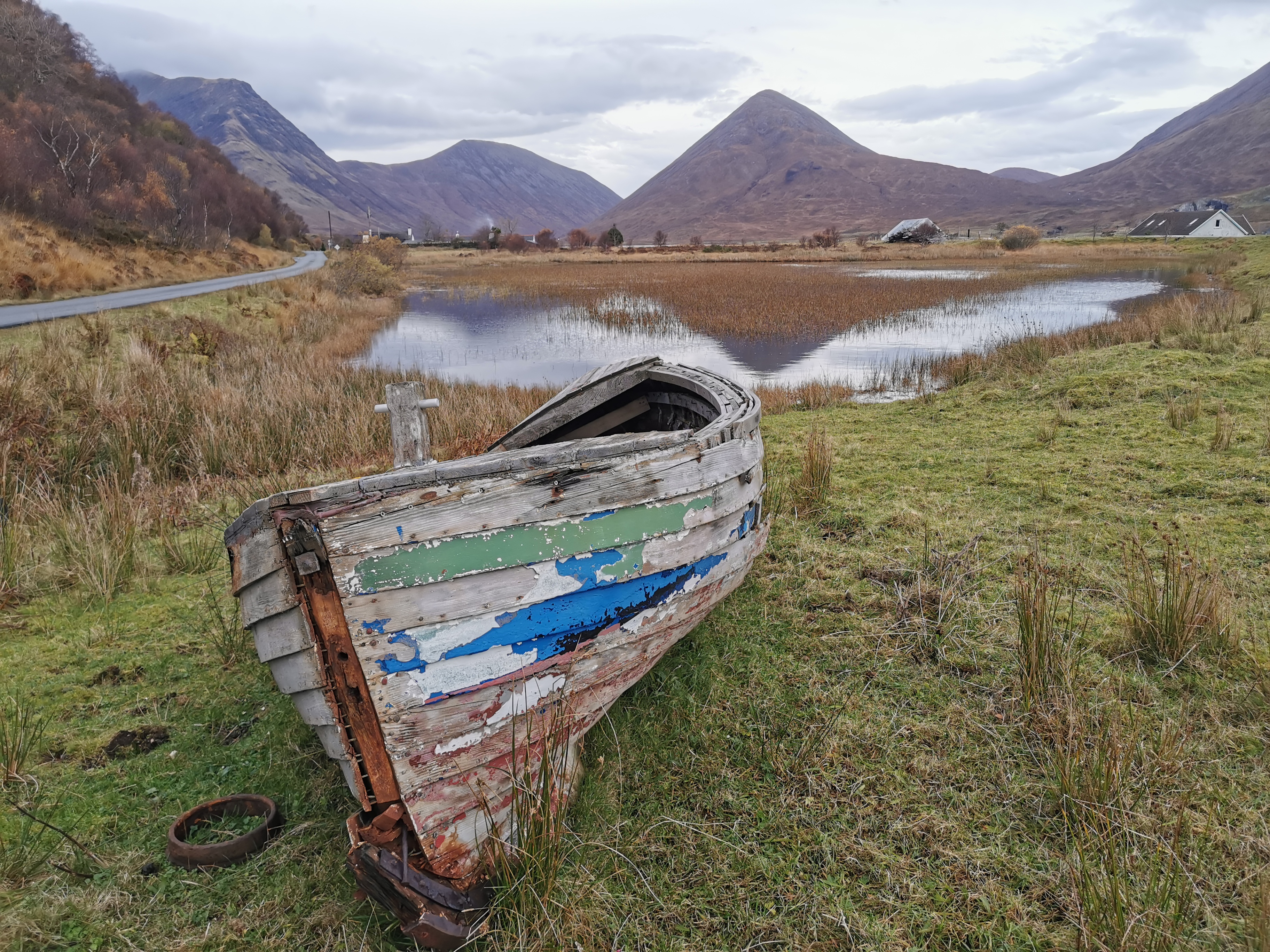
Last week, Anna, my very recent wife of 10 days, picked up a book at ‘Waste Not Want Not’ in Torrin, a free community recycling site under the mountain Blà Bheinn’s watchful gaze. I read the dog-eared, well thumbed copy of a now defunct magazine called ‘Perdiz’ and it was like filling a cup I didn’t know was empty, I entered a world full of humanity, joy and whimsy, a world that celebrated roller derby arse bruises, death, cannabis smoking nuns and a profound pleasure in simple existence. I’m not trying to produce anything for anyone else; I’m just trying to feel like myself again in the face of a tsunami of data and dopamine-fueled digital compulsions.

There are days when my mind races, when the pressure to keep up with everything- work, social media, and life- feels like a storm I can’t outrun. That’s when I walk. The road from Broadford to Elgol (B8083) runs past my house, it’s very hilly and demanding but commands some of the finest views on Skye, and I’ll go there, leave my phone at home and just let my feet move. I read somewhere that walking in nature can lower your stress. I think it was in some psychology journal, but I don’t need the science to tell me it works. I can feel my heartbeat slow, my thoughts settle, as I watch the leaves shift in the breeze. My perspective shifts to the world from the confines of the digitally proscribed tyrannic fiefdom of the screens.

When I’m knackered, when my mind is too tired to keep going, I let myself sleep. Not just a quick nap, but proper sleep, without the guilt of “wasting time.” I’ve learned it’s not wasting time at all, it’s how I return to myself. I’m not afraid to hit the sack at 7pm or 3pm if that’s what I need to make myself whole again.

Then there are those rare moments when my mind feels sharp, clear, like the fog has lifted. That’s when I create. Last month, I started sketching a little herb garden I might plant someday. I’m not a great gardener, but drawing those beds of herbs and imagining them growing felt like creating something real. These rituals are writing, playing music, taking photos, drawing, reading, walking, sleeping, and building, not just habits. They’re my way of holding onto the slow, quiet things I crave, even when the world around me won’t stop shouting.

I’m not alone in this longing, and that’s been a comfort. I shared my thoughts with a mate, our postman, Declan, and he told me he dreams of retiring to a cabin in the woods, near a stream where he can grow vegetables and hear nothing but the wind and the water, chopping firewood without a care for status or metrics. Another friend, Chill, said he feels the same pull to live a life measured by the crackle of that firewood, the rhythm of water against stone, and his drumming in his own space, motivated by joy in the moment, not by likes or career ladders. Hearing their dreams makes my ache feel less lonely, like we’re all reaching for the same stillness and freedom to exist without proving it to anyone.

Here’s where I get a bit stubborn: I think we need to stop letting the world dictate our pace. I’m tired of feeling like I have to sprint through life, like pausing means falling behind. But what if falling behind is the whole point? Growing a herbs takes months, I looked it up, and it’s about 30 to 80 days from planting to harvest. A tune can take years to get right; I’ve got one I’ve been tinkering with since 2023, and it’s still not finished. Friendships, the real ones, need long, lazy afternoons, not just quick texts between meetings. The world tells me this slowness is inefficient, but I’m starting to think it’s the only way to live deeply.

I’m trying to reclaim those slow things, bit by bit. I’ve started leaving my phone in another room most mornings to sit with my tea and watch the light shift. I’ve been writing more, not for anyone else, but for me, essays mostly, but also little notes, tunes, riffs, poems, and dreams of that garden without invasive ruminants I might have one day. I’m walking more, sleeping when needed, and building small things that make me feel alive. It’s not a grand escape yet, but it’s a start. I keep thinking about what success could look like if I measured it differently, if a single herb plant I grew myself, or a tune no one ever heard, was enough.

This ache for slowness isn’t about giving up on life; it’s about remembering what makes me feel human. It’s about listening to that quiet urge to plant, play, write, and be, even when the noise tries to drown it out. I’m not alone in this, and neither are you. Maybe we can all find our own small rebellions, our own ways to slow down, to live deeply, to make space for the things that take time to bloom. For me, that starts with a notebook, a walk, an instrument, a good night’s sleep, and the dream of a garden I’ll tend one day, all on my own terms.

Reclaim Your Attention: A Left Hook to a Hyper-Capitalist Habit.

That phone in your pocket? It’s not your friend. It’s a brain-rotting instrument, meticulously engineered by tech oligarchs to scramble your grey matter, decimate your focus, and keep you hooked so they can sell you more shit you don’t need and further a far-right-wing anarcho-capitalist ideology that is killing the planet. It both undermines progressive thought and serves far-right governments, bad actors and authoritarians across the globe. It’s unregulated, unfettered digital anarchy and for sale to the highest bidder, no questions asked. It’s not just you; it’s a societal affliction, this creeping idiocy by design. You feel it, I feel it. We’re all getting a bit too responsive, easily angered, dafter, a bit more on edge, and that bloody phone is usually the prime suspect.

Now, I could parrot the usual advice:  buy an old-fashioned dumb phone,  look in phone settings and grey-scale your screen, mute notifications, go smell the roses, and chill out. But you’ve already tried that, and it’s a sticking plaster on a gaping wound that just won’t heal.

Why is an artist like me delving into big tech and self-help? The answer is simple: I am appalled by the rot in our society, the political radicalisation, the public apathy, and the hyper-capitalist frenzy gutting our communities and our planet. It’s all amplified, refined, and delivered through that devilish device in your pocket. It’s a weapon of mass distraction and, frankly, mass derangement. So, disarming it, or at least understanding its mechanics, is a political act.

Step One: Recognise your Enemy (It’s Not You, It’s Them)

You know it isn’t good for you, but you feel you can’t live without it. That’s the trap. And how do I know? Because everyone I talk to says the same damn thing. Your time, attention, and sanity are being siphoned off simply to serve you adverts. That’s the grand, pathetic truth. All this psychic damage, this digitally engineered ADHD, this paranoia – it’s so some algorithm can flog you a pair of cheap trousers from a sweatshop via Temu.

That’s the sole purpose of these “social” media platforms: to keep your eyeballs glued long enough to absorb advertising. The brightest minds of a generation, not curing cancer or solving climate change, but figuring out how to make you click on an ad. It’s built on casino psychology – the endless scroll, the intermittent rewards – turning us into lab rats pulling a lever for the next dopamine pellet.

And notice how everything feels a bit… worse? It’s the relentless ‘shitification’ of society, isn’t it? The grim endgame of decades of trickle-down economics that have plundered the working class, with the phone now a key accelerant. These platforms thrive on engagement, and what gets engagement? Outrage. Fear. Division. The algorithms aren’t designed to inform you or make you happy; they’re designed to keep you on the app, even if it means turning you into a raving bigot against, say, migrants, or anyone deemed too ‘woke’ by a right-wing press waging its own relentless war on common sense and decency. Fascism always needs a scapegoat to ‘otherise‘, and they’re adept at finding new ones weekly. Very soon, in the words of the National Lottery, ‘It could be you’.

Researchers and whistleblowers have repeatedly linked platforms like Facebook to real-world violence and even genocide. Social media platforms whip up hatred, fracture communities, and for what? To sell you some plastic tat you don’t need. It’s grotesque. We’re letting them rewire our brains for their profit margins. The phone isn’t a tool anymore; it’s a direct conduit for Silicon Valley’s richest and most morally bankrupt to extract value from your consciousness. The broligarchy is real, and it wants your soul, your vote, and constantly demands your attention 24/7 if you let it.

So, here’s the first practical step: stop blaming yourself. The guilt, the “I have no discipline” narrative – that’s what they want. Instead, get righteously angry. These corporations, these billionaires, did this to us, deliberately, for profit. Channel that anger. It’s far more motivating than shame. There’s a reason it’s called “rage bait,” not “guilt bait.”

Step Two: Reclaim Your Tools – The Humble Computer

You’ve seen the videos: “I cut my screen time by 80%… by using my computer more.” Sounds like a cheat, but it’s fundamental. The phone is the brain-rot machine; the computer, by and large, remains a tool. Computers were built for doing things, not just passively consuming.

Think about “apps.” If, back in 2007, Twitter had said, “To read these short messages, you must first download and install our proprietary program,” we’d have told them to sod off. You’re a website, mate. But on phones, this became normal. We stopped visiting websites and started living inside these corporate-owned, walled gardens. Each app’s sole purpose, remember, is to keep you in the app, away from the open internet, so they can farm more data and show more ads. Click an external link on Instagram? “Are you sure you want to leave our lovely, data-rich environment? How about our terrible in-app browser instead, so we can track you further?” It’s insidious.

On a computer, you have the whole messy, wonderful internet. Plus, actual programs you can (sometimes even legally) own and use. You can still doomscroll on a PC, but it’s less appealing, less immediate. And crucially, you can do other things. My survey showed most use phones for mindless entertainment. But for creative pursuits – music, writing, coding, art – it’s the computer that truly serves as a tool for active engagement, not passive consumption.

The early internet was a “Wild West” precisely because these tech feudal lords hadn’t yet enclosed the commons for profit. You can still find that spirit on a PC. That’s how I learned most of what I know – by stumbling across something interesting online and giving it a go.

Worried about DMs? Apps like Beeper or Texts can pull all your messages onto your computer. You see the funny tweet your mate sent without falling down the Twitter rabbit hole for an hour. The point is, on a computer, you can walk away. It’s not physically tethered to you.

And enhance your computer’s defences:

  • Unhook for YouTube: Kills the recommended videos, stopping the endless rabbit hole.
  • uBlock Origin (or similar for Reddit): Block those distracting, addictive homepages.
  • SelfControl (or equivalent): When needed, hard blocks sites and reclaims your focus.
  • One tool is absolutely non-negotiable: AD BLOCKER. If Chrome phases them out, switch to Firefox. Seriously. Once you experience ad-free internet, going back is like being waterboarded with commercials. This is about reclaiming your mental space from corporate bombardment.

This fights “algorithmic complacency”, that passive acceptance of whatever Zuckerberg or Musk decides to mainline into your brain. Don’t let them be your curators. Actively choose your information. That’s freedom of thought. On a computer, you have more agency. You could scroll Twitter, or you could open a tutorial and learn something, create something, or engage with something real.

Step Three: Sundry Practical Defences

  • Screen Time Passwords: If you use them, get a trusted friend to set it, or do it with your eyes closed and forget it.
  • Replace Bad Habits with Less Bad Ones: Instead of Twitter, try Sudoku, chess puzzles, a language app, or even an e-book from the library. Something engaging but not soul-destroying. Replace mindless scrolling with things like general knowledge or puzzles.
  • No Phone in Bed. Ever. It’s the devil’s work. It’s the mind-killer. Keep it charging in another room. Your alarm can be a cheap, old-fashioned clock.
  • Fidget Wisely: If you’re like me and your hands need to be busy, find an alternative. Draw, write, play a tune, sing, have a conversation, go for a walk. Anything to stop that reflexive phone grab.
  • Embrace Full Albums: A night listening to actual, complete albums, perhaps with a nice cup of tea or a glass of wine, if that’s your thing, is infinitely better than doomscrolling.

A Final Word on Accessing Culture (and Sticking it to the Man)

Are you really going to subscribe to Disney+, Netflix, HBO, Now TV, and whatever else these media conglomerates cook up, especially in this economy, while writers and actors get shafted? Consider where your money goes. Typing ‘TV show online free’ or exploring alternative ways to access culture isn’t just about saving a few quid. It’s about questioning who controls information and art. The knowledge that Jeff Bezos or some other media baron isn’t getting another cut, while you still get to engage with culture, is liberating. Think about supporting independent artists, local venues, or buying directly from creators, rather than padding the pockets of massive corporations who increasingly treat art as mere “content” for their streaming wars.

Ultimately, this is about reclaiming your mind, time, and agency from systems designed to exploit them. It’s a small act of rebellion, but it is vital for your sanity and, dare I say, for the health of our democracy and planet. Use your tools wisely. Don’t let them use you. Your mind is the last uncolonised territory; defend it.

Switch off data roaming on your phone and Wi-Fi while you are at it. Make your use of the devil in your pocket a conscious choice, not a dopamine-fueled automatic reflex that feeds the machine. Look at the world outside; see the beauty of life beyond the tiny screen in your hand.

Turn off. Tune in. Wake-up.