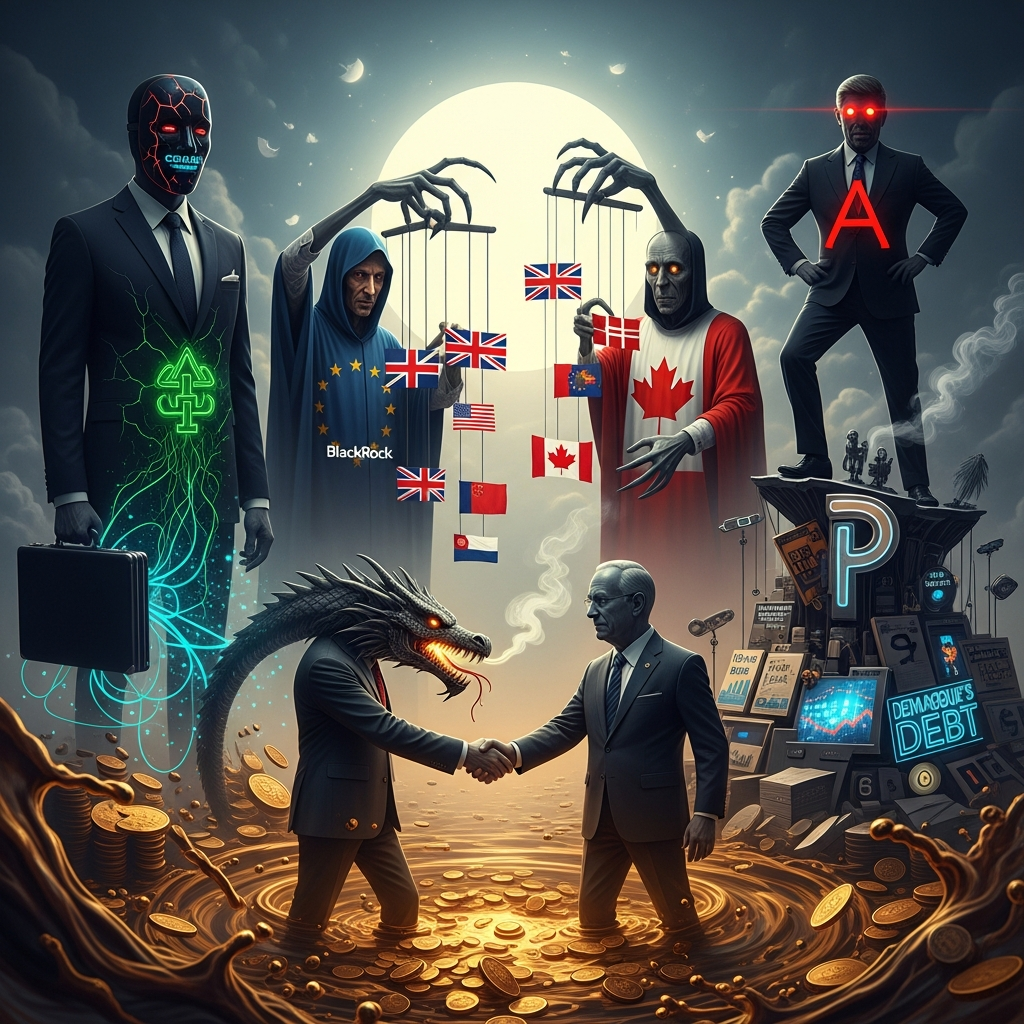
That grinding sense of exhaustion after every election in the UK has to change; we’ve had enough of two-party politics and first-past-the-post and the failed two-party system. Nobody wants to vote as a damage limitation exercise. Holding your nose, ticking a box for the least bad option, and hoping for the best, only to find the ‘best’ felt suspiciously like a slower, slightly more polite version of the same old austere managed decline. That feeling isn’t an accident. It’s the managed despair that keeps a broken two-party system on life support.
But what if that exhaustion is the signal that the game itself is changing? The 2024 election gave Labour a government, but it didn’t provide them with the courage to act on their mandate for real hope. With public support already fraying, a vacuum is opening up on the Left. And it is into this vacuum that the Green Party is stepping, powered not just by a sharp new strategy but by a tidal wave fuelled by hope. With membership surging past 124,000—making them the third-largest party and closing in on the Conservatives—this is no longer just a protest vote. It’s a movement gathering unstoppable force.
This movement is being channelled into a patient, four-phase plan to build a new politics from the ground up.
Phase One: Lay the Foundations in Our Communities. This is where the new energy is most visible. The strategy has already started not in Westminster, but in your town hall, and it’s being executed by a rapidly growing army of activists. The Greens’ 859 councillors are the tip of the spear, but the shaft is the thousands of new members turning up to canvass, deliver leaflets, and stand for election themselves. Every pothole fixed, every local renewable energy scheme approved becomes a proof of concept, building an infrastructure of trust that is powered by sheer people-power.
Phase Two: Inspire a National Conversation. With those local foundations secured by a legion of volunteers, the next step is to take the vision national. This means doubling down on a message of hope that resonates because it’s authentic. The membership surge isn’t happening in a vacuum; it’s a direct response to policies that offer a stark, positive choice: a wealth tax on billionaires to fund public services; bringing energy and rail back into public hands; rent controls to tackle the housing crisis. The strategy is to link these bold ideas to people’s daily lives, framing environmentalism not as a sacrifice, but as the essential toolkit for a fairer, more secure society—a message now amplified by over a hundred thousand voices.
Phase Three: Offer a Clear Choice in the Heartland. This is where the plan becomes truly focused, and where the new-found scale of the party becomes a powerful force for change. The aim is to methodically concentrate on over 100 constituencies where disillusionment with the old parties is highest. An ambition like that would have been a fantasy a few years ago. Now, funded by membership fees and powered by thousands of activists with the enthusiasm the major parties can only dream of, it becomes a credible alternative. This is how you create a green breakthrough: by having the boots on the ground to give voters a genuine choice, converting apathy into engagement and winning a formidable bloc of Green MPs.
Which brings us to Phase Four: Reshape the System for Good. This is the ultimate goal. The most realistic path to power isn’t winning 326 seats outright, but winning enough—perhaps 40, perhaps 60—to hold the balance of power. A strong bloc of Green MPs, backed by the largest and most engaged activist base in the country, would enter a hung parliament not merely as junior partners, but as architects of a new democracy with a non-negotiable mandate: electoral reform. With nearly 70% of the public supporting Proportional Representation, this is the moment you translate people-power into permanent, systemic change.
So, what does this mean for you, nursing that feeling of political burnout? It means recognising that the cage has no bars, and that you are not alone. The first step is internal: stop seeing politics as something done to you. But the most vital step is external. The energy fuelling this entire strategy isn’t coming from focus groups; it’s coming from people like you. When you join this movement, you aren’t just adding your name to a list. You are the fuel. You are the hands that help lay the foundations in Phase One, the voice that inspires the conversation in Phase Two, and the engine for the breakthrough that will make the old politics obsolete.
It is time for change, and it’s happening now. Real green shoots, new progressive ideas, are breaking through the manufactured concrete consensus that the only direction is right and then far-right.
People are resonating with that deep ache for something fundamentally different, a yearning for a world not defined by the relentless pursuit of profit or the cynical machinations of power, but by genuine human connection and collective well-being. We’ve had enough of the politics of despair, the economics of extraction. What we desperately need now is a politics of hope and an economics of care.
This isn’t just a nice idea; it’s an urgent necessity in a UK landscape dominated by a uni-party consensus that offers little more than managed decline, all while the far-right seeks to deepen the chasms between us. The ‘Friendly fascism’ and centrist authoritarianism we see here thrives on a profound lack of hope, on the exhaustion wrought by a system that consistently prioritises abstract market forces over the tangible needs of people. The hypernormalisation of austerity, the dehumanising rhetoric aimed at anyone struggling to survive, the relentless information overload – it’s all designed to drain our will to fight for something better.
So, what do we actually do? We plant the seeds of that hope, and we cultivate that care, refusing to let the cynicism of others define our future. For me, and for a growing chorus of voices, that means actively building a political movement that embodies these very principles – and that’s precisely what we’re doing with the Green Party. While others offer more of the same, praying at the altar of Neo-liberalism and allowing big money and foreign influence to dictate their every move, we are forging an alternative rooted in genuine compassion and a vision for a just future.
A politics of hope means daring to imagine a country where everyone has a safe, warm home, where our NHS is not just protected but properly funded, where our communities are vibrant and resilient, and where our planet is not sacrificed for short-term gain. It means challenging the insidious lie that there is no alternative to the current trajectory. And an economics of care means fundamentally reorienting our priorities: away from endless growth and towards meeting the needs of all, ensuring dignity for workers, protecting our precious natural resources, and fostering genuine well-being over corporate spreadsheets. It means valuing the essential work of caring for each other, for our children, for our elders, and for our environment, not just the financial transactions that boost GDP.
The culture war, stoked by the far-right and amplified by a complicit media, is a deliberate distraction from this fundamental shift. It’s designed to keep us from uniting around shared values of hope and care. We must see through it and expose it for what it is: a cynical ploy to protect the interests of the powerful by fragmenting the rest of us. When they scream about ‘woke’ ideology, we talk about universal basic income, robust public services, and truly affordable housing – the bedrock of an economics of care.
Fascists thrive on scarcity and fear. A politics of hope and an economics of care counters this directly by affirming abundance and mutual aid. We refuse to let them redefine who is ‘deserving’ of care; we insist that every life has intrinsic value. And when it comes to the Labour and Conservative uni-party, beholden as they are to big money, we expose their rhetoric for what it is: a thinly veiled defence of the status quo, offering managed decline instead of genuine transformation. Austerity instead of abundance.
My own journey has shown me that breaking through these entrenched narratives requires persistent, empathetic communication. We need to reach those who feel disillusioned, those who have been let down by decades of Neo-liberal consensus, and show them that hope isn’t naive – it’s a powerful engine for change. The Green Party’s rapid growth isn’t just about environmentalism; it’s about a fundamental commitment to a politics of hope and an economics of care, a vision that resonates deeply with people who are tired of being told there’s no alternative.
Paulo Freire’s call for critical consciousness is absolutely paramount here. We must question the very foundations of an economic system that prioritises profit over people, and a political system that claims to be democratic while being controlled by external forces. We must empower ourselves, and our communities, to imagine and build an entirely new way of organising society – one based on collaboration, compassion, and true sustainability.
Yes, the fight is monumental. The forces of cynicism and greed are deeply entrenched. But we cannot surrender. We must protect our humanity, our empathy, and our capacity for hope, because these are our most potent weapons. Join your local Green Party. Get involved. Speak truth to power. Demand a politics of hope and an economics of care, not just as abstract ideals, but as the foundational principles of a society truly fit for the 21st century. The most anti-fascist act any of us can make, in the face of managed decline and manufactured misery, is to stubbornly, defiantly, hold onto that vision and work every single day to bring it into vibrant, caring reality.
We need to talk about Nigel. It’s the cognitive dissonance that gets you first. The charming common sense everyman voice, the pint in hand, the easy confidence of someone who sounds both posh and plausible. And then come the words. Bitter, divisive words, spouting the worst kind of rhetoric, but delivered as if he’s just commenting on the weather. As if it’s perfectly normal, perfectly acceptable, to speak of your neighbours and fellow citizens with such casual contempt. The truth is, it isn’t. And that gap—between the slick presentation and the toxic substance, is the most dangerous political space in Britain today.
This performance is not an accident. It’s a finely-tuned political instrument designed to do one thing: to make the unthinkable seem reasonable. The charm is the anaesthetic before the surgery. It lowers your defences, making you receptive to the simple, satisfying diagnosis for that low, persistent hum of anxiety we all feel. It takes your legitimate anger about a broken system and, with a friendly wink, points it towards a simple enemy. It’s a strategy, and it works by making prejudice sound like common sense.
Once you’ve accepted the premise, the policies write themselves. Look at the plans for immigration. They are the logical conclusion of this normalised division. Abolishing the right of people who have lived and worked here for years to call this country home? It stops sounding cruel and starts sounding like ‘management’ when you’ve been told they are a burden. Tearing up international human rights laws? It’s no longer a shocking breach of our values, but a ‘necessary step’ to deal with an invasion. Each policy is another brick in a wall built to divide us, turning the complex failings of the state into a simple story of ‘us versus them’.
Then comes the second front of the attack, aimed not at our borders but at the very heart of our communities. The war on “woke.” The crusade to scrap diversity and equality initiatives. This is the mission to purify the ‘us’ group. It’s a direct assault on the messy, complex, brilliant reality of modern Britain. It sends a clear message that fairness has gone “too far,” that protecting minorities is an attack on the majority. It is a project designed to dismantle empathy, to label tolerance as a weakness, and to give bigotry a political permission slip.
And here is the raw truth we must confront: none of this is about fixing the problems that keep you up at night. Your council tax, the state of the NHS, the price of the weekly shop—these are just the emotional kindling for their fire. The goal isn’t to solve anything. The goal is to keep you angry. It is a political model that thrives on our exhaustion and profits from our division. It is a poison that paralyses our ability to look at our real problems and work together to solve them.
So, what on earth do we do? The first act of resistance is to break the spell. It is to see the performance for what it is: a con. It means actively refusing to swallow the daily diet of rage being served up. Practise ‘informational hygiene’. Guard your own resilience as if it were armour, because that’s exactly what it is. To stay calm and clear-headed in a storm of manufactured hysteria is a radical act.
But personal resilience is just the start. The real antidote to this division is connection. This is the unglamorous, vital, and urgent work ahead. It means rebuilding the bonds they are trying to sever, one conversation at a time. Talk to your actual neighbours. Have the quiet courage to challenge the divisive rhetoric when you hear it from a friend, not with aggression, but with a firm refusal to let it stand. And yes, get involved. Join the most boring-sounding local committee you can find. Be part of the levy that shores up the flood defences of our shared civic decency.
Because that is precisely what is at stake. They are selling a story of a broken Britain that can only be saved by breaking it apart even further. Our job is to tell a better story—and not just to tell it, but to live it. A story built not on fear and suspicion, but on the quiet, stubborn, and profoundly British belief that we are, and always will be, better than this.
In more detail with links
London, UK – A range of policies proposed by Reform UK, particularly concerning immigration, multiculturalism, and equality, have faced widespread criticism for being racist, divisive, and detrimental to social cohesion, according to analyses from political opponents, media reports, and think tanks. While Reform UK asserts its platform addresses legitimate public concerns, critics argue that many of their proposals target minority groups, fuel anti-immigrant sentiment, and could erode community harmony.
Immigration Policies at the Forefront of Controversy
Reform UK’s stringent immigration policies have drawn the most significant condemnation. Proposals to freeze non-essential immigration, leave the European Convention on Human Rights (ECHR), and implement offshore processing for asylum seekers have been labeled as “racist” and “immoral” by opponents.[1] Critics, including Labour leader Keir Starmer, argue that such measures scapegoat immigrants for broader societal problems and normalize state-sanctioned racism.[1][2]
One of the most contentious proposals is the plan to abolish Indefinite Leave to Remain (ILR), a move that could affect hundreds of thousands of legal residents. Starmer has vehemently opposed this, stating it would “rip this country apart” by targeting neighbors and contributors to the economy.[1][3] In response, Reform UK’s head of policy, Zia Yusuf, accused Labour of telling the electorate to “pay hundreds of billions for foreign nationals to live off the state forever, or we’ll call you racist!”[1]
Further proposals, such as a 20% National Insurance surcharge on employers hiring foreign workers and restrictions on international students bringing dependents, have also been criticized as discriminatory and echoing past anti-immigration rhetoric.
Challenges to Multiculturalism and Equality
Reform UK’s stance on multiculturalism and its pledge to scrap Diversity, Equality, and Inclusion (DEI) initiatives have intensified accusations of divisiveness. The party’s manifesto states it would replace the Equality Act, which it claims “requires discrimination in the name of ‘positive action'”.[4] Party leader Nigel Farage has been a vocal critic of DEI, and following success in local elections, has vowed to dismantle what he terms the “DEI industry” in councils under Reform control.[5][6]
Legal experts have warned that abolishing DEI roles could breach the Public Sector Equality Duty, a legal requirement for public bodies to eliminate discrimination and promote equality.[5] Critics argue these policies threaten years of progress on workplace equality and could embolden prejudice.[6] The Good Law Project has accused Reform UK of using women’s safety as a “cover for racism” by linking migration to sexual assault without credible evidence.[7][8]
Divisive Rhetoric and the Impact on Social Cohesion
Commentators suggest that Reform UK’s policies and rhetoric are tapping into a sense of public disillusionment and despair, refracting class anger through a racist lens.[9] The party’s success is seen by some as being built on exploiting fears about immigration and a loss of national identity.[9][10] The rhetoric used by some associated with the party has also come under fire. An undercover investigation revealed a Reform UK canvasser using a racial slur against Prime Minister Rishi Sunak and suggesting migrants crossing the Channel should be shot.[11]
While Keir Starmer has labeled some of Reform’s policies as racist, he has been careful to state that he does not believe all Reform voters are racist, acknowledging their frustration with the political status quo.[2][12][13] However, critics maintain that the party’s platform risks normalizing extremist views and undermining the social fabric of the UK.[9][10] A poll by British Future found that four in ten people believe Reform is a racist party, a perception more pronounced than that of UKIP in 2015.[14]
Reform UK defends its policies as necessary for border security and preserving British culture and values.[15] The party’s rise in popularity, particularly its strong performance in the 2024 general election and its significant presence on social media, indicates that its message resonates with a substantial portion of the electorate.[16][17] Nevertheless, the divisive nature of its platform continues to be a central point of contention in British politics.
An election manifesto is a promise, a plan, a road map to a better world. The seductive whisper that everything can be fixed, and simply. That a broken Britain can be made whole again with a dose of “common sense.” Reform UK has mastered this promise, presenting a vision of slashed taxes and booming growth. But when you pull back the curtain on the grand pronouncements, you don’t find a politics of hope. You find the ghost of failed ideas, a familiar, punishing script of austerity and trickle-down economics designed to benefit the few at the devastating expense of the many.
So, let’s talk about the price tag on this promise. To fund their carnival of tax cuts, Reform plans to find £150 billion in annual savings. A key part of this involves slashing £50 billion from what they call government “waste.” It sounds painless, like trimming the hedges. But the Institute for Fiscal Studies (IFS), a group not known for hyperbole, warns this would “almost certainly require substantial cuts to the quantity or quality of public services.” This isn’t trimming fat; it’s amputating limbs. It’s the sound of your local library closing, the GP appointment you can’t get, the pothole that never gets filled. This is the quiet, grinding misery of austerity, and they are planning it on a scale that would make George Osborne blush.
But where is all that money going? While our public services are starved, Reform intends to cut corporation tax and practically abolish inheritance tax for all but the wealthiest estates. This is the tired, old magic trick of trickle-down economics: the belief that if you shower money on the richest, some of it will eventually splash down onto the rest of us. Yet we’ve seen this show before, and we know how it ends. The IPPR think tank crunched the numbers and found the wealthiest households would gain enormously, while the poorest gain next to nothing. It’s not a rising tide lifting all boats; it’s ordering another bottle of champagne for the super-yacht while puncturing the life rafts.
Frankly, this isn’t just a cruel vision for Britain; it’s fantasy economics. The architects of this plan are building a house on foundations of pure wishful thinking. The IFS has stated bluntly that “the sums in this manifesto do not add up,” labelling the entire package “problematic.” They calculate that the proposed tax cuts would cost tens of billions more than Reform claims, while the savings are wildly optimistic. This isn’t a serious plan for government. It’s a fiscal implosion waiting to happen, a reckless gamble where the chips are our public services and the futures of millions.
To see this plan for what it is—a politics of exploitation masquerading as hope—is the first act of defence. But understanding the deception isn’t enough. The most powerful response isn’t to despair, but to build. The true antidote to a politics that seeks to divide and dismantle is the patient, unglamorous work of shoring up our communities. It means looking up from our screens, talking to our neighbours, and strengthening the bonds that this ideology needs us to forget we have.
So, what’s the path forward? It begins with reclaiming your own agency. Start by practicing some informational hygiene; read past the headlines and question the easy promises. But then, take that awareness outside. Find the most boring-sounding local committee you can and join it. A library support group, a park watch, a tenants’ association. This is the real work. It’s the levy that shores up the flood defences. Because when they come with their politics of misery, they will find that the fabric of our communities is far stronger, more resilient, and more hopeful than their cynical calculations could ever imagine.
And for those of you who like facts here’s the data:
Reform UK’s Economic Blueprint: A Politics of Misery Masked as Hope
Central Premise: Reform UK’s economic proposals, centred on sweeping tax cuts and contentious spending reductions, represent not a politics of hope, but a thinly veiled return to austerity and trickle-down economics that favours the wealthy at the expense of public services and the vulnerable.
In the contemporary British political landscape, Reform UK has positioned itself as a radical alternative, promising to slash waste, cut taxes, and unlock economic growth.[1] However, a closer examination of their 2024 manifesto and subsequent policy announcements reveals a framework built on familiar, and many argue failed, economic ideologies. The party’s platform, which proposes massive tax cuts funded by equally large spending reductions, has been flagged by economic experts as “financially unrealistic” and reliant on “extremely optimistic assumptions.”[2][3][4] This analysis suggests that behind the rhetoric of hope lies a program of deep austerity and trickle-down economics, threatening the very fabric of public services and social support systems.
The Austerity Agenda: Deep and Unspecified Cuts
Reform UK’s fiscal plan is predicated on achieving £150 billion in annual savings to fund nearly £90 billion in tax cuts and £50 billion in spending increases.[5] A significant portion of these savings, £50 billion to be exact, is expected to come from cutting “wasteful” spending across government departments.[5][6] However, the Institute for Fiscal Studies (IFS) has warned that saving such a substantial sum would “almost certainly require substantial cuts to the quantity or quality of public services” and go far beyond a simple crackdown on waste.[5][7]
This approach is characteristic of austerity, where broad, often unspecified, cuts to public expenditure are implemented to reduce the budget deficit, frequently impacting frontline services. The IFS has stated that Reform UK is proposing a “very different vision for the role of government,” one that involves “much lower taxes, paid for with large, unspecified cuts to public services.”[7] This raises serious concerns about the future of essential services that citizens rely on.
Further austerity-aligned policies include the proposed £30 billion annual saving from scrapping net-zero commitments and green energy subsidies.[8] While presented as a measure to reduce household bills, this move would dismantle long-term environmental strategies and could have far-reaching economic and environmental consequences. Similarly, a planned £15 billion cut to the welfare bill is aimed at getting people “back to work,” a common refrain in austerity narratives that often overlooks the complex reasons for unemployment and economic inactivity.
Trickle-Down Economics: Benefiting the Few, Not the Many
At the heart of Reform UK’s economic strategy is a series of tax cuts that disproportionately benefit businesses and high earners, a hallmark of trickle-down economics. The theory posits that reducing the tax burden on the wealthy and corporations will stimulate investment, create jobs, and ultimately benefit everyone. However, historical evidence and economic studies have repeatedly challenged this notion, showing that such policies often exacerbate income inequality without delivering significant economic growth.[9][10]
Key proposals from Reform UK include reducing the main corporation tax rate from 25% to 15% and abolishing inheritance tax for estates under £2 million.[11][12] The IFS has noted that the costing for the corporation tax cut is less than half of what official estimates suggest the long-run cost would be.[5] These measures, along with plans to raise the income tax personal allowance to £20,000, would indeed leave more money in some pockets.[11] However, analysis from the IPPR think tank indicates that the wealthiest fifth of households would gain significantly more from these changes than the poorest 20%.[13]
This approach has been criticized as a “right-wing, free-market libertarian playbook” that would do little to help the working-class families Reform claims to champion, while providing a substantial boost to the super-rich.[13] Critics argue that this focus on top-end tax cuts ignores the immediate needs of a population grappling with a cost of living crisis and struggling public services.[14]
Unrealistic Projections and a “Problematic” Package
The feasibility of Reform UK’s entire economic plan has been called into question by leading economic analysts. The IFS has bluntly stated that “the sums in this manifesto do not add up,” describing the package as “problematic.”[3][5] They project that the proposed tax cuts would cost “tens of billions of pounds a year more” than Reform anticipates, while the spending reductions would save less than stated.[3][5]
This significant fiscal gap suggests that, if implemented, Reform UK’s policies would either lead to a massive increase in government borrowing, a move that could destabilize the economy, or necessitate even deeper cuts to public services than currently admitted. The party’s rejection of criticism, with leader Nigel Farage describing the proposals as “outside the box,” does little to inspire confidence in their fiscal credibility.[3]
The Politics of Misery
By cloaking austerity and trickle-down economics in the language of “common sense” and “hope,” Reform UK presents a vision that, upon closer inspection, threatens to entrench inequality and dismantle the public sphere. Their proposals rely on unrealistic savings to fund tax cuts for the wealthy, a formula that has historically led to underfunded public services and a fraying social safety net.[15]
This is not a politics of hope for the average worker, the pensioner, or the family reliant on the NHS. It is a politics of exploitation and misery, where the burden of fiscal adjustment falls on the shoulders of the many, while the benefits flow to the few. The promise of a revitalized Britain, freed from the shackles of high taxes and “wasteful” spending, is a seductive one. However, the reality of Reform UK’s economic agenda is a future of diminished public services and widened social divisions.
Nigel Farage has thrived as a political insurgent and would be useless as an incumbent of political office, like the turd that won’t flush. He has become a constant fixture in the feckless punditry of the media class, proffered to the disenfranchised and angry as a universal panacea for their grinding poverty and relentless exploitation. His is the politics of hate and eugenics dressed up in red, white, and blue.
But there really is hope.
For alongside the stench of stale ale, fags, and old roubles, there is the toxic whiff of yesterday’s news about him. Like your hate-filled racist uncle, he has overstayed his welcome, another Trump tribute act and just one repeat appearance too many from Aunty Beeb.
Nigel Farage embodies feelings of visceral disgust and a sense of national embarrassment. Drunk on attention, he refuses to leave the political stage, even as we grapple with a terrifying political reality. The weariness is palpable; the sense that those in charge are not just failing but speaking a different language has curdled into a desperation for anyone to dismantle the rotten structure. Recent polling even suggests this desperation could make him Prime Minister. The bloke from the pub, the uncle you avoid at family gatherings, could soon be the resident of Number 10. The fundamental problem with professional arsonists, of course, is that you should never, ever ask them to look after the matches or give them the keys to your house.
You have to hand it to him, the man knows his craft. For three decades, Farage has perfected the art of the political insurgent. He is a master diagnostician of national discontent, tapping into the veins of frustration over immigration, sovereignty, and a sneering elite with unerring accuracy. His victory with the Brexit campaign wasn’t a fluke; it was the culmination of a career spent turning apathy into anger, and anger into votes. He is a brilliant campaigner, a savvy media operator who can turn a cancelled bank account into a national crusade and command a stage with the practiced ease of a seasoned broadcaster. He provides a simple, satisfying release valve for a complex and paralysing pressure. He gives you someone to blame. And in a world that feels chaotic and nonsensical, that is a powerful, seductive gift.
But here’s the rub: the skills required to tear a house down are the polar opposite of those needed to build one. The insurgent’s armoury – the pint, the fag, the sharp soundbite – becomes a liability in the quiet corridors of power where detail, diplomacy, and diligence are the currency. This is a man who has serially quit every major leadership role he’s ever had, often vanishing in a puff of drama only to return when the spotlight beckoned once more. He has never run a government department, never managed a large-scale bureaucracy, and surrounded himself with a party whose own candidates have a history of scandal and incompetence. His entire career has been a protest against the establishment; he has no experience, and seemingly no interest, in the grinding, unglamorous work of actually being it.
Worse, his playbook for power is a recipe for national disaster. He championed Liz Truss’s catastrophic mini-budget, a policy that sent the markets into a tailspin, and seems keen to repeat the experiment. Analysts warn a Farage premiership could trigger a 20% collapse in the pound, with inflation and mortgage rates soaring into double digits. His signature policy, Brexit, is a project he now openly admits has failed, yet his solution is inevitably more of the same poison. That stench of stale ale and old roubles you mentioned isn’t just an aesthetic; it’s the smell of economic instability and diplomatic isolation. It’s the toxic whiff of a man still shouting the same old slogans as the world moves on, leaving us to live with the consequences.
So, what do we do? It’s easy to feel helpless, to simply ride the wave of outrage and despair. But that is exactly what this brand of politics wants. It thrives on our exhaustion. The real act of rebellion, the truly patriotic act, isn’t to find a louder strongman to shout back. It is to deny the outrage-merchants their fuel. It starts with a quiet, personal insurgency: curating your media diet with ruthless discipline, practising what you might call informational hygiene, and refusing to let your emotional state be dictated by the latest manufactured controversy.
And then you take that resilience outside. The antidote to the grand, empty spectacle of national politics is the tangible reality of local action. Find the most boring-sounding local committee you can – planning, parks, the parish council – and join it. Re-engage with the civic fabric of your community by talking to people. Build something. Fix something. This is the painstaking, vital work of democracy. It’s the levy that shores up the flood defences against the tide of populism. It is how we prove that real power doesn’t come from a bloke shouting in a television studio, but from the collective, determined effort of people who have decided, quietly and firmly, to take back control for themselves.
To understand what’s coming with the mandatory “Brit Card,” you first have to understand who is already here. The scheme isn’t appearing out of thin air; it’s the logical capstone on an infrastructure that has been quietly and deliberately assembled over years by a single, dominant player: Palantir. Their involvement isn’t just possible—it’s the probable, planned outcome of a strategy that serves both their corporate interests and the UK government’s long-held ambitions.
Let’s be clear about the facts. Palantir isn’t some new bidder for a government contract; they are already embedded, their surveillance tentacles wrapped around the core functions of the British state. They have over two dozen contracts, including with the NHS to analyse patient data, the Ministry of Defence for military intelligence, and police forces for “predictive policing.” They are in the Cabinet Office, they are in local government. They are, in essence, the state’s private intelligence agency.
This is a company forged in the crucible of the CIA and the NSA, whose entire business model is to turn citizen data into surveillance gold. Their track record is one of mass surveillance, racial profiling algorithms, and profiting from border control and deportations. To believe that this company would be hired to build a simple, privacy-respecting ID system is to willfully ignore everything they are and everything they do. The “Brit Card” is not a separate project for them. It is the keystone—the final piece that will allow them to link all their disparate data streams into one terrifyingly complete surveillance engine, with every UK adult forced onto its database.
But to grasp the scale of the threat, you have to ask why this is happening here, in the UK, and not anywhere else in Europe. This isn’t a happy accident; it’s a deliberate strategy. Palantir has chosen the UK for its European Defence HQ for a very simple reason: post-Brexit Britain is actively marketing itself as a deregulated safe harbour.
The UK government is offering what the EU, with its precautionary principles and landmark AI Act, cannot: regulatory flexibility. For a company like Palantir, whose business thrives in the grey areas of ethics and law, the EU is a minefield of compliance. The UK, by contrast, is signalling that it’s willing to write the rules in collaboration with them. The government’s refusal to sign the Paris AI declaration over “national security” concerns was not a minor diplomatic snub; it was the smoking gun. It was a clear signal to Silicon Valley that Britain is open for a different kind of business, one where restrictive governance will not get in the way of profit or state power.
This brings us to the core of the arrangement: a deeply symbiotic relationship. The UK government offers a favourable legal environment and waves a giant chequebook, with an industrial policy explicitly geared towards making the country a hub for AI and defence tech. The MoD contracts and R&D funding are a direct financial lure for predatory American corporations like Palantir, Blackrock, and Blackstone, inviting them to make deep, strategic incursions into our critical public infrastructure.
This isn’t charity, of course. In return, Palantir offers the government the tools for mass surveillance under the plausible deniability of a private contract. By establishing its HQ here, Palantir satisfies all the sovereign risk and security concerns, making them the perfect “trusted” partner. It’s a perfect feedback loop: the government signals its deregulatory intent, the money flows into defence and AI, and a company like Palantir responds by embedding itself ever deeper into the fabric of the state.
This isn’t about controlling immigration. It’s about building the infrastructure to control citizens. We are sacrificing our regulatory sovereignty for a perceived edge in security and technology, and in doing so, we are rolling out the red carpet for the very companies that specialise in monitoring us. When the firm that helps the CIA track its targets is hired to build your national ID card, you’re not getting documentation. You’re getting monitored.
You’ve heard all the promises about the Digital Pound. That it’s safe. That your privacy is guaranteed. But you have to ask yourself one brutal question: what happens when the people making those promises are gone? Because in the hands of an authoritarian regime, the system they are building today becomes the perfect weapon for controlling you tomorrow. This isn’t an academic exercise; it’s a warning. The infrastructure of a digital cage is being assembled right now, and what matters isn’t the current design, but what it will become in the wrong hands.
This isn’t just an academic exercise. History is littered with democracies that faltered. To build this infrastructure without considering the worst-case scenario is not just naive; it is reckless. In the event of an authoritarian takeover, the digital pound, linked to a Digital ID, would not be a tool of convenience. It would be the most perfect instrument of state control ever conceived.
The first and most immediate change would be the weaponisation of surveillance. All the current safeguards—GDPR, promises of data privacy, the separation between the Bank and private wallet providers—would be swept away overnight. An authoritarian state would rewrite the laws, bypass regulations, or simply coerce private companies to hand over the data. The system is already designed for traceability; a new regime would just have to point it in the right direction. Every transaction, every donation, every purchase would become an open book to the state, revealing your networks, your beliefs, and your loyalties. Financial privacy would cease to exist.
This leads directly to the next implication: conditional access to your own life. Today, they promise it’s a choice. Under an authoritarian regime, that choice would vanish. The digital pound would become mandatory, and cash, the last bastion of anonymity, would be aggressively phased out. We’ve seen how quickly existing financial systems can be turned against citizens. During the 2016 coup attempt in Turkey, the government froze the bank accounts of thousands of suspected dissidents. A digital pound would make this process frictionless and absolute.
Your access to money, and therefore your ability to buy food, pay rent, or travel, would be tied directly to your compliance. A centralised Digital ID would become the linchpin of a social credit system, where your right to participate in the economy is granted or denied based on your loyalty to the regime. Step out of line, and you could be switched off. Not arrested, not charged, just silently and efficiently excluded.
With this power, our fundamental civil liberties would be dismantled. The right to protest, to assemble, and to speak freely would be neutered. An authoritarian state could reprogramme the digital pound in an instant. It could block donations to opposition groups, restrict travel to protest locations, or even limit what you are allowed to purchase. The “silent denial of a transaction” would become the state’s most effective tool for suppressing dissent, creating a chilling effect that would silence opposition far more effectively than any police force.
And in a final, devastating step, such a regime could use the digital pound to manipulate the economy for its own ends. It could issue “helicopter money” directly into citizens’ wallets to shore up loyalty, but with strings attached—programmable funds that can only be spent on state-approved goods. It could even revalue the currency overnight, forcing everyone into the new system and wiping out the savings of those who resist.
The democratic checks and balances we rely on today are fragile. They can be eroded or dismantled. The infrastructure we build, however, is permanent. To create a centralised system that fuses identity and money is to build a cage. We may be promised that the door will remain unlocked, but in the hands of an authoritarian ruler, that door would be slammed shut and bolted. The Digital Pound would become the ultimate enforcer, turning every citizen into a subject, their freedom contingent on the flick of a switch.
The Digital Back Door: Why a National ID is the End of a Free Society
Every breath you take And every move you make Every bond you break Every step you take I’ll be watching you
Lyric George Sumner – The Police
There’s a pitch being sold to the British public, dressed up in the language of convenience and national security. It’s the idea of a Digital ID for every adult, a neat, modern solution to complex problems like illegal migration.
I can tell you this isn’t progress. It’s the architecture of a control system, a Trojan horse that smuggles a surveillance state in under the guise of efficiency. It is the end of a free society, and we are sleepwalking towards it.
Let’s start by dismantling the primary justification: fixing the border. The claim that a Digital ID will stop the boats is, to put it plainly, bollocks. It will not stop trafficking gangs, nor will it fix a fundamentally broken system. Criminals and their networks are, by their very nature, experts at working around systems; they adapt faster than bureaucracies can legislate. The ones who will pay the price for this vast, expensive, and dangerous infrastructure will not be the criminals, but the honest, law-abiding citizens of this country.
The fundamental flaw lies in a concept I deal with daily: centralised risk. We spend hundreds of billions a year on cybersecurity, yet the volume and severity of data breaches are breaking records. The threat grows faster than the spend. From Jaguar Land Rover to major airports, no centralised system has proven impenetrable. Now, imagine that vulnerability scaled up to a national level, with a single database linking your identity to every checkpoint of daily life: where you go, what you buy, what you read, and who you speak to.
Here is the risk that ministers will not admit. A sophisticated ransomware attack, seeded quietly through a compromised supplier or a disgruntled insider, lies dormant for months. It slowly rolls through the backups, undetected. Then, on trigger day, the live registry and every recovery set are encrypted simultaneously. The country grinds to a halt. Payments fail. Health and benefits systems stall. Borders slow to a crawl. Citizens are frozen out of their own lives until a ransom is paid or the state is forced to rebuild the nation’s identity from scratch. To centralise identity is to centralise failure.
This, however, is only the technical risk. The greater political and social danger lies in the certainty of function creep. It will begin as an optional, convenient way to log in or prove your age. But it will not end there. It will inevitably become a mandatory prerequisite for accessing money, travel, employment, and essential public services. Our fundamental rights will be turned into permissions, granted or revoked by the state and its chosen corporate contractors.
This isn’t a theoretical dystopian future; it’s a documented reality. India’s Aadhaar system, initially for welfare, now underpins everything from banking to mobile phones and has been plagued by data leaks exposing millions to fraud. We are seeing the groundwork laid in the UK with the Digital Identity and Attributes Trust Framework (DIATF), a federated model reliant on a network of private suppliers like Yoti, Hippo Digital, and IDEMIA. This multi-vendor approach doesn’t eliminate risk; it multiplies the potential points of failure through a web of interconnected APIs, each a potential back door for attackers.
Furthermore, this system is built on a foundation of exclusion. The assumption of universal digital literacy is a dangerous fiction. With a significant percentage of UK adults lacking basic digital skills, a mandatory Digital ID will create a two-tier society. The elderly, the poor, and the vulnerable—those who cannot or will not comply—risk being locked out of the services they need most, deepening inequality and fuelling social unrest.
The gravest danger, however, emerges when this infrastructure is placed in the context of a crisis. Economic collapse, social unrest, or an environmental emergency often serves as the justification for an expansion of state power. A Digital ID system provides the ready-made tool for authoritarianism. In a crisis, it could be repurposed to monitor dissent, freeze the bank accounts of protesters, or restrict the movement of individuals deemed a threat. It builds, by stealth, the machinery for a social credit system.
And this brings us to the corporate engine waiting to power this machine: Palantir. The US data-mining firm is already deeply embedded within the UK state, with contracts spanning the NHS and the Ministry of Defence. Palantir doesn’t need a specific contract for the “Brit Card”; its platforms, Foundry and Gotham, are designed to do precisely what a Digital ID enables on a mass scale: fuse disparate datasets into a single, all-encompassing profile for every citizen.
The Digital ID would be the “golden record” that connects your health data, your financial transactions, your movements, and your communications. In a crisis, Palantir’s AI could be used for predictive surveillance—flagging individuals who enter a “protest zone” or transactions to “undesirable” organisations. This isn’t just a British system; with Palantir’s deep ties to US intelligence, it becomes a system subject to foreign demands under legislation like the CLOUD Act. We would be outsourcing our national sovereignty.
The entire premise is flawed. If the government were serious about the border, it would enforce current laws, properly resource patrols and processing, and close existing loopholes. You do not need to build a panopticon to do that. We scrapped ID cards in 2010 for a reason, recognising their threat to our fundamental liberties. Reintroducing them through the digital back door, outsourced to a network of private contractors and data-mining firms, is a monumental error.
There are better ways. Decentralised alternatives using cryptographic methods like zero-knowledge proofs can verify status or identity without creating a central honeypot of data. But these privacy-first solutions lack government traction because the true, unstated goal is not security or convenience. It is control. We must not fall for the pitch. This is a system that will centralise risk and outsource blame. It will punish the vulnerable while failing to stop the criminals it targets. It is the foundation for a future where our rights are contingent on our compliance. The choice is simple: yes to privacy-first proofs, no to a database state.
Whilst all eyes are on Trump at Windsor the UK Government announced the “Tech Prosperity Deal,” a picture is emerging not of a partnership, but of a wholesale outsourcing of Britain’s digital future to a handful of American tech behemoths. The government’s announcement, dripping with talk of a “golden age” and “generational step change,” paints a utopian vision of jobs and innovation. But peel back the layers of PR, and the £31 billion deal begins to look less like an investment in Britain and more like a leveraged buyout of its critical infrastructure.
At the heart of this cosy relationship lies a bespoke new framework: the “AI Growth Zone.” The first of its kind, established in the North East, is the blueprint for this new model of governance. It isn’t just a tax break; it’s a red-carpet-lined, red-tape-free corridor designed explicitly for the benefit of companies like Microsoft, NVIDIA, and OpenAI. The government’s role has shifted from regulation to facilitation, promising to “clear the path” by offering streamlined planning and, crucially, priority access to the national power grid—a resource already under strain.
While ministers celebrate the headline figure of £31 billion in private capital, the true cost to the public is being quietly written off in the footnotes. This isn’t free money. The British public is footing the bill indirectly through a cascade of financial incentives baked into the UK’s Freeport and Investment Zone strategy. These “special tax sites” offer corporations up to 100% relief on business rates for five years, exemptions from Stamp Duty, and massive allowances on capital investment. For every pound of tax relief handed to Microsoft for its £22 billion supercomputer or Blackstone for its £10 billion data centre campus, that is a pound less for schools, hospitals, and public services.
Conspicuously absent from this grand bargain is any meaningful protection for the very people whose data will fuel this new digital economy. The deafening silence from Downing Street on the need for a Citizens’ Bill of Digital Rights is telling. Such a bill would enshrine fundamental protections: the right to own and control one’s personal data, the right to transparency in algorithmic decision-making, and the right to privacy from pervasive state and corporate surveillance. Instead, the British public is left to navigate this new era with a patchwork of outdated data protection laws, utterly ill-equipped for the age of sovereign AI and quantum computing. Without these enshrined rights, citizens are not participants in this revolution; they are the raw material, their health records and digital footprints the currency in a deal struck far above their heads.
What is perhaps most revealing is the blurring of lines between the state and the boardroom. The government’s own press release celebrating the deal reads like a corporate shareholder report, quoting the CEOs of NVIDIA, OpenAI, and Microsoft at length. Their voices are not presented as external partners but as integral players in a shared national project. When Sam Altman, CEO of OpenAI, declares that “Stargate UK builds on this foundation,” it raises the fundamental question: who is building what, and for whom?
This unprecedented integration of Big Tech into the fabric of national infrastructure raises profound questions about sovereignty and control. These data centres and supercomputers are not just buildings; they are the “factories of the future,” processing everything from sensitive healthcare data from the UK Biobank to research that will define our national security. By handing the keys to this infrastructure to foreign entities, the UK risks becoming a digital vassal state, reliant on the goodwill and strategic interests of corporations whose primary allegiance is to their shareholders, not to the British public.
The “Tech Prosperity Deal” has been sold as a triumph of post-Brexit, “Global Britain.” But the reality is far more sobering. It is a deal that sees the government leveraging its power to reduce tax income, strain the national grid, and cede control of critical infrastructure, all to entice a handful of the world’s most powerful companies. The handshake may have been for £31 billion, but the price of Britain’s digital independence could prove to be far higher.
Further Reading and Sources
Official Government Announcements and Policies:
The US-UK Tech Prosperity Deal Announcement (16 September 2025): The full press release from the Department for Science, Innovation and Technology and 10 Downing Street.
I understand your concerns about the recent deal between the UK government and Big Tech, especially regarding data privacy and national security. It’s a complex issue with various potential implications.
On one hand, proponents of the deal might argue that collaborations with leading technology companies can bring significant benefits, such as:
Economic Growth: Attracting investment and creating jobs in the tech sector.
Technological Advancement: Gaining access to cutting-edge research, development, and infrastructure that could boost the UK’s scientific and technological capabilities.
Improved Public Services: Utilizing advanced data analytics and cloud computing to enhance efficiency and effectiveness in areas like healthcare (e.g., accelerating medical research through projects like the UK Biobank) and national security.
Global Competitiveness: Ensuring the UK remains a key player in the global digital economy.
Concerns about data sovereignty and the potential risks are valid. Here are some of the “what ifs” that often arise in discussions like this:
Data Security and Privacy:
Breaches: The risk of data breaches increases when sensitive information is stored and processed by third-party corporations, regardless of their size or security measures.
Jurisdiction: In cases of international corporations, questions arise about which country’s laws apply to data privacy and protection, potentially complicating legal recourse for UK citizens.
Usage of Data: Concerns about how this data might be used beyond the stated purpose, including for commercial gain or even by foreign governments, especially if those corporations are subject to laws in their home countries that compel data access.
National Security Implications:
Foreign Influence: The potential for foreign governments to gain indirect access to sensitive national security research or infrastructure through these corporations.
Critical Infrastructure: If essential services become overly reliant on foreign-owned tech infrastructure, it could pose a risk during international disputes or cyber-attacks.
Loss of Control and Sovereignty:
Policy Influence: Big Tech companies wield significant influence, and collaborations could lead to their greater sway over UK policy and regulatory frameworks.
Dependence: Becoming overly dependent on specific foreign providers could limit the UK’s long-term strategic autonomy in the digital sphere.
Ethical Considerations:
Bias in Algorithms: If AI and data analytics tools provided by these companies are used in public services, there’s a risk of embedded biases affecting outcomes for citizens.
Transparency: The level of transparency around how data is managed, accessed, and secured by these corporations can be a major point of contention.
These are all important points for public discussion and robust oversight. Governments typically try to mitigate these risks through strict contractual agreements, data protection regulations (like GDPR in the UK), independent audits, and national security assessments. The effectiveness of these safeguards is often the subject of ongoing debate and scrutiny.
Police use spyware from Israeli firm Cellebrite to hack phones. But does this powerful surveillance tool threaten our own national security?
It’s the modern detective’s dream: a skeleton key for any smartphone. When a case hinges on data locked inside a device, surveillance technology from companies like Israel’s Cellebrite offers a way in. British police forces are spending millions on these tools. But the very power that makes them so effective also makes them a profound threat to privacy, a tool for oppression, and a startling vulnerability at the heart of our national security.
This isn’t just about pulling a few incriminating texts. The technology performs a complete digital dissection of a person’s life, copying everything: every email, photo, video, and call log. It goes deeper, recovering deleted messages and digging into hidden files that track your location history. It can even reach into your cloud backups, downloading data you thought was stored safely away.
Your Life in a Police File
The implications for ordinary people are chilling. When police use these tools, they often perform a complete “data dump” of the device. Your intensely personal and entirely irrelevant data gets hoovered up right alongside any potential evidence. Victims of crime are often told to hand over their phones, unaware that their entire digital life could be scrutinised.
This practice erodes the trust between the public and the justice system. And with no transparent public record of how often these tools are used, we are left in the dark about whether this immense power is being used proportionately, or simply because it’s there.
A Ready-Made Tool for Tyrants
The story gets darker. This technology is not just used by police in democratic nations. The client list includes some of the world’s most repressive regimes. In Bahrain, it was used to prosecute a tortured activist. In Myanmar, it helped build the case against journalists investigating a massacre. Despite corporate assurances, these tools consistently end up in the hands of governments who use them to hunt down anyone who speaks out of line.
The technology’s sharpest edge is found in conflict zones. In Gaza, it has reportedly been used not as a tool for justice, but as an instrument of military intelligence. Reports describe the mass seizure of phones from Palestinians to map social networks, track movements, and inform targeting decisions. It is population control through technology.
Forged in Intelligence: The Unit 8200 Connection
You can’t understand this technology without understanding its origins. Cellebrite, in particular, is a product of Israel’s state intelligence machine, specifically the legendary cyber-warfare corps, Unit 8200. This unit serves as an incubator for Israel’s tech sector, and its veterans often move into senior roles at surveillance companies.
This isn’t a neutral tech company; it’s a strategic asset of the Israeli state. The revolving door between the military and the boardroom means its technology is born from a philosophy of state security, not just criminal justice.
“When a police force buys this tech, they aren’t just buying software; they’re importing a national security risk.”
An Agent in the Evidence Room
This is where the story comes home. When a British police force uses this tech, it may be inadvertently placing a foreign agent in its own evidence room. The shift to cloud-based software means data extracted in a London station could be processed on servers with ties to a foreign military. This fundamentally compromises our data sovereignty.
This hands a powerful lever of influence to another country. Access to the compromising data of a nation’s leaders, judges, or military officials is the kind of leverage that can quietly shape foreign policy. It’s a stark reminder that in the world of intelligence, there is often no such thing as a true friend, only interests.
The question for any democracy is stark. In the scramble for a tool to keep us safe, are we willing to trade a piece of our own sovereignty to get it?