Author Archives: Quentin Budworth

Unknown's avatar

About Quentin Budworth

Quentin Budworth is a hurdy-gurdy virtuoso, composer, and award-winning filmmaker, blending European folk traditions with drone music, while cycling the Highlands, indulging in cheese, and leading bands Celtarabia and Agent Starling. Author: The Secret Life of the Hurdy-Gurdy - Field Notes On Playing https://quentinbudworthmusic.com/book/

Artists for Nature Dead Sea Project Day 1

March 16th 2017 – Day 1

I’m working on an international project in Israel, Palestine and Jordan – looking at the ecological crisis facing the Dead Sea with 25 other international artists.

Please find a link to a downloadable catalogue of the Dead Sea project here.

The rest of the artists arrive in Ben Gurion Airport after travelling from many corners of the globe. The first stop for them in a packed schedule is the Israeli Bird Ringing Center (IBRC) which is part of the Society for the Protection of Nature in Israel and based in the Jerusalem Bird Observatory . A Blackcap (the commonest migrant in Israel) and a Blue throat amongst other species obliged us all with their presence in the nets. Apparently, according to IRBC manager, Dr Gideon Perlman, this little chap is a bit of a celebrity with local birders and must enjoy the attention, as he regularly flies in for a visit! You should pop and see him and the excellent gallery exhibitions and feather collections.

After a very welcome supper, next stop Jerusalem International YMCA for the launch of the project followed by a concert by Paul Winter (seven times Grammy Award recipient) and his consort. This was a sell-out evening, and deservedly so, with 620 people attending.

Greetings and speeches were given by project organisers and partners:
Opening movie:
Treasures of the Dead Sea, filmed and edited by Yuval Dax

Greetings:
Professor Yossi Leshem introduced the project and welcomed inspirational speeches from:
MK Tzachi Hanegbi
– Israeli Minister of Regional Cooperation and Minister of Communications General (Ret.) Mansour Abu Rashid – Chairman of the Amman Center for Peace and Development (ACPD), Jordan
Dov Litvinoff – Mayor of the Tamar Regional Council
Maj. Gen. (Res.) Doron Almog – Chairman of the Hoopoe Foundation
Iris Hahn – CEO, Society for the Protection of Nature in Israel (SPNI)
Ysbrand Brouwers – Director, Artists for Nature Foundation

Common threads running through the opening speeches, gained through research, conservational experience, experimentation and innovation were the need for swift, collaborative action between the Dead sea countries to find a solution or a range of solutions to the water-based threats the Dead Sea and the Jordan River face, and resultant threats to the environment, nature and people.

Doron Almog summed up with a thought that: “As human beings we need to be humble in front of nature, we do not rule it. We need to be inspired by it and protect it through finding this balance.” General Mansour added that the project’s “artists are here to remind our people, our authorities and the world of the great resources and beauty of the region. They are also here to pass this on to school children … our futures.”

‘The Music of the Birds’ concert followed, (with music written by Paul Winter) in a new program inspired by beautiful bird songs from the extensive archives of bird recordings gathered since beginning to work on Paul’s new composition “Flyways” in 2005, celebrating bird migration and music of the countries along the Great Rift Valley.

Paul talked about his experience of being invited by Yossi Leshem to take an unforgettable soaring flight in a plane amidst the migrating birds of the Great Rift Valley.

The music in a series of movements, was a response to recorded and birds’ calls. These calls from the ‘avian vocalists’ took the lead in each movement almost as a dawn chorus to the rising theatre lights which faded as the movement/daily cycle ended and returned to darkness. The musicians then entered the conversation with rejoinders from varying instruments bearing sonic relationships to the ongoing avian repertoire – arguing with, complementing or cajoling each other. The sometimes plaintive, melodious, chirruping, cackling or plaintive score was beautifully delivered by:

Paul Winter, USA (on the soprano saxophone), and his consort:
David Haughey, USA (cello)
Paul McCandless, USA (oboe)
Eren Bas ¸burg ˇ , Turkey (keyboards)
Zohar Fresco, Israel (percussion

Quality Metrics for the arts looking out for the Emperor’s new clothes…

In 2017 Hull will be awash with publicly funded and commercial art, here are some ways to look at the quality of the work on offer – straight from the Arts Council.

The core quality metrics

Self, peer and public:

  • Concept: it was an interesting idea
  • Presentation: it was well produced and presented
  • Distinctiveness: it was different from things I’ve experienced before
  • Challenge: it was thought-provoking
  • Captivation: it was absorbing and held my attention
  • Enthusiasm: I would come to something like this again
  • Local impact: it is important that it’s happening here
  • Relevance: it has something to say about the world in which we live
  • Rigour: it was well thought through and put together

Self and peer only:

  • Originality: it was ground-breaking
  • Risk: the artists/curators really challenged themselves
  • Excellence: it is one of the best examples of its type that I have seen

For more info click on the link http://www.artscouncil.org.uk/quality-metrics/quality-metrics

Q. What is Quality Metrics?

A. Quality Metrics is a sector-led metrics framework that uses self, peer and public assessment to capture the quality of arts and cultural work.

Q. How does it work?

A. The Quality Metrics are a core set of statements developed by arts and culture organisations that describe the components of quality artistic and cultural work. They are publically available and free for anyone to use. To date, the metrics have been administered through a digital platform called Culture Counts which allows organisations to collect, analyse and share self, peer and public feedback on their events, exhibitions or performances in real time and using the same scale across the sector.

Q. To what extent has the work been sector led?

A. The project has been entirely sector led; with funding support from Arts Council England linked directly to our strategy and Goal 1 in particular- excellence; with the ambition to support a sector-led project that could positively impact on the wider arts and cultural sector in England.

Q. How do Quality Metrics fit alongside the Arts Council’s existing self assessment framework and peer review practices?

A. The Quality Metrics sit alongside other ways of assessing quality, for example the Self Evaluation Framework and our Artistic & Quality Assessment programme, providing artists and organisations with another tool to help them understand and talk about the quality of their work.

Q. Where has it come from?

A. The work takes its inspiration from a project initiated in 2010 by the Department of Culture and the Arts in Western Australia, which commissioned consultants John 2 Knell of Intelligence Agency and Michael Chappell of Pracsys Economics to work with arts organisations to develop a system that would help them understand the public value of arts and culture.

Opening Of The Bagpipe Maker’s Baby

L67A7097Playing for guests on arrival at the premiere of The Bagpipe Maker’s Baby at Hull Truck yesterday. I did some of the music for the film the opening credit theme tune and some diagetic sound when the pipes are played on screen – my favourite bit though were the sounds created as I imitated  a baby crying on the pipes – it set off the baby in the audience – a win!

Diverse-city Moth

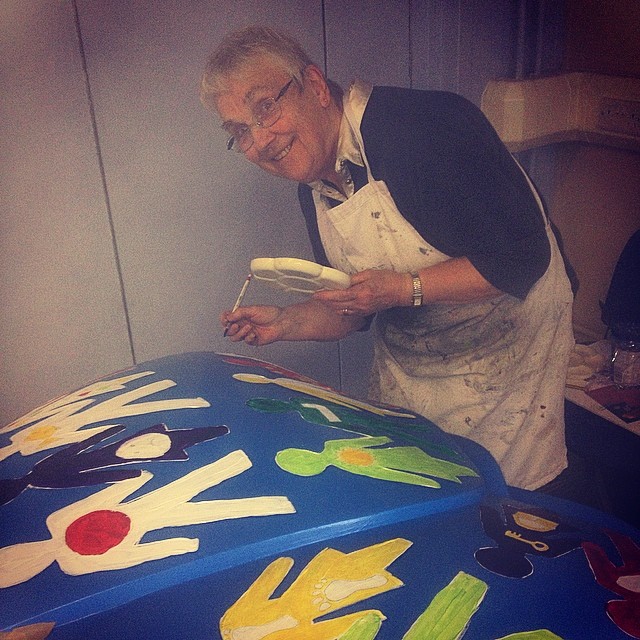
Here I am pictured with Diverse-city Moth which is positioned opposite the Open Doors Project which supports refugees, asylum seekers and economic migrants. The moth is situated on the wall of Fudge just off Prince’s Avenue on Blenheim street so that all the members of the Open Doors Community can get to see their moth. You can find out more about Open Doors herehttps://thestrangerstale.com/

A little bit of information about the process of creating the moth I initially pitched the idea of creating the moth to Bashir Shiraj the project co-ordinator for the Open Doors Project who thought it was a great idea. So I approached Rick to see if the Amy Johnson Festival would like an Open Doors Moth, he was very receptive to the idea and helped to find a sponsor for the art work.

Then came the tricky business of embodying the spirit of a community in a visual way …

Asking people from Open Doors to draw and write on the figure templates at Open Doors and turning them into the graphic designs on each figure.

Artist and Open Doors volunteer Jean Rippon giving me a hand to paint Diverse-city moth

13557818_10154240309461698_7053519249558630122_n

To find out more about the Open Doors Community visit https://thestrangerstale.com/

location: Fudge, Princes Avenue, HU5 3QP

About the Design:
The design concept was developed through a period of consultation with the Open Doors Community during which the idea of linked hands emerged as a key motif. The group wanted to celebrate and show respect for differences in the community members.

The idea of sunshine, clear skies and freedom influenced the design, leading to the idea of the linked hands of paper chain people. Each paper chain person has their own symbol and colour, representing what Open Doors means to them. The clear blue skies can be seen symbolising freedom in the background, and the sunrise orange in the moth’s orange head symbolises eternally renewing hope.

About the Artists:
Quentin Budworth is a Bridlington based artist, primarily working with photography and music. He is interested in storytelling, perception and imagination, and seeing his work displayed in places where interesting things can happen. Jean is a member of the Open Doors community.

About the Sponsor:
The Open Doors project is a community led organisation which aims to help asylum seekers and refugees in Hull, by integrating them into local society to live independently and confidently. Its members contribute by becoming part of the project to help others as well as accessing its service and maintaining the Open Doors community approach.

The project works to provide resources and classes, as well as advice and support for migrant workers. The project hosts coffee mornings and helps to provide clothes and food for those in need. http://opendoors-hull.org.uk/


Hullywood Icons

Quentin Budworth

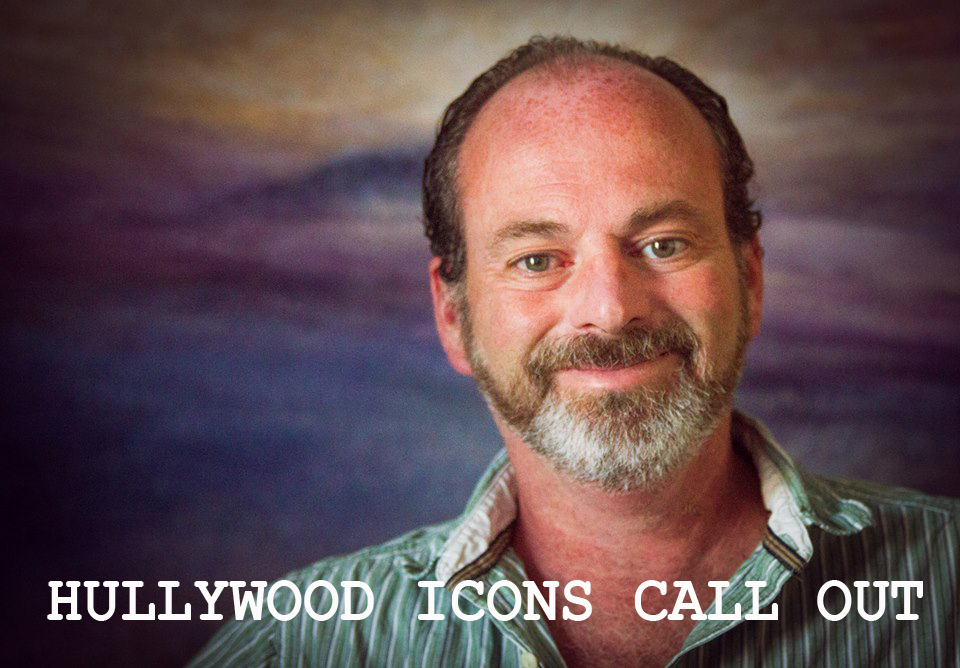
Lens based Artist Quentin Budworth is looking for participants locations and venues for an exciting visual arts project happening in Hull in 2017. Hullywood Icons will recreate iconic moments from Hollywood films with the people of Hull in the City of Hull. The work will be exhibited prominently throughout the city and be featured in the media.

There are several ways to be involved with the project:

Participation in the project as a subject – I need to know which character, from which Film? Which scene you would like to appear in?

Use of venue as possible location for a shoot.

Offer of exhibition space.

Use of external walls for exhibition/projection work.


If you would like to be involved contact me quentinbudworth@btinternet.com


Mentoring

Recently I was asked to mentor up and coming creative business Feet First Studios. Run by Gus and Owen who have recently graduated from Hull School of Art and Design with first class honours degrees and are working on their video production company based on the High Street in Hull’s old town.

This is what they had to say about the session:

‘We approached Quentin for professional advice and mentoring with our business venture. He was more than willing to share his personal experiences and ensure that we were making the right decisions with Feet First Studios. We found the discussion extremely helpful in many aspects that related to both film and general business management. We would confidently recommend Quentin to anyone in need of a professional input with regards to film, both practically and theoretically.’

Gus/Owen – Feet First Studios

Well I guess 30 years working in the Arts and that Arts Council funded training to become an accredited coach wasn’t wasted.

A list of things that I have worked out recently #artsfunding

marcusromer's avatarMarcus Romer's work & blog

AreYouAngry_1977

1. All work that is made from public subsidy in the Arts – should be made free and available for all – at some point during the life of its production or presentation

2. Explaining, to some people, that these changes are going to have to happen, can be exhausting.

3. Continuing to think, even just an arms reach into the future, actually threatens some people.

4. The ones who get it, have always got it. The ones who don’t, never did.

5. Understanding the civic role of artists in their communities has a potential for inspiring creative social change

6. There will always be people who will tell you why your ideas are wrong and will not work

7. Knowing that Creativity is actually imaginative ideas that have value

8. Taking time to develop imaginative ideas is most important…

9. …before trying to make ideas fit into a funding…

View original post 135 more words

Toads Revisited

I was asked by the Roots and Wings organisation to document in photography and video – the progress of the giant floating Toad and Toads Revisited workshop and performance programme throughout the city of Hull here are the images – I hope they give a feeling of the events and the places where they took place.

Brian Eno on ‘Scenius’ I think a really useful concept for creatives in Hull

Brian Eno had some interesting ideas on genius vs ‘scenius’ which challenge the idea of the genius artist working in isolation. Brian’s words are pertinent to Hull and hopefully this post will get some discussion going as what he is really talking about here is culture…

“I was an art student and, like all art students, I was encouraged to believe that there were a few great figures like Picasso and Kandinsky, Rembrandt and Giotto and so on who sort-of appeared out of nowhere and produced artistic revolution.

As I looked at art more and more, I discovered that that wasn’t really a true picture.

What really happened was that there was sometimes very fertile scenes involving lots and lots of people – some of them artists, some of them collectors, some of them curators, thinkers, theorists, people who were fashionable and knew what the hip things were – all sorts of people who created a kind of ecology of talent. And out of that ecology arose some wonderful work.

The period that I was particularly interested in, ’round about the Russian revolution, shows this extremely well. So I thought that originally those few individuals who’d survived in history – in the sort-of “Great Man” theory of history – they were called “geniuses”. But what I thought was interesting was the fact that they all came out of a scene that was very fertile and very intelligent.

So I came up with this word “scenius” – and scenius is the intelligence of a whole… operation or group of people. And I think that’s a more useful way to think about culture, actually. I think that – let’s forget the idea of “genius” for a little while, let’s think about the whole ecology of ideas that give rise to good new thoughts and good new work.”

What do you think?